Unilever Paid $1.2 Billion for a Three-Year-Old Gummy-Vitamin Brand
A gummy bear with vitamins in it just became one of the fastest billion-dollar exits in consumer goods history.
By Carry and Conquer Publications
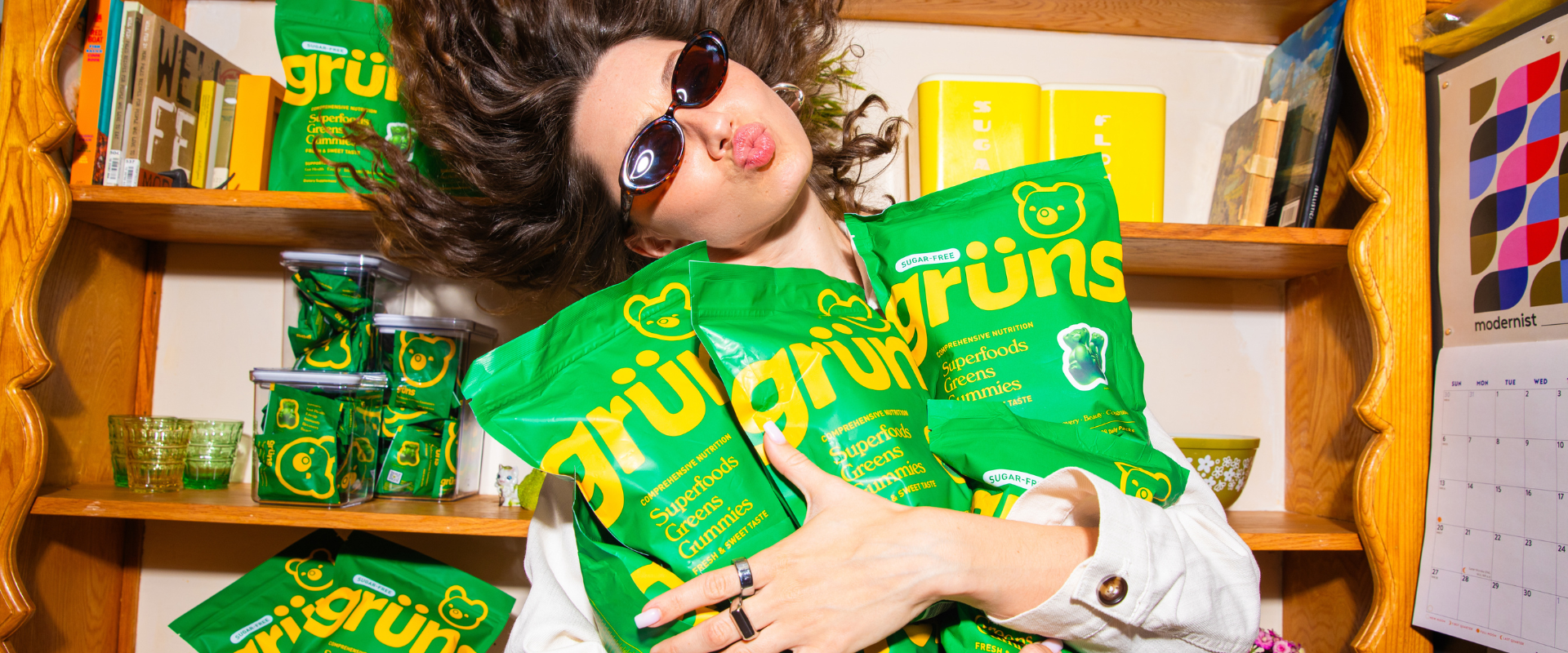
In April 2026, Unilever announced it was acquiring Gruns, a greens-supplement brand that did not exist before August 2023, for approximately $1.2 billion. The company behind the deal makes Dove soap and Hellmann's mayonnaise. The company it bought makes fruit-and-vegetable, vitamin, prebiotic, and adaptogen gummies that are, mechanically, candy: gelatin or pectin base, flavor-masking science, a molded bear shape, the same manufacturing lineage that produces Haribo and Skittles. Gruns founder Chad Janis simply filled that shape with 60 ingredients instead of sugar and marketed it as a multivitamin replacement. Three years later, Unilever priced the format itself, independent of the confectionery category it grew out of, at nine figures.
The Deal
Unilever's Wellbeing division confirmed the acquisition on April 9, 2026, with the transaction closing June 1, 2026. Jostein Solheim, CEO of Unilever Wellbeing, framed the rationale around adherence rather than novelty, saying Gruns pairs a science-backed portfolio with products people "genuinely enjoy, trust, and consistently use." Terms were not officially disclosed, but Axios and multiple outlets reported the price at $1.2 billion, a figure that implies roughly a 4x multiple on Gruns's trailing revenue. The brand had crossed a $300 million annualized run rate by October 2025, after raising a $35 million Series B in March 2025 that valued the company at $500 million. In seven months, that valuation more than doubled.
The timing is not incidental. Five days before the Gruns announcement, Unilever had agreed to sell its entire food division, including Hellmann's and Knorr, to McCormick for $45 billion, a deal implying roughly 2.5x revenue for 150 years of packaged-food heritage. The same balance sheet that walked away from legacy food at a discount multiple turned around and paid nearly double that multiple for a company younger than the average car lease.
A Candy Format, Repriced as Infrastructure
Strip away the marketing and Gruns is a delivery mechanism for nutrients using the same production base as gummy candy: a gelatin or pectin matrix, precise dosing and depositing equipment, and flavor systems engineered to mask bitter actives, the exact toolkit confectionery manufacturers have refined for a century. Industry researchers now size the global gummy market at somewhere between $12.5 billion and $30 billion depending on methodology, with vitamin and functional gummies the fastest-growing segment inside it and Asia-Pacific the largest region by revenue. Multiple forecasts put the category on a path toward $40 billion to $90 billion by the early-to-mid 2030s.
What makes the Gruns price notable is that Unilever did not need to buy into the format generically. It already owned two gummy-supplement brands, SmartyPants and Olly, when it acquired Gruns. The $1.2 billion was not for gummy manufacturing capability. It was for the specific distribution stack Janis built in under three years: Amazon category dominance, shelf space at Target, Walmart, Costco, and Sprouts, a subscription base large enough to make the brand profitable within 14 months, and roughly one million customers shipping about 10 million gummies a day. Confectionery giants are chasing the same territory from the other direction. Haribo, Mars, Mondelez, and Perfetti Van Melle are all investing in functional formulations and plant-based gelling agents, with Mars alone putting $70 million into a New Jersey R&D facility aimed partly at better-for-you formats. The Gruns deal signals which side of that convergence Big CPG thinks is worth paying up for first: the wellness brand with a candy delivery system, not the candy company adding wellness claims.
The Founder Who Priced the Format, Not the Product
Janis is not a typical DTC founder. Before Gruns, he spent three years as an investor at Summit Partners, a Boston private equity and venture firm managing roughly $44 billion in assets, where he led ten deals worth a combined $1.4 billion and sat as a board observer on Brooklinen, Ruggable, Chubbies, and Dr. Squatch, the men's grooming brand Unilever itself acquired for $1.5 billion in 2025. That vantage point shaped his central thesis: winning consumer brands change how a product is delivered, not just what is inside it. Janis has said he considers imitators of a successful format, rather than originators of a new one, unlikely to build large, sellable businesses, and he has dismissed other novel supplement form factors, jelly beans and lollipops among them, as too niche to scale the way gummies have.
He built Gruns from a Stanford Graduate School of Business dorm room, reaching a $50 million run rate before finishing his MBA, and ran the company on a self-imposed 3x-or-higher ratio of customer lifetime value to acquisition cost. He also negotiated the Unilever transaction himself, without hiring an M&A banker, a decision people close to the deal describe as characteristic of how deliberately he had planned the exit from early on.
The Case Against the Gummy
Not everyone treats gummy-format supplements as a genuine health upgrade. Registered dietitians and physicians have flagged that a single gummy vitamin serving typically carries three to eight grams of added sugar, that sugar alcohols used in sugar-free versions can cause gastrointestinal side effects, and that the candy-like appearance raises real risk of accidental overconsumption, particularly among children. Independent lab testing has previously found gummy supplements failing to deliver the nutrient levels printed on their labels, and some nutritionists argue that heat exposure during gummy processing can degrade certain vitamins before the product ever reaches a customer. The category's own defenders concede the point obliquely: the entire commercial case for gummies rests on compliance, that people who won't reliably swallow a pill will reliably eat candy, rather than on any claim that the gummy format delivers nutrients better than a capsule does.
That tension is precisely what Unilever is underwriting at scale. A $1.2 billion valuation on a three-year-old company is a bet that consistency beats potency in a market where most consumers already fail to take their vitamins at all, and that the format doing the convincing happens to be one the confectionery industry perfected generations ago for an entirely different purpose. Whether that bet pays off will not be settled by a clinical trial. It will be settled by whether Gruns' one million subscribers are still opening their sachets a year from now, inside a company built to sell soap, not candy.