The University That Runs a Venture Capital Fund for the Afterlife Economy
Wadi Makkah Ventures is wholly owned by Umm Al-Qura University and exists to fund Hajj and Umrah startups, but its biggest bet to date is a Detroit AI company with no religious mandate at all.
By Carry and Conquer Publications
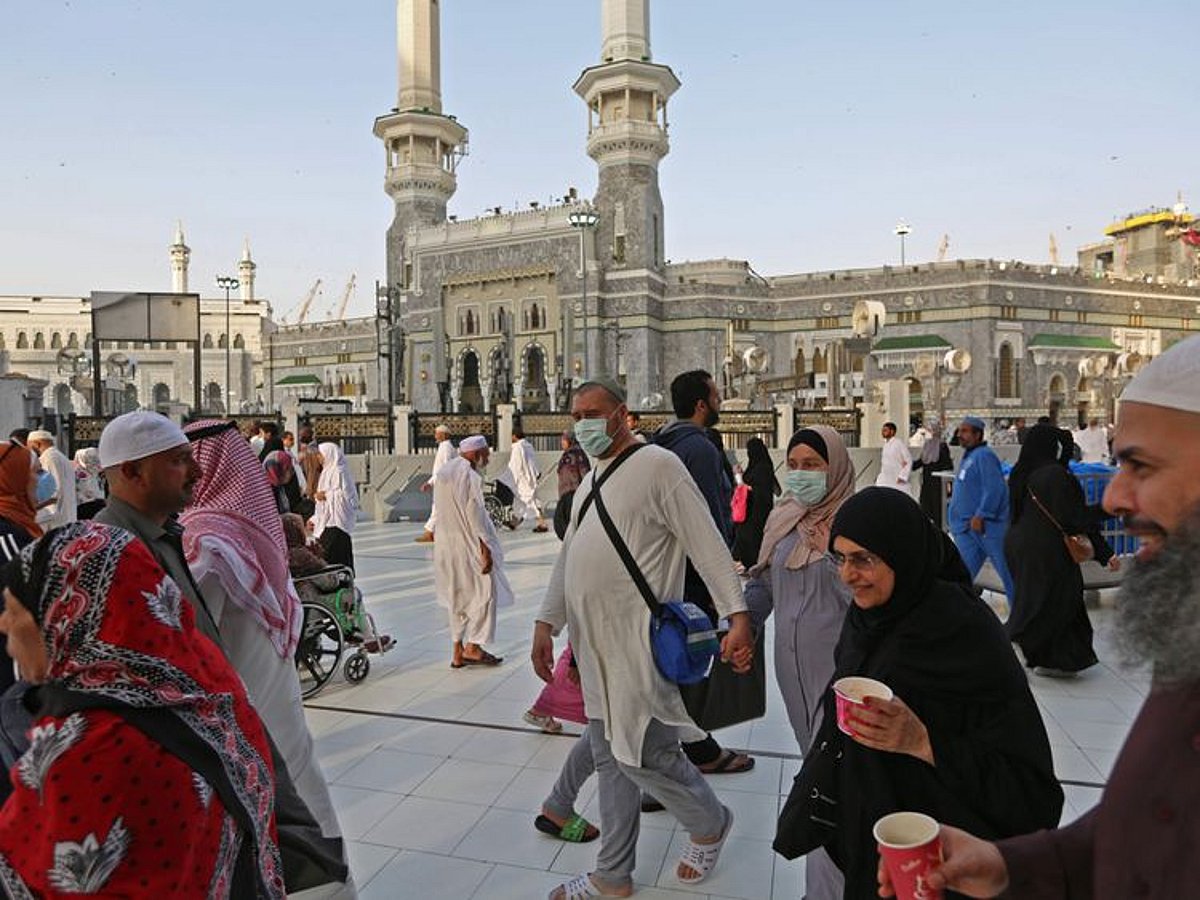
A public research university that also runs a captive VC fund is not, on its own, unusual. That the fund is locked to a single 1,400-year-old ritual, and that its highest-profile bet is a Detroit AI startup with no religious affiliation at all, is.
In December 2020, a venture arm owned outright by a Saudi public university wired $500,000 into Derq, an MIT-spinoff building computer-vision traffic systems for cities in the US, Europe and the UAE. The purpose was specific: bring AI-driven road safety to the streets of Mecca. The investor was Wadi Makkah Ventures, the investment arm of Wadi Makkah Technology Company, which is wholly owned by Umm Al-Qura University. It is, structurally, one of the stranger vehicles in venture capital: a school running a fund with a single client, and that client is a religious pilgrimage scaling toward triple its current size.
A fund built around one ritual
Umm Al-Qura University sits in Mecca, and its investment vehicle exists for one purpose: financing startups that serve Hajj and Umrah. Wadi Makkah Technology Company was established under a royal decree in 2012 with 100 million riyals in capital, tasked with commercializing university research and building a knowledge economy around the holy city. Its investment arm, Wadi Makkah Ventures, runs three separate portfolios rather than one fund: an initial portfolio closed in 2017, a seed fund created by board resolution in December 2018 for early-stage "incubated startups," and a Series A vehicle launched in early 2019 for more advanced, high-tech companies. Across those three vehicles, the company has made roughly 40 investments.
The pitch to founders is not just capital. Startups that graduate from the university's programs get access to a 4,666-square-meter facility, patent-filing support routed through Umm Al-Qura's own patent office, and a standing pipeline of student labor for prototyping, market research and portfolio management. Eng. Khalid Abdul-Ghani Sulaimani, chairman of Wadi Makkah Ventures' board and its investment committee, has repeatedly framed the fund's mandate in almost bureaucratic terms: channel capital toward companies that serve "the Hajj and Umrah economies in general and the economy of the Makkah region in particular." Recent portfolio companies bear that out. Mabeet connects pilgrims with permitted homestay operators in Mecca and Medina. Sariyah provides tourist-guide services and curated routes for visitors to religious and historical sites. Bab Makkah and Tarteel closed rounds with the fund in December 2020, the same month as the Derq deal. This is a fund that mostly looks exactly like what its name suggests: a pilgrimage-services investor with a university's balance sheet behind it.
The bet that has nothing to do with religion
Derq breaks that pattern entirely. Founded in 2016 by Dr. Georges Aoude, Dr. Amer Abufadel and Karl Jeanbart, Derq is a Detroit- and Dubai-based company built on AI research from MIT, where Aoude earned his PhD in aerospace engineering. Its platform uses cameras, radar and machine learning to detect, track and predict the behavior of vehicles and pedestrians at intersections in real time, warning drivers and connected vehicles of a likely collision before it happens. By the time Wadi Makkah Ventures invested, Derq's technology was already live in Michigan, Ohio, Nevada and Dubai, and the company counted Qualcomm, Kapsch, Motional and DENSO among its partners.
The $500,000 came as part of Derq's pre-Series A round, alongside other global tech investors, and brought the startup's total funding to nearly $6 million. It was not a passive check. Wadi Makkah structured the investment around a specific mandate: use Derq as a "go-to-market" partner to bring smart mobility infrastructure into Mecca. Sulaimani was explicit about the arithmetic driving the decision. With a Vision 2030 target of 30 million Umrah pilgrims and a resident population of 2.5 million in Mecca, he said, "the need for smart mobility solutions is critical to optimizing the capacity of the existing infrastructure." Wadi Makkah and Derq later signed a formal memorandum of understanding, alongside a third consulting firm, to develop road-safety and traffic-management solutions across the kingdom.
What makes the deal notable is not the size, which is modest even by pre-Series A standards, but the company it puts Umm Al-Qura's fund in league with. Derq's investor base includes Qualcomm, AT&T Ventures, e& capital and the U.S. Department of Transportation. Its competitors, per PitchBook, include Momenta, Wayve and Autobrains, the same cohort of computer-vision and autonomous-driving companies drawing checks from Silicon Valley and Detroit auto money. A university fund built to serve a religious pilgrimage was sitting at the same capitalization table as some of the largest names in global mobility, underwriting the same underlying technology that is being tested for self-driving cars, because it decided a Detroit road-safety startup was the fastest route to a specific, physical problem: how does a city built for a much smaller population survive being tripled in size.
The scale problem the fund is underwriting
That tripling is not hypothetical. Hajj hosted 1.8 million pilgrims in 2024, 2.1 million in 2025, and is tracking toward roughly 2.3 million in 2026. Saudi Arabia's Vision 2030 target for Hajj is 6 million pilgrims a year, nearly three times current volume. Umrah has moved faster: from a 2016 baseline of roughly 6.2 million visitors, the kingdom logged 16.92 million in 2024 and more than 18 million in 2025, already ahead of its interim targets, en route to a 30 million-a-year goal. The Hajj and Umrah Realization Program, one of the formal Vision 2030 delivery vehicles, has been running ahead of schedule on the tourism side and well behind on the raw capacity side. Getting from 2.3 million to 6 million Hajj pilgrims without a corresponding increase in road deaths, gridlock and crowd-crush risk is an infrastructure problem before it is a religious one, and it is the exact problem Wadi Makkah cited when justifying the Derq check.
That framing matters because it explains why a fund built to serve one ritual would look outside its own sector for a startup and inside a rival sector, autonomous vehicle perception, for the underlying technology. Wadi Makkah's other roughly 40 investments serve pilgrims directly: accommodation platforms, guide services, patent-driven university spinouts. Derq serves the roads underneath the pilgrims, indirectly, using a product designed for Detroit intersections and NVIDIA-powered edge hardware.
A structure academic finance has already flagged
University-affiliated venture funds are not new. The phenomenon dates back decades in the US and Europe, and researchers have built entire literatures cataloguing their governance and performance. The consistent finding is uncomfortable for anyone assuming a university's proximity to research gives it an investing edge. A 2022 Academy of Management analysis of 706 university portfolio companies in the US and UK found that investments tied to an institutional-personal relationship between the university and the founders "rarely pay off commercially," and that geographic proximity to an established venture ecosystem, not university affiliation, was the strongest predictor of returns. Cambridge Enterprise, which manages Cambridge University's own investment activity, has gone further, arguing publicly against giving university funds automatic "right of first refusal" pipelines into campus research, on the grounds that pipelines forward-sell intellectual property and create exactly the kind of institutional conflict of interest that later blows up in court or in the press.
Wadi Makkah does not operate in that ecosystem. It is not competing with Sand Hill Road for spinout deal flow from a research powerhouse; it is the only capital source purpose-built for an economic sector that exists because of a religious obligation observed by nearly two billion people. That single-sector focus is exactly what makes the fund durable in a way most university venture vehicles are not: its "market" cannot disappear, decline, or get disrupted by a competing pilgrimage. It can only get larger, on a schedule set by the Saudi state rather than by venture cycles. The Derq deal is what that inevitability looks like in practice: a school-owned fund reaching outside its own religious mandate, into a Detroit AI lab's spinoff, because the ritual it exists to serve is about to outgrow the city that hosts it.