The Ugly Shoe Industrial Complex: How Private Equity Turned "Deliberately Unattractive" Into Footwear's Only Reliable Trade
A decade of buying orthopedic sandals, fake-distressed sneakers, combat boots, and foam clogs has produced a closed circuit of the same three or four firms reselling the same handful of brands to one another at escalating prices, with public markets punishing nearly every one of them the moment they actually had to trade on fundamentals.
By Carry and Conquer Publications
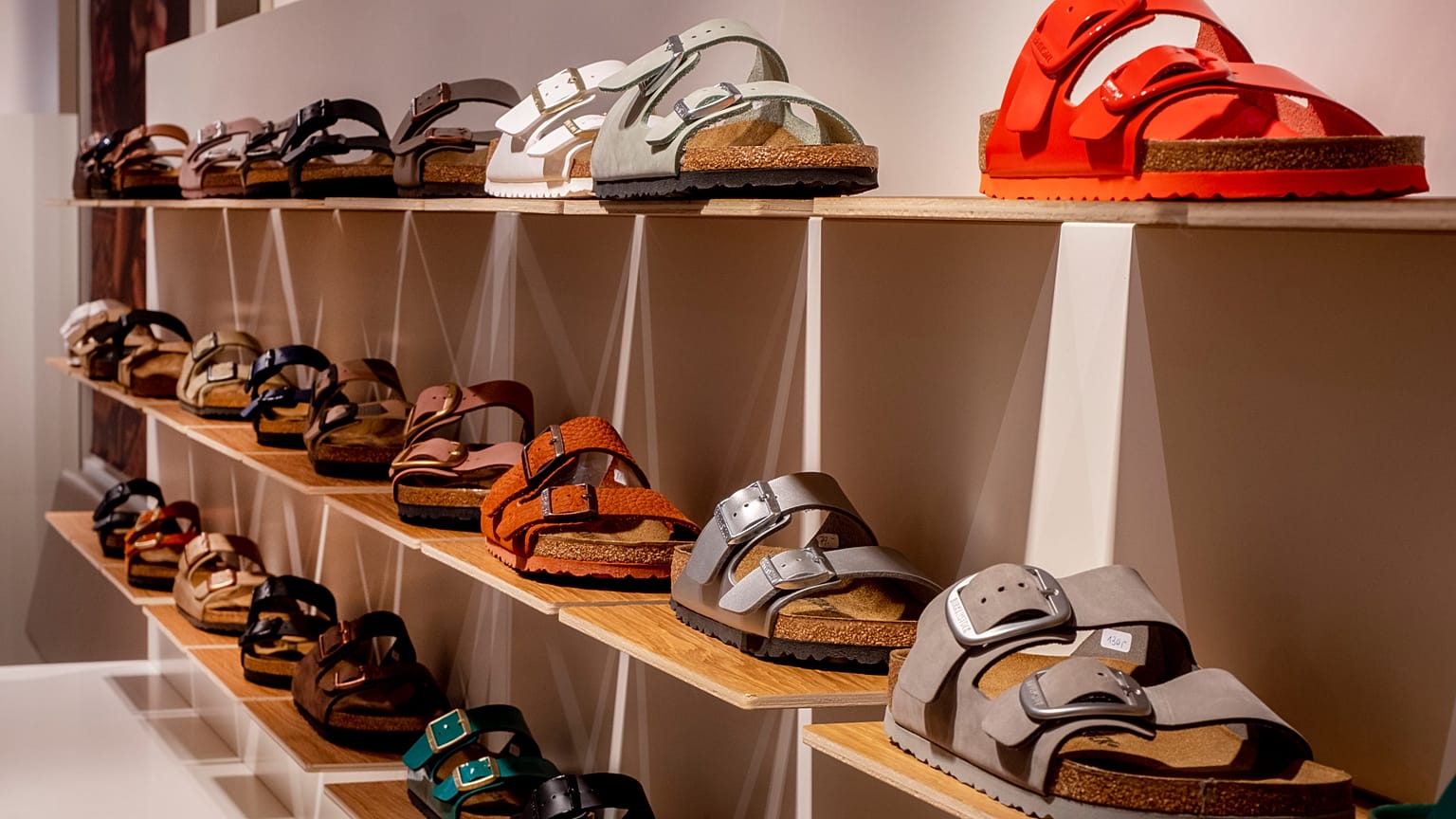
Private equity did not stumble into the ugly shoe trade. It built a machine for it, and the machine has now run the same handful of brands through the same handful of hands so many times that the playbook is no longer subtle.
Line up the footwear brands private equity has fought hardest to own over the past decade and the list reads like a dare: orthopedic sandals, fake-distressed sneakers with a manufactured "worn" look stitched into the design spec, combat boots built for punk shows and factory floors, foam clogs. None of it looks like a coherent thesis until you follow the money instead of the aesthetics, at which point a single, repeatable arbitrage emerges. Buy the brand the fashion establishment finds embarrassing, dress the embarrassment up as a lifestyle category, sell it to the next sponsor before public markets get a vote on the valuation. The shoes are incidental. The trade is the product.
The Birkenstock Blueprint
Birkenstock had been a family business since 1774, sixth-generation German management, roughly 4,300 employees, the kind of heritage manufacturer that private equity usually struggles to even get a meeting with. In February 2021, L Catterton and Financiere Agache, the family holding vehicle of LVMH chairman Bernard Arnault, agreed to buy a majority stake in a deal that valued the company at about 4 billion euros, or $4.35 billion. Arnault framed the acquisition in the language of stewardship rather than arbitrage, saying in a statement that the firm appreciated brands with this kind of multi-generational heritage. Brothers Christian and Alex Birkenstock, descendants of the founder, retained a minority stake and became billionaires in the process.
What followed tracked the standard private equity script almost exactly. Revenue jumped from about $728 million in fiscal 2020 to roughly $1.3 billion in fiscal 2022, a 71 percent increase over two years, while net income doubled from $101.3 million to $202.8 million over the same stretch. By July 2023, L Catterton was already shopping the idea of an IPO that could value the company north of $6 billion. By September, the target had climbed to over $8 billion. The company that priced its IPO that October set the offer at $46 a share, implying a valuation of $8.64 billion, a multiple of roughly 6.9 times annual sales and a price-to-earnings ratio above 45, well above footwear peers like Nike, Adidas, Crocs and Skechers, which traded at one to three times forward sales.
The market's answer arrived almost immediately. Birkenstock opened at $41 on October 11, 2023, five dollars below its offer price, then closed the day down 12.6 percent at $40.20, a one-day decline that Bloomberg data identified as the worst first-day showing for a U.S. listing of $1 billion or more in over two years. Only AppLovin's April 2021 debut, down 18.5 percent on day one, had been worse. By the end of the first week, shares had slid as much as 21 percent from the IPO price. Pauline Brown, the former chair of LVMH North America, told Yahoo Finance the company had been "too aggressive and a bit reckless" in its pricing, calling the outcome "more a reflection of the pricing than it is the quality of the stock." An analyst at the Michigan Journal of Economics later ranked the debut as the sixth-worst opening-day performance among 95 IPOs that had raised over $1 billion in the preceding decade.
None of this stopped L Catterton from continuing to harvest the position. In June 2024, the firm priced a $756 million secondary offering at $54 a share, trimming its stake from 81.1 percent to 73.2 percent, with Birkenstock itself receiving none of the proceeds. The brand that supposedly couldn't justify its IPO price was, less than a year later, trading well above it. The lesson private equity took from Birkenstock was not "don't overprice the exit." It was "the exit doesn't need to work on day one, as long as the next sponsor or the secondary market eventually pays up."
Golden Goose's Five Owners in Twelve Years
If Birkenstock is the case study in a single flip, Golden Goose is the case study in what happens when the flip becomes a business model unto itself. The Venetian brand, founded in 2000 by designers Alessandro Gallo and Francesca Rinaldo, built its entire identity around sneakers that are manufactured to look used: scuffed leather, faded stars, a "perfectly imperfect" aesthetic baked into the production line rather than acquired through wear. It is, in other words, a company that sells fabricated authenticity at a premium, which makes it close to a pure-form test of whether the ugly shoe thesis generates returns independent of any specific brand's merits.
The ownership chain reads like a stress test of that thesis. Italian private equity fund DGPA SGR acquired roughly 75 percent of the company in late 2013 for about $59.8 million, valuing the business at around 100 million euros after a year in which it posted 48 million euros in revenue. Two years later, in 2015, DGPA sold to mid-market firm Ergon Capital Partners for an estimated 80 million euros, with the deal value implying the company had grown to around 130 million euros. Ergon held it for less than two years before selling to Carlyle in 2017 for roughly 400 million euros, a deal Carlyle described at the time as its fourth significant investment in European fashion and apparel after Moncler, TwinSet and Hunkemoller. Carlyle, in turn, sold to Permira in 2020 for just under 1.3 billion euros, a transaction that also folded in Permira's existing ownership of Dr. Martens, putting both of the decade's signature anti-glamorous footwear brands under one roof.
Permira tried to take Golden Goose public in June 2024, targeting a roughly 1.86 billion euro valuation. The company pulled the listing days before it was set to price, citing market volatility following European Parliament elections and the announcement of snap elections in France. But the order book had reportedly been covered across the price range from the first hour of bookbuilding, suggesting demand was not the binding constraint. According to a contemporaneous report from the Armchair Trader, insiders said "the ghost of Dr. Martens haunted the discussions with bankers about whether to pull the IPO." Permira, having watched its other ugly-shoe portfolio company collapse on the public market, chose not to find out whether Golden Goose would do the same.
Eighteen months later, in December 2025, Permira found a buyer instead. HSG, the Chinese investment firm formerly known as Sequoia Capital China, agreed to acquire a majority stake at a valuation of approximately 2.5 billion euros, with Singapore's Temasek and its subsidiary True Light Capital joining as minority investors. The price represented nearly double the 1.3 billion euro figure Permira had paid in 2020, achieved not through a public listing but through a fifth consecutive sponsor-to-sponsor handoff. Permira retained a minority stake, as did Carlyle, the firm it had bought the company from five years earlier. In April 2026, Golden Goose priced an 880 million euro bond package, split between 350 million euros of seven-year fixed-rate notes and 550 million euros of floating-rate notes, to help finance the HSG transaction, with the fixed tranche pricing at a 6.25 percent yield. Reuters reported separately that Qatar Investment Authority was in talks to acquire a further 10 percent stake at a valuation consistent with the 2.5 billion euro price, meaning that by mid-2026, Golden Goose's cap table includes a Chinese venture firm, a Singaporean sovereign-linked investor, a Gulf sovereign wealth fund, and the European private equity firm that originally tried and failed to sell it to the public.
The Dr. Martens Precedent Nobody Wanted to Repeat
Permira's caution about Golden Goose's IPO was earned the hard way. The firm bought Dr. Martens from the Griggs family in January 2014 for 300 million pounds, then spent seven years executing a textbook value-creation program: revenue more than tripled from 209 million pounds in 2014 to 672 million pounds by 2020, the store count grew fivefold, online sales rose twelvefold, and the workforce nearly tripled from 758 employees to 2,288. Permira took the company public on the London Stock Exchange in January 2021 at 370 pence a share, implying a valuation of 3.7 billion pounds. The IPO was reportedly oversubscribed eight times.
What happened next is the cautionary tale every subsequent footwear sponsor has had to reckon with. By April 2024, Dr. Martens had issued five profit warnings in three years and its share price had fallen 85 percent from the IPO, cutting the company's valuation to around 670 million pounds, a fraction of its float price. Activist investor Marathon Partners, led by managing member Mario Cibelli, sent a letter urging the board to pursue a strategic review or outright sale, arguing the brand "would produce higher earnings as a private company." Cibelli also flagged a structural conflict: Permira, which by then owned both Dr. Martens and Golden Goose, might be reluctant to run parallel sale processes for two underperforming bets at the same time. Permira sold down its Dr. Martens stake in stages, including a 65-million-share placing in 2023 that triggered a further double-digit decline in the stock on the news alone, but as of mid-2024 the firm still held close to 40 percent of the company it had taken public three years earlier at ten times the price.
The comparison to Birkenstock is instructive precisely because the two companies look so similar on paper. A 2024 City AM analysis noted that Dr. Martens and Birkenstock had nearly identical revenue profiles, in the $1 billion to $1.5 billion range, with comparable cost structures and EBITDA margins around 23 to 24 percent. Yet Birkenstock's New York listing valued it at roughly 6.5 billion pounds while Dr. Martens, listed in London, traded around 1.2 billion pounds, a gap the analysis attributed largely to which exchange the company happened to list on rather than any underlying difference in the business. Both facts can be true at once: London's listing venue discount is real, and so is the broader pattern in which nearly every recent footwear IPO has underperformed its private equity sponsor's exit price once it actually had to trade on fundamentals rather than growth-story narrative.
Why Analysts Saw the Pattern Coming
The footwear-as-asset-class thesis was not a secret that private equity kept to itself. In March 2021, weeks after the Birkenstock deal closed, Bernstein luxury goods analyst Luca Solca told WWD plainly: "Private equity is interested in casual footwear," citing the recent Golden Goose transaction alongside Birkenstock as evidence of a pattern rather than a coincidence. Solca attributed the wave partly to COVID-19, saying the pandemic "boosted a process toward casual and comfortable that was already under way, both in apparel and in footwear." Asked which brands might be next, Solca named Allbirds and Autry as candidates "popping up here and there."
What Solca was describing in real time was the formation of a closed circuit: a small number of firms, Permira, Carlyle, L Catterton, Ergon, repeatedly buying, operating, and reselling the same handful of brands to one another, with sovereign wealth funds and strategic buyers increasingly joining as the multiples escalated. The pattern holds because the playbook genuinely produces revenue growth almost every time. Birkenstock's revenue rose 71 percent in two years under L Catterton. Dr. Martens revenue tripled under Permira. Golden Goose grew from 266 million euros in 2020 to 655 million euros in 2024 under Permira's ownership, with direct-to-consumer sales climbing 21 percent and the store network expanding to 227 locations from 97 in 2019. The operational improvements are not fabricated. What is fabricated, repeatedly, is the assumption that growth at this rate justifies the valuation multiple the next buyer is being asked to pay, an assumption public markets have rejected nearly every time footwear private equity has asked them to underwrite it.
The Trend That Keeps Making the Bet Look Right
Layered on top of a decade of financial engineering is a live consumer movement that, for now, keeps validating the underlying read on demand even as it says nothing about the price anyone should pay for that demand. Fashion's "ugly shoe" cycle, which had been building through Maison Margiela's Tabi and Crocs collaborations for years, accelerated sharply through 2026. According to Brendan Dunne of resale platform StockX, Mary Jane-style sneaker resale was up more than 350 percent year-over-year in the first quarter of 2026. Fashion Tingz newsletter creator J'Nae Phillips, quoted by the BBC, framed the appeal of these shoes as objects that "provoke reactions, become conversational objects, or function almost like visual memes." Celebrities including Bella Hadid, Emma Chamberlain, and Doja Cat have been photographed in deliberately confrontational silhouettes from Margiela, Schiaparelli, and Marc Jacobs, while mainstream brands including Puma, Converse, and Adidas have rushed out their own Mary Jane sneaker hybrids to meet demand that runway insiders started and resale platforms then amplified.
This is, in a narrow sense, exactly the dynamic Solca described in 2021: casual, comfortable, polarizing footwear moving from subculture into mainstream spend at a pace that makes any sponsor holding an "ugly" brand look prescient regardless of what they paid for it. But the trend's persistence is also precisely why it should not be mistaken for evidence that the underlying trade is safe. Golden Goose, Birkenstock, and Dr. Martens were all bought years before their respective ugly-shoe moments crested, which means the brands that look smart today were assembled on theses formed before this particular wave existed. The trade was never about timing a single trend. It was about owning a category that reliably produces a trend every few years, regardless of which specific silhouette happens to be culturally ascendant in any given season.
The Closed Circuit Has No Real Exit
The uncomfortable truth sitting underneath all of this is that the public market, the supposed final stop for any private equity asset, has functioned less as an exit and more as a pricing referendum that keeps coming back negative. Birkenstock's IPO needed a "pop" and got a 12.6 percent first-day decline instead. Dr. Martens raised 1.3 billion pounds in its float and then watched 85 percent of that valuation evaporate over the following three years. Golden Goose got close enough to its own listing to set a price range, watched the order book fill up, and then pulled the trigger anyway because the people running the process were more afraid of becoming the next Dr. Martens than they were confident in their own oversubscription numbers.
What this leaves is a market structure in which the only reliable exit for an ugly shoe brand is another sponsor, not a public shareholder base. Golden Goose has had five owners in twelve years and has still never successfully completed a public listing. Permira bought it from Carlyle in 2020 and sold it to HSG in 2025, and neither transaction required public investors to validate the price. Birkenstock did go public, but L Catterton still controls roughly 73 percent of the company and continues to harvest value through secondary offerings rather than relying on the stock's organic performance to deliver returns. The 2026 ugly shoe trend, with its 350 percent resale spike and its conversational-object framing, gives every one of these sponsors a fresh story to tell the next buyer. But the story was never really about the shoes. It is about a closed loop of the same four or five institutions, recognizing that "deliberately unattractive" footwear is one of the few consumer categories where the operational growth is real, the cultural cycle is reliably recurring, and the only audience that has consistently refused to pay up is the one nobody in the loop actually needs to convince: the public.