The Tow Truck Business for Dead Satellites
Starfish Space's $52.5 million contract with the U.S. Space Force marks the first time any government has paid a private company to clean up its orbital mess - and it signals the opening of an entirely new market.
By Carry and Conquer Publications
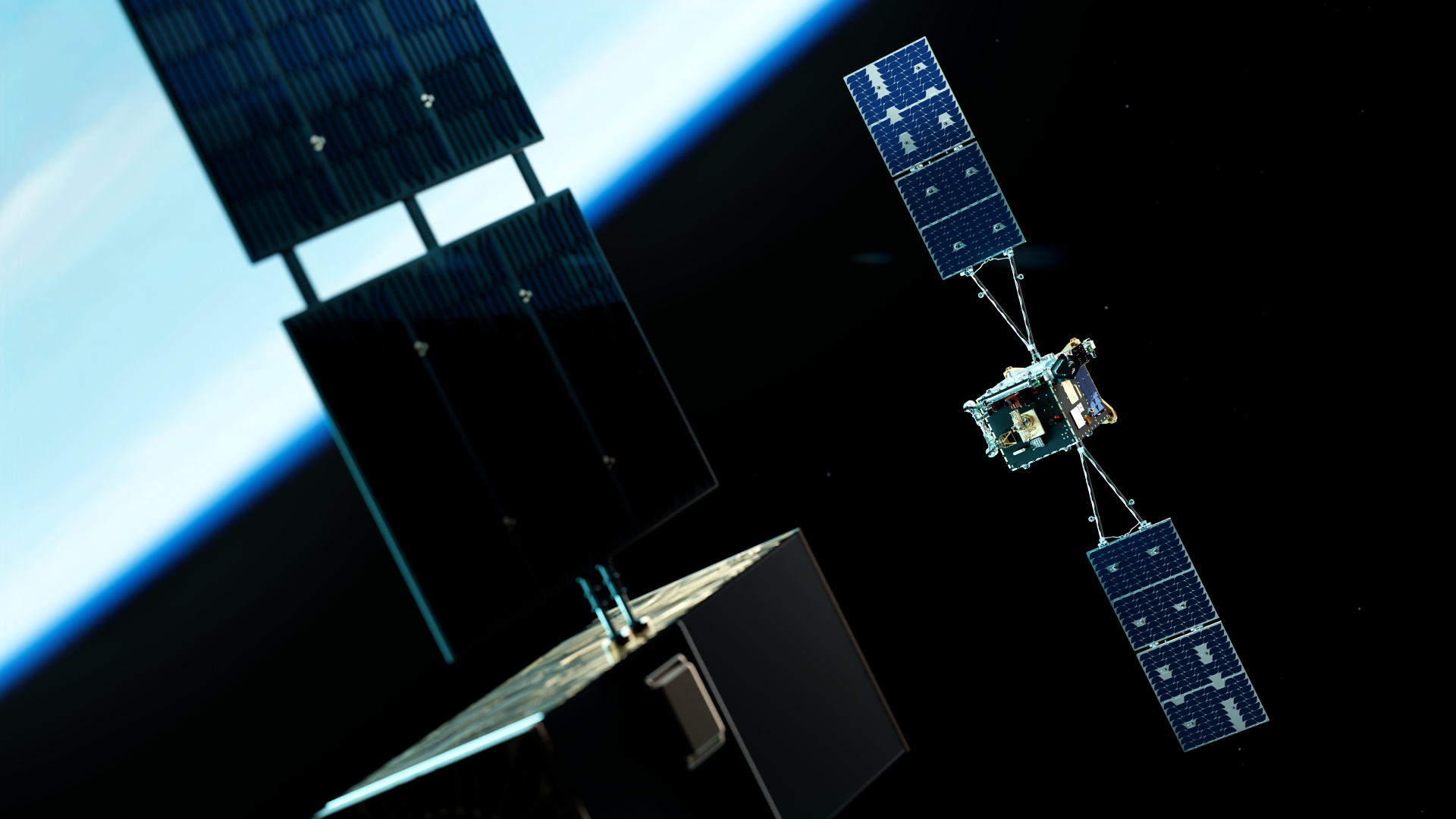
On January 21, 2026, a Tukwila, Washington startup called Starfish Space announced it had secured a $52.5 million contract from the U.S. Space Force's Space Development Agency (SDA) to provide what it calls Deorbit-as-a-Service (DaaS) - the first contracted end-of-life satellite disposal mission in history. The customer is the Pentagon's Proliferated Warfighter Space Architecture (PWSA), a rapidly expanding constellation of hundreds of military satellites in low Earth orbit. The contract is not a research grant or a feasibility study. It is a real service agreement, structured like a tow truck dispatched when a vehicle breaks down - except the broken-down vehicles orbit Earth at 17,500 miles per hour. For private equity investors watching the commercial space sector, the implications are considerable. An entirely new services market is emerging, one that did not exist in contracted form sixty days ago.
The Problem Hiding in Plain Orbit
Low Earth orbit is becoming the orbital equivalent of a crowded highway at rush hour - except vehicles travel at roughly 17,500 miles per hour and collisions do not produce fender benders, they produce clouds of lethal shrapnel. The European Space Agency's 2025 Space Environment Report documented the scope of the challenge: approximately 40,000 objects are now tracked in Earth orbit, but the actual number of debris pieces larger than one centimeter - each capable of catastrophic satellite damage - is estimated at over 1.2 million. The density of active satellites in the 500-600 kilometer orbital band now approaches that of space debris, a milestone meaning collision risk increasingly comes from operational neighbors as much as from junk.
The Pentagon has compounded the problem with deliberate urgency. SDA's Proliferated Warfighter Space Architecture was designed from the start to field hundreds of satellites in tranches - launching new generations every two years with iterative capability improvements. Tranche 0 put 27 demonstration spacecraft into orbit. Tranche 1, currently deploying, encompasses 158 platforms across transport and tracking layers, built by York Space Systems, Northrop Grumman, Lockheed Martin, and L3Harris. In December 2025, SDA awarded another $3.5 billion across four companies - Lockheed Martin, Rocket Lab, Northrop Grumman, and L3Harris - to build 72 more Tracking Layer satellites for Tranche 3. The constellation is planned to eventually number in the hundreds. Which raises the obvious question: what happens to all of them when they stop working?
Until the Starfish contract, the answer came down to an uncomfortable binary. Operators could deorbit satellites while their propulsion systems still functioned - sacrificing months or years of remaining operational life to ensure controlled disposal - or fly satellites until failure and accept the debris risk. Both options carry real costs. The first sacrifices revenue-generating lifetime. The second imposes collision risk on every other operator sharing the orbital band.
The Otter: Small Spacecraft, Large Ambitions
Starfish Space was founded in October 2019 by Austin Link and Trevor Bennett, two former Blue Origin engineers who had worked together long enough to share Thanksgiving dinners and develop a shared thesis about the orbital economy's missing infrastructure layer. Link holds a B.S. in Physics from Stanford and an M.S. in Aerospace Engineering from Purdue, with prior stints at Lockheed Martin and Blue Origin. Bennett completed his PhD in Aerospace Engineering at the University of Colorado Boulder following research positions at NASA's Jet Propulsion Laboratory and Goddard Space Flight Center, and was an NSTRF Fellow whose doctoral focus was proximity operations.
Their product is the Otter, an ESPA-class satellite servicing vehicle weighing roughly 300 kilograms - about the size of an oven - designed to rendezvous with, dock to, and deorbit satellites that were never outfitted for servicing in the first place. That last detail matters commercially. Most proposed satellite servicing concepts require target spacecraft to be pre-equipped with docking hardware, limiting the addressable market to future satellites only. Otter is built for the installed base.
The Otter's technical architecture rests on three proprietary systems. CETACEAN is a computer vision-based navigation software that estimates the relative position and orientation of a target satellite using off-the-shelf sensors, enabling safe approach even to tumbling or unresponsive spacecraft. CEPHALOPOD is the autonomous guidance and control software that plans and executes docking maneuvers. The Nautilus docking mechanism adheres to virtually any flat surface without requiring pre-installed fixtures. The vehicle runs on high-efficiency electric propulsion that makes it roughly ten times lighter than traditional servicing vehicles, reducing launch cost while enabling repeat missions. After completing a deorbit, the Otter climbs back to operational altitude and can engage another target. Bennett has indicated one Otter spacecraft can dispose of substantially more than two satellites per mission, with the number closer to ten.
The path to the SDA contract was methodical. Otter Pup 1 launched in June 2023 on a SpaceX Falcon 9 rideshare and survived a significant early anomaly - deploying before separation and spinning at over 330 degrees per second. The Starfish engineering team stabilized it using onboard control algorithms, then in April 2024 completed a rendezvous mission, capturing imagery of a D-Orbit ION spacecraft from within approximately one kilometer. Otter Pup 2 launched in June 2025 with the goal of completing the first-ever commercial satellite docking in LEO. In December 2025, Starfish and Impulse Space announced the successful completion of the Remora mission - a fully autonomous rendezvous using a single lightweight camera system, an industry first in LEO.
The SDA contract built on a competitive mission study Starfish executed for SDA throughout 2024 and 2025. The $52.5 million is not a single disbursement: an initial payment covers costs through the first deorbit operation, after which SDA pays for services rendered. The first operational Otter is targeted for launch in 2027.
What a Service Contract Actually Means
Trevor Bennett was careful in his public statements to draw a distinction that private equity investors should note. "This is not research and development," he told GeekWire. "This is an actual service, in a structure that allows that service to scale for this constellation, for an entire industry." The difference is significant. R&D contracts pay for exploration. Service contracts create recurring revenue models with defined deliverables and options for expansion.
The SDA deal covers an initial deorbit with contractual options for additional deorbits contingent on Otter's performance. The structure mirrors what happened in launch services: a government anchor tenant proves the model, validates the technology, and establishes the unit economics that attract commercial operators. SpaceX's early NASA contracts are the obvious reference point. PWSA represents a guaranteed, replenishable source of deorbit demand. Each tranche of satellites launched will eventually require disposal. With hundreds of satellites planned across multiple tranches, the pipeline is structural rather than episodic.
The commercial market beyond government is potentially larger still. Starfish has three missions on deck publicly: the Space Force PWSA deorbit contract, a GEO life extension mission for SES (formerly Intelsat), and a NASA debris inspection mission worth $15 million announced in August 2024. In February 2026, the Space Force separately awarded Starfish a $54.5 million contract for a GEO-configured Otter vehicle, funded through the Pentagon's APFIT program - Accelerate the Procurement and Fielding of Innovative Technologies - the only APFIT award issued to a space company in that funding cycle, and one of the largest in the program's history. The company has also signed contracts with the NRO for a mission concept study and completed an autonomous rendezvous demonstration with Impulse Space. Across five years and multiple mission types, Starfish has raised over $50 million in venture capital from investors including Shield Capital, Point72 Ventures, Booz Allen Ventures, Munich Re Ventures, and Toyota Ventures.
The Commercial Flywheel
What makes the Starfish model interesting from a capital markets perspective is the structural alignment between growing orbital congestion, tightening regulatory requirements, and a customer base expanding in both size and velocity. The FCC in 2024 adopted a rule requiring satellites in LEO to complete disposal within five years of end of mission - a sharp tightening from the previous 25-year standard. ESA's Zero Debris Charter, signed by more than 100 entities including a dozen countries, is pushing in the same direction. Regulatory pressure converts optional behavior into contractual obligation, and contractual obligation creates addressable market.
The customer base is growing faster than projections from even five years ago. SpaceX's Starlink constellation already numbers in the thousands of satellites. Amazon's Kuiper and OneWeb are both expanding. The Pentagon's PWSA will continue its tranche-by-tranche growth. Every satellite that reaches end of life - whether through hardware failure, software obsolescence, or scheduled replacement - represents a potential Otter mission. Munich Re Ventures' participation in Starfish's funding rounds is not accidental: the insurance sector has a direct financial interest in reducing the probability of debris-generating collisions across the orbital commons.
The remaining risks are real but defined. Otter Pup 2's docking mission represents the final technical validation gate before the full Otter begins operational missions. The 2027 launch timeline means the SDA contract is two years from first revenue. Space hardware development timelines routinely slip, and the Tranche 1 PWSA launch itself was delayed by roughly a year due to supply chain constraints. The competitive landscape, while currently sparse, will not stay empty - Astroscale, D-Orbit, and other in-space servicing companies are developing adjacent capabilities in both LEO and GEO.
A Market Made, Not Found
The satellite servicing market has been a theoretical investment thesis for years - compelling on paper but without the anchor contracts that convert ambition into revenue visibility. The Starfish-SDA deal changes that calculus. It is not proof of scale, but it is proof of concept in the only form that counts: a government customer paid real money for a real service, with contractual options for expansion and a stated intent to use commercial deorbit services as part of its long-term constellation management strategy.
Bennett put it plainly: the goal is an industry that relies on on-orbit servicing and spacecraft-to-spacecraft interaction broadly. Disposal is the first stepping stone. Orbital repositioning, life extension in GEO, debris inspection for NASA, and commercial constellation refresh cycles are the ones that follow. Each successful mission extends the validated capability envelope and widens the addressable market. For the private equity firms and venture investors tracking the commercial space infrastructure layer, 2026 may mark the year end-of-life satellite disposal stopped being a concept and became a line item.