The Texas Convenience Chain Where Gasoline Is a Loss Leader and the Real Product Is Beaver Nuggets
Buc-ee's prices gas near cost to pull families into 74,000-square-foot stores where brisket and branded merchandise, not fuel, generate two-thirds of revenue and 10 to 20 times the industry's per-location sales.
By Carry and Conquer Publications
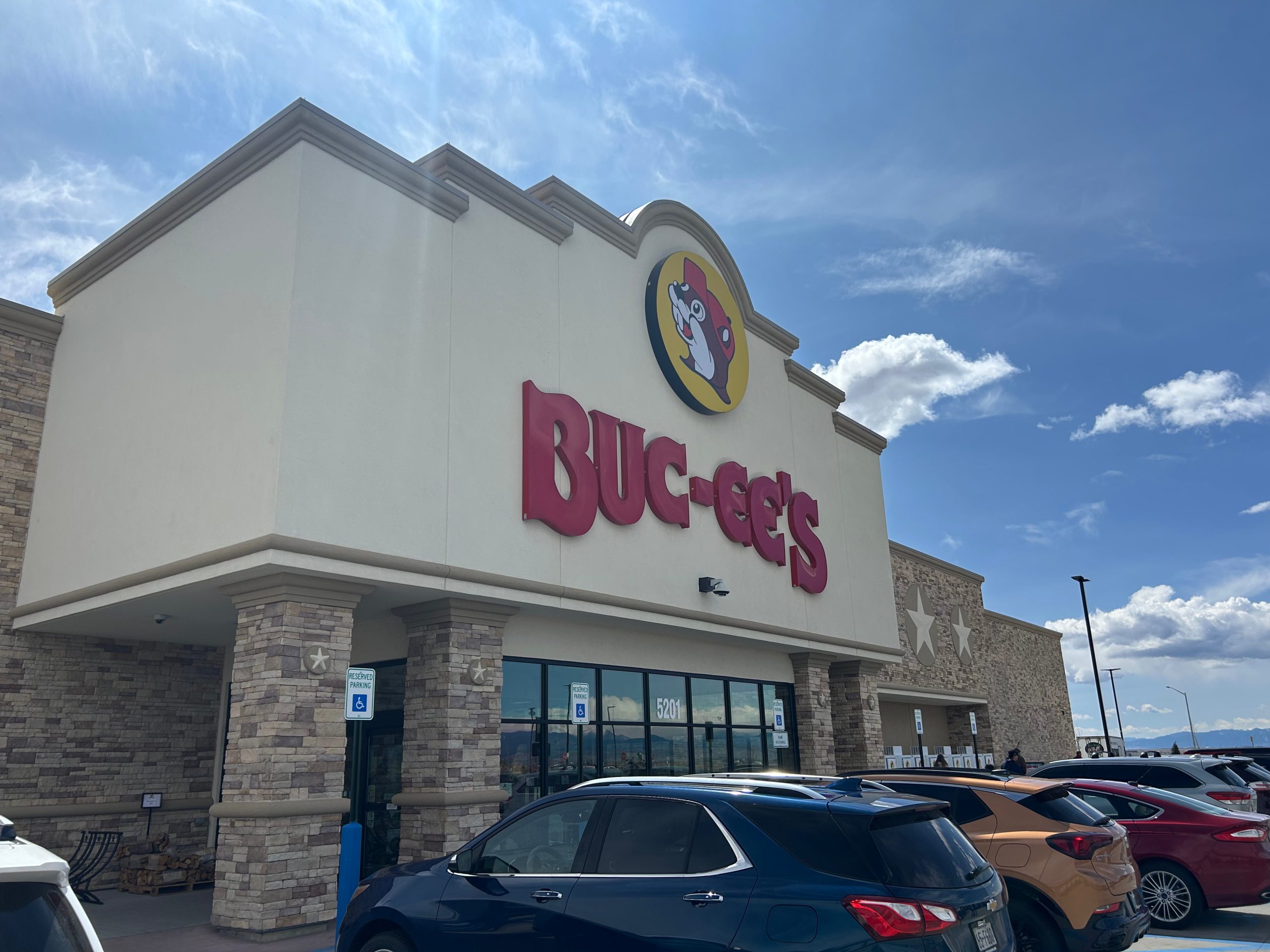
A family pulls off Interstate 25 outside Johnstown, Colorado, drawn by a sign advertising gas a dime cheaper than the station across the highway. They expect a four-minute stop. They leave 35 minutes later having spent more on jerky, a cedar-scented candle, and a beaver-branded onesie than they did on fuel. This is not an accident of impulse retail. It is the entire business model of Buc-ee's, Ltd., a privately held travel-center chain out of Lake Jackson, Texas, that has quietly built what may be the highest revenue-per-location operation in American retail by doing the opposite of what every other gas station does: treating fuel as bait and everything inside the building as the business.
A $250,000 loan and a beaver named after toothpaste
The chain traces back to 1982, when Arch "Beaver" Aplin III, a Texas A&M construction science graduate, opened a 3,000-square-foot gas station in Clute, Texas, a small town next to Lake Jackson in Brazoria County. Aplin's nickname came from his mother, who thought he resembled the grinning beaver mascot on a tube of Ipana toothpaste. He financed the store with a $250,000 loan from a Lake Jackson bank president he had befriended, and he ran it on two non-negotiable rules: sell cheap ice and keep the bathrooms clean. Three years later he partnered with Don Wasek, a local businessman whose father had distributed Lone Star beer and who brought deep knowledge of supply chains and retail logistics. The two split responsibilities, Aplin handling marketing, construction, and site selection while Wasek ran operations, and for their first three years they shared a single desk. They remain fifty-fifty co-owners of the still-private company today, having financed every phase of growth with bank debt rather than give up equity to outside investors.
The transformation from gas station to cultural phenomenon happened in 2003, when Buc-ee's opened its first true travel center in Luling, Texas, on Interstate 10 between Houston and San Antonio. At roughly 10,000 square feet it was modest by the chain's current standards, but it introduced the formula that would define the brand: barbecue sandwiches, branded T-shirts, a strict ban on eighteen-wheelers, and Beaver Nuggets, the caramel-coated corn puffs that would become the chain's signature product. Revenue figures disclosed in court filings and reported by Texas Monthly show the trajectory: $63 million in 2001, $202 million by 2006, and $959 million by 2015. The 2012 opening of a 68,000-square-foot mega-location in New Braunfels, with 120 fuel pumps and 83 toilets, briefly held the title of world's largest convenience store and proved that the destination model could scale.
The inversion: two-thirds of revenue from inside the building
Every other major fuel retailer in the United States runs on the same arithmetic: gasoline accounts for roughly 60 to 67 percent of total convenience store revenue, while in-store merchandise is the higher-margin afterthought that pads the bottom line. Buc-ee's founder Arch Aplin has stated that his company's ratio runs in the opposite direction, with roughly two-thirds of revenue coming from food, snacks, and merchandise and only one-third from fuel. The mechanism is deliberate. Buc-ee's prices gasoline 10 to 30 cents per gallon below surrounding stations, occasionally below wholesale cost. When the chain opened its first Alabama location in Baldwin County in 2019, it priced regular gas at $1.79 per gallon against a wholesale cost of roughly $1.90, a move that drew a competitor lawsuit under the state's Motor Fuel Marketing Act.
The cheap gas does its job. The Johnstown, Colorado, location draws an estimated 8,000 cars per day, and Johnstown's mayor has put monthly visits at nearly 85,000, with peak hours exceeding 800 customers an hour. The conversion happens once the cars are parked. The average convenience store visit nationally lasts three minutes and thirty-three seconds; Jeff Lenard of the National Association of Convenience Stores has said he has never heard of anyone spending less than ten minutes inside a Buc-ee's, and anecdotal dwell times of thirty minutes or more are common. With stores averaging 74,000 square feet against a national convenience store average of 3,520 square feet, and with 120 fueling positions compared to 8 to 16 at a typical station, Buc-ee's has built physical space that functions less like a quick stop and more like a destination retailer that happens to also sell gas.
The merchandise strategy borrows more from Trader Joe's than from 7-Eleven. A large share of what Buc-ee's sells is private label, carrying beaver branding on everything from a dozen-plus varieties of jerky and homemade fudge to $1,400 gas grills, camping gear, pajamas, and seasonal nutcrackers. Beaver Nuggets, the puffed-corn snack glazed in brown sugar caramel, is made exclusively for Buc-ee's and sold nowhere else, which has spawned a third-party resale market where bags that cost five or six dollars in store change hands online for ten to eighteen dollars. Private labeling captures both manufacturer and retail margin at once, and industry analysis puts Buc-ee's merchandise gross margins at roughly 40 percent, well above the 31 to 37 percent typical for in-store convenience retail.
The numbers that separate Buc-ee's from everyone else in the industry
The scale of the inversion becomes clear next to its competitors. Pilot Flying J operates more than 900 locations and generates an estimated $46.9 billion in revenue; Casey's General Stores runs roughly 2,900 stores averaging $5.4 million each. The national convenience store average sits at approximately $5.5 million per location. Buc-ee's, with only 54-plus locations, is estimated to generate $3 to 5 billion in total annual revenue, which works out to roughly $55 to 93 million per store, a gap of 10 to 20 times the industry norm. Some estimates from inside the industry put the figure even higher: one breakdown from Management Consulted pegged per-store revenue at $50 to 100 million against an estimated $200 million in company-wide annual operating income.
That per-store revenue is generated on real estate Buc-ee's owns outright. The chain buys land rather than leasing it, typically acquiring 25 to 36 acres per site at prices between $6.5 million and $11.5 million depending on the market, and each new store costs $60 to 95 million to build once land, construction, and infrastructure are included. The Kansas City, Kansas, location that broke ground in October 2025 carried a total project cost of $94.8 million. Across the more than 17 sites currently in the pipeline, Buc-ee's is committing an estimated $1 to 1.5 billion in development spending, all of it self-financed by a company that has never taken outside equity and has no franchise structure to share the capital burden.
From Texas-only to 11 states in seven years
For its first 37 years, Buc-ee's operated exclusively within Texas. That changed in January 2019, when the company opened its first out-of-state location in Robertsdale, Alabama. By mid-2025, the chain had expanded into 11 states: Texas, Alabama, Florida, Georgia, Kentucky, South Carolina, Tennessee, Missouri, Colorado, Mississippi, and Virginia. The pace has accelerated each year since: four stores opened in 2024, four more in 2025, and five to seven are projected for 2026, with the confirmed pipeline including Goodyear, Arizona, in June 2026; Huber Heights, Ohio, in April 2026; Benton, Arkansas, in September 2026; and further sites planned in Kansas, Louisiana, North Carolina, and Wisconsin through 2027. Early-stage planning extends to Nebraska, Utah, Indiana, and Idaho, with the company's own targets suggesting it could operate in roughly 20 states by 2028.
The expansion follows interstate corridors rather than population density: I-10 east through the Gulf Coast, I-95 north along the Atlantic seaboard, I-75 and I-65 through the Southeast, I-25 and I-70 into Colorado and the Mountain West, and I-40 heading west. Local governments have learned to court the chain aggressively. Harrison County, Mississippi, approved a $25 million tax increment financing package to land its location; Loxley, Alabama, granted a 20-year deal letting Buc-ee's retain 37.5 percent of sales tax revenue; San Marcos, Texas, offered a 50 percent sales tax rebate over 15 years worth $3.2 million. CEO Arch Aplin has been candid about why the company asks: "Normally, it takes help because they are so expensive to build."
Johnstown said yes. Palmer Lake said no, then the company came back anyway
Colorado offers the clearest before-and-after of how this model lands in a community. The chain's first Colorado store opened in Johnstown in March 2024, a 74,000-square-foot site with 116 fuel pumps that the town's economic development office credited with a three-pronged impact: community attention, fiscal revenue, and jobs. One year after opening, Johnstown's mayor reported the store had generated more than $1 million in sales tax revenue, employed roughly 250 to 275 people at an average starting wage of $15 an hour, and drawn customers from more than 50 miles away, with 55 percent of shoppers driving upward of 51 miles to get there. The mayor called Buc-ee's "a great fit" and pointed to $250,000 in community contributions toward a local interchange project.
Eighteen months later, Buc-ee's tried to replicate that success 70 miles south in Palmer Lake, a town of roughly 2,575 people between Colorado Springs and Denver, and the result was the opposite of Johnstown's experience. Developers proposed annexing 41.2 acres at the corner of I-25 and County Line Road using a "flagpole annexation," a legal maneuver connecting the parcel to the town through a narrow strip of land roughly two miles away. A fiscal impact study commissioned by the town and prepared by Economic & Planning Systems projected $31.8 million in taxable retail sales in the store's first full year of 2027, generating $955,087 in sales tax revenue, a 30.7 percent jump in the town's total annual sales tax collections. The same study estimated the town would need to spend $5.9 million on one-time infrastructure and see general fund expenditures rise 23.7 percent, from $4.23 million to $5.23 million, largely to cover new police officers, fire department staffing, and a dedicated well to supply the development's water.
The water issue, layered onto concerns about traffic, light pollution, and the site's position beside one of the Front Range's largest conservation corridors, became the flashpoint. Cable television magnate John Malone, whose family owns land directly north of the proposed site, funded public ad campaigns against the project alongside Douglas County landowner Ian Griffis, and the development drew formal opposition from Colorado Governor Jared Polis and both of the state's US senators, who described the area as "one of the most consequential conservation corridors in the United States." A recall election in September 2025 removed two town trustees, Shana Ball and Kevin Dreher, who had been seen as favorable to the project, and the same ballot introduced a new ordinance requiring a townwide vote on all future annexations, which passed with nearly 70 percent support. The town's board lost its attorney to resignation in December 2025 and saw several other officials resign over the course of the fight. In February 2026, with the new board still working out how to hold the required election, Buc-ee's withdrew its annexation application. Stan Beard, the company's director of real estate and development, said the decision reflected "governance challenges" in Palmer Lake rather than a loss of interest in the area, adding that the company would "provide additional comment when and if circumstances change."
The story did not end there. In April 2026, a corporate entity called Buc-ee's EPCO LLC, formed in January and linked to the company's Lake Jackson headquarters, paid more than $10 million for roughly 53 acres near the same I-25 and County Line Road intersection, structured through a boundary line adjustment involving the same parties behind the original withdrawn application. The purchase grants water rights allowing the company to pump up to 11 million gallons annually from local aquifers. Kat Gayle, chief legal counsel for the advocacy group Integrity Matters that led the opposition, read the move as confirmation that Buc-ee's never actually left: "I really feel at this point, Buc-ee's is insisting on this site because they didn't want to lose." Whether the application resurfaces under a new name and a different governance climate in El Paso County, rather than inside Palmer Lake's town limits, remains the open question hanging over the Tri-Lakes region.
The competitors a Buc-ee's leaves behind
The community fights over annexation and water are fights about whether Buc-ee's gets to come in. A separate and more measurable pattern shows what happens to everyone else once it does. A 2024 study found that 63 percent of existing convenience stores within a quarter mile of a new Buc-ee's location close within a year of its opening, a level of localized disruption rarely documented this specifically in retail. Industry coverage of the chain's Florida expansion noted that Wawa, 7-Eleven, and independent gas stations were bracing for the same pattern as Buc-ee's pushed into new metro markets, betting that spotless restrooms and a snack wall deeper than most specialty retailers would draw away the customer base smaller operators depend on.
The broader convenience store industry that Buc-ee's is reshaping generated $837.4 billion in total US sales in 2024, according to NACS data, across roughly 152,000 locations, with in-store sales hitting a record $335.5 billion for a 22nd consecutive record year while fuel revenue actually declined 5.7 percent as gas prices fell. Foodservice now makes up 28.7 percent of in-store sales, up from just 11.9 percent in 2004, and 72 percent of consumers now consider convenience stores a viable alternative to quick-service restaurants, up from 56 percent the year before. Buc-ee's did not wait for this shift; it built its entire model around it two decades early, while the rest of the industry consolidated around acquisition instead of food-and-merchandise reinvention. Alimentation Couche-Tard's $1.57 billion purchase of GetGo's 270 stores and Casey's $1.15 billion acquisition of CEFCO's 198 locations are typical of an industry still dominated by fragmentation, where 63 percent of US convenience stores remain owned by operators with 10 or fewer locations. Buc-ee's has taken none of that path, growing only through new construction on land it owns, never through acquisition.
The cost of staying private and the limits of the model
The wage structure underlying all of this is genuinely unusual for the sector. Entry-level Buc-ee's employees earn $16 to 21 an hour, roughly 40 to 50 percent above the typical convenience store associate wage of $14.33, and general managers can earn up to $225,000 annually with three weeks of paid vacation, a 401(k) with a 6 percent employer match, and health insurance. Yet Glassdoor reviews describe grueling conditions inside the stores that generate those headline wages: only 27 percent of employees say they would recommend working there, work-life balance is rated 2.0 out of 5, cell phone use results in immediate termination even during breaks, and one Houston location reportedly runs more than 200 surveillance cameras. A Texas appellate court case, Rieves v. Buc-ee's, struck down a compensation clause that required employees who left before five years, or without six months' notice, to repay tens of thousands of dollars in "additional compensation," ruling the provision an unenforceable restraint of trade.
Each new Buc-ee's location is a $60 to 95 million wager on a single piece of land, financed entirely by a company with no public shareholders, no franchise fees, and no outside capital to share the downside. That structure is precisely what let two men with a $250,000 loan and a shared desk turn cheap ice and clean bathrooms into a multibillion-dollar chain, and it is the same structure now being tested against conservation corridors, water tables, and town governments that did not ask to be reshaped by a beaver. The industry has spent two decades discovering, store closure by store closure, what Aplin and Wasek understood when gas was still cheap enough that nobody had thought to give it away: the road trip was never really about the gallon. It was about what people would buy once you got them to stop the car.