The Salt-Powered Surge: Inside Emerald Battery Labs' $1.1M Quest to Replace Lithium with Common Table Salt
A Seattle startup is betting that sodium - the element in table salt - can break lithium's grip on grid-scale energy storage.
By Carry and Conquer Publications
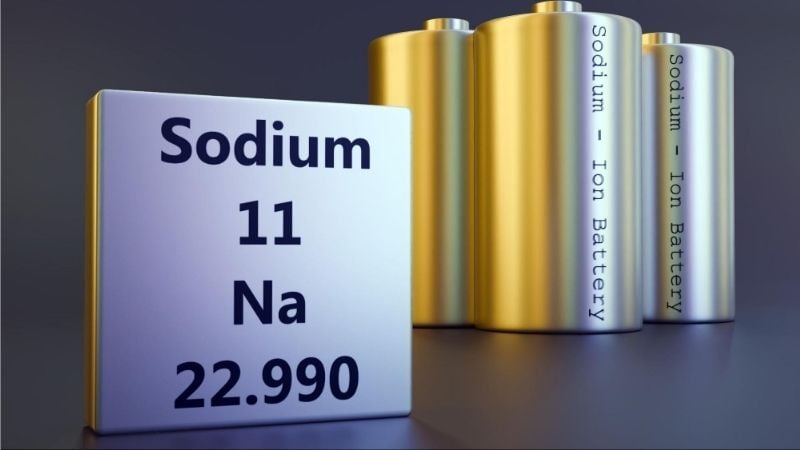
A three-person startup working out of a University of Washington lab is building a case that the future of energy storage smells a lot like the ocean.
In January 2026, Emerald Battery Labs - a Seattle-based startup - quietly closed a pre-seed funding round of just under $1.1 million to advance its sodium-ion battery technology. The capital came from E8, a Seattle-based cleantech angel network that has committed more than $60 million to early-stage clean energy ventures, direct E8 member investments, and an undisclosed family venture office. The raise is modest by venture standards. But the bet Emerald is making - that sodium, the element in common table salt, can displace lithium as the defining material of grid-scale energy storage - is anything but small.
The Problem with Lithium
The lithium-ion battery has powered the modern world for three decades. It runs smartphones, laptops, and electric vehicles. It stores solar and wind energy. It underpins the data centers feeding the AI boom. But lithium itself is a geopolitical liability. Concentrated in a handful of countries - primarily Chile, Argentina, and Australia - and refined overwhelmingly in China, which controls around 61% of global lithium refining capacity, lithium supply chains are brittle, expensive, and exposed. When lithium carbonate prices spiked in 2022, sodium-ion batteries surged onto the agenda of every major battery researcher and investor on the planet. Even as lithium prices have since fallen more than 70% from their peaks, the structural case for an alternative remains intact: sodium is roughly 14,000 times more abundant than lithium in the Earth's crust, costs a fraction of the price to source, and exists in plentiful domestic supply across North America and Europe.
The U.S. alone, according to Emerald, produces enough sodium-ion feedstock to meet over 10,000 GWh of battery demand annually - enough, in theory, to fully electrify the nation's grid and automotive fleet. That figure is less a projection than a statement of what the country is already sitting on. The inputs for sodium-ion batteries - soda ash, caustic soda, biomass-derived hard carbon - are not exotic. They are industrial commodities already produced at scale on American soil.
The challenge has never been sodium's availability. It has been performance.
Two Platforms, One Mission
Emerald Battery Labs is not trying to build a battery. It is trying to build better anode materials - the component that sits at the core of why sodium-ion has historically underperformed lithium-ion in energy density.
The company is pursuing two parallel technology platforms. The first focuses on developing proprietary anode materials that push sodium-ion energy density higher while maintaining stability across cold and high-temperature environments - a performance requirement in defense and industrial mobility applications where batteries must operate in conditions that would cripple conventional chemistries. The second targets a cost ceiling: 200 watt-hours per kilogram at under $30 per kilowatt-hour. That $30/kWh figure is significant. It represents less than half the cost of the cheapest lithium-iron phosphate cells currently available from Chinese manufacturers, which are themselves the lowest-cost batteries in the world.
If Emerald can reach that threshold, it would not merely compete with lithium. It would undercut it by a margin wide enough to redefine procurement decisions across grid storage, industrial microgrids, data centers, commercial vessels, and electric vehicle segments where energy density is less critical than total cost of ownership.
The company is operating out of UW's CoMotion Labs in Fluke Hall and using the university's Clean Energy Testbeds for fabrication work - a deliberate choice to remain asset-light while scaling material science without the capital burden of building manufacturing infrastructure from scratch.
The Team Behind the Chemistry
The founding team reads like a who's-who of the battery materials industry's pre-commercial trenches.
Dr. Kjell Schroder, CEO and CTO, holds a PhD in Materials Science and Engineering from the University of Texas at Austin, with research focused on silicon anodes. Before Emerald, Schroder spent years working in engineering, R&D, and testing roles at Form Energy - the Boston-based startup developing 100-hour iron-air grid storage, which recently announced plans for a pre-IPO raise of $300 to $500 million - and at Ionic and EnPower. His academic work on anode materials directly informs Emerald's core technology.
David Bell, co-founder and Chief Product Officer, brings a different dimension to the team. Bell led product management and customer programs at Group14, a company manufacturing next-generation silicon-anode materials for lithium-ion batteries, and previously worked at Ionic Materials. He also has a Wall Street background as a battery analyst - a combination that gives Emerald unusual fluency in translating technical progress into market narratives that investors and industrial partners can act on. "As battery chemistries evolve, as technology evolves, people are going to find new ways to use energy storage technology," Bell told GeekWire in January 2026. His immediate priority: solving the energy density gap. "We want to solve that energy density problem," he said.
Aric Stocks, COO, brings an operations and business development lens. He led a global team of business development managers at Group14 and was previously a senior product manager at T-Mobile. He has overseen hundreds of millions of dollars in anode materials contracts - the kind of experience that matters when Emerald transitions from lab prototypes to partner agreements with existing battery manufacturers.
Rounding out the team is technical advisor Dr. Marca Doeff, an affiliate of Lawrence Berkeley National Laboratory who has been publishing pioneering research in sodium-ion anode materials since the early 1990s. Doeff's involvement connects Emerald to the deep institutional knowledge of sodium-ion chemistry that predates the current commercial wave by three decades.
What the Market Is Watching
Sodium-ion batteries were selected by a Sightline Climate survey of investors and entrepreneurs in January 2026 as one of the top breakthrough technologies for the year - coming in just behind the use of AI for clean-tech materials discovery. MIT Technology Review named sodium-ion batteries among its 10 Breakthrough Technologies for 2026. The macro tailwinds are real. The global battery market is worth more than $350 billion and growing at roughly 10% annually. Grid-scale utility installations are expanding even faster - at over 20% per year - as renewable intermittency pushes operators toward storage solutions that can be deployed cheaply and safely at scale.
China has taken the early lead. CATL launched a sodium-ion product line called Naxtra in 2025 and claims to have begun manufacturing it at scale. BYD is building its own production facility. Chinese makers have the industrial base and the cost structure to push hard and fast. But China's dominance also points to exactly the geopolitical gap that Emerald and its investors are betting can be filled domestically.
For grid storage, the calculus is different than for consumer electronics or EVs. Weight and size matter less. What matters is cost per kilowatt-hour over the life of the asset, safety profile, and supply chain reliability. On all three of those vectors, sodium-ion has a structural edge - not yet fully realized, but structurally available to any team that can solve the anode.
The cautionary tale is Natron Energy. The California-based sodium-ion startup shut down in September 2025 after opening the first commercial-scale sodium-ion factory in the U.S. just months earlier. Despite $25 million in booked orders, Natron could not get UL certification quickly enough to convert those orders to revenue. Investors pulled back. The company went to Sherwood Partners. Its closure rattled observers - but analysts who followed the story closely noted that Natron's technology, based on Prussian blue electrodes, operated more like a supercapacitor than a true grid-scale battery. The lesson, as one executive in the sodium-ion space told Heatmap News, is not that the chemistry is broken. It is that the path to market requires matching technology to the right application and getting certification right before operations scale.
Emerald is taking that lesson seriously. By remaining in the lab and targeting prototypes for defense and transportation partners - sectors with defined procurement channels and high tolerance for premium pricing during early commercialization - the company is threading a path that avoids Natron's particular bottleneck.
The Hard Part
The academic literature is clear that sodium-ion faces real obstacles. A January 2025 Nature Energy study examining over 6,000 technology scenarios concluded that achieving price competitiveness with low-cost lithium-ion variants in the near term is challenging, and that the most impactful lever available is increasing sodium-ion energy densities to reduce materials intensity. That is precisely what Emerald is focused on. But the same research found multiple sodium-ion pathways that could reach cost-competitiveness in the 2030s under the right conditions - and separately, that the technology's near-cost-parity position today becomes more advantageous as production scales and supply chains localize.
The headwinds are political as well as technical. Battery companies are navigating a changed landscape in Washington, D.C., where many clean energy subsidies and supports introduced under the Inflation Reduction Act are being unwound by the Trump administration. For an early-stage materials company hoping to partner with domestic battery manufacturers, the erosion of clean energy tax incentives raises the cost of capital for the downstream partners it needs to validate its technology.
What Emerald has going for it is the thing no policy change can easily erase: the fundamental economics of sodium relative to lithium. A commodity that is 14,000 times more abundant, manufactured on existing equipment with minor modifications, and sourced from domestic feedstocks that require no deep-sea or open-pit mining - that case does not depend on subsidy. It depends on execution.
Bell's framing captures the strategic bet succinctly: the company is heads down, building toward a minimum viable product it can ship to paying customers, running prototypes for defense and transportation applications, and treating the $1.1 million not as a destination but as the runway to prove out what the anode can do. If it can do what Emerald's founders believe it can, the battery industry's long dependence on an element dug out of desert salt flats in Chile may look, in retrospect, like an expensive habit that was always waiting to be broken.