The Robot With Water Instead of Wires in Its Muscles
Clone Robotics has thrown out the electric motor for a water-driven synthetic muscle that sweats to cool itself, betting a luxury android strategy against the industrial playbook of Tesla and Figure.
By Carry and Conquer Publications
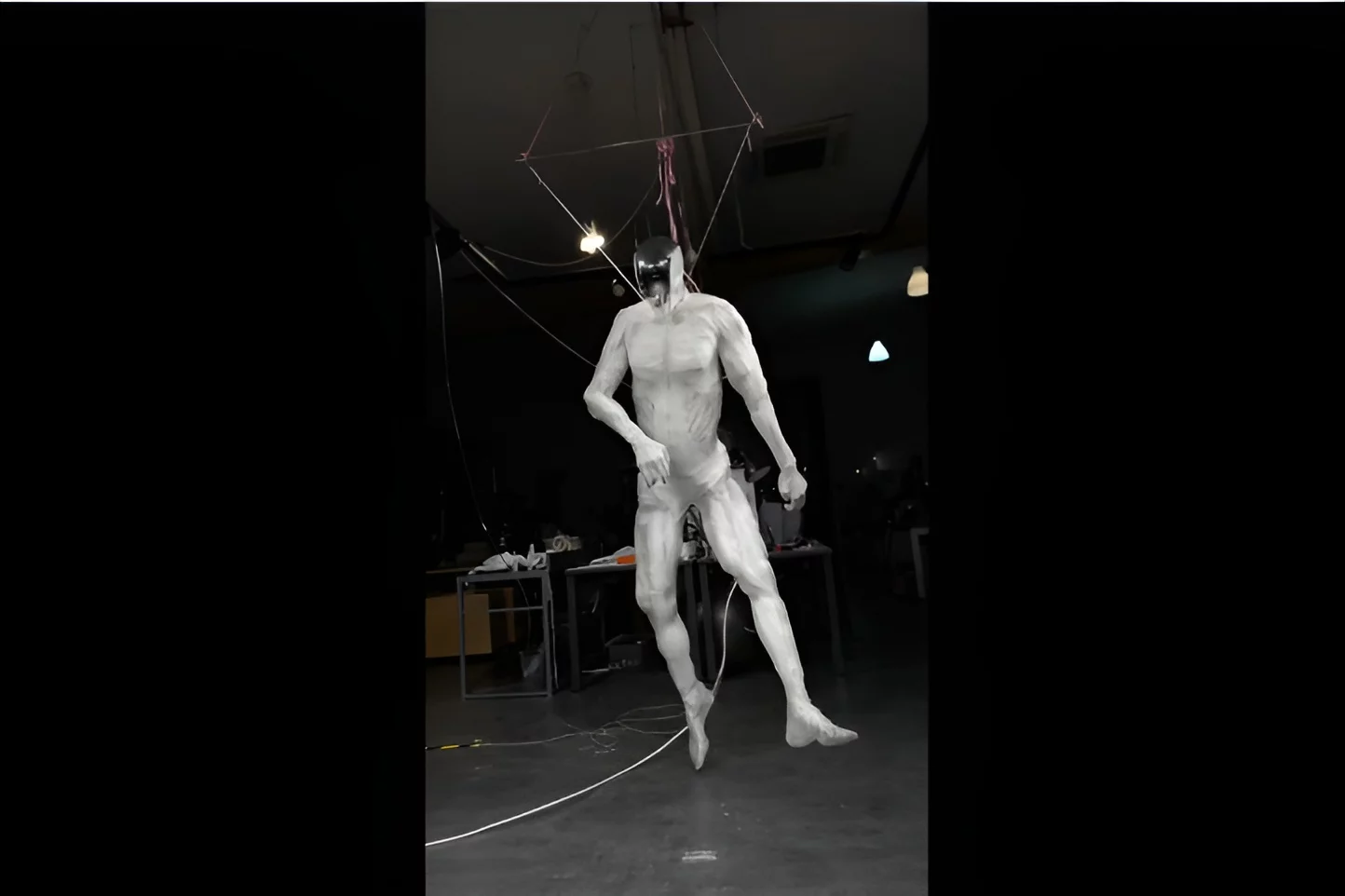
Inside a workshop that looks more like a biology lab than a robotics shop, a faceless android hangs from the ceiling, its translucent limbs twitching and clenching in a way that reads less like machinery and more like a body waking up. There are no visible motors, no gearboxes, no whirring servos. What moves this robot is water, pumped through a thousand synthetic fibers wired into a polymer skeleton built to the exact dimensions of human bone. The company behind it, Clone Robotics, calls this thing Protoclone, and its stated goal is not incremental improvement on the humanoid robot but a wholesale rejection of how one is built. While Tesla, Figure, and Boston Dynamics chase rigid actuators, harmonic drives, and factory-floor throughput, Clone has spent five years trying to answer a stranger question: what happens if you copy the human body instead of engineering around it.
A Muscle Built to Replace the Motor
Clone Robotics was founded in November 2021 by Dhanush Radhakrishnan and Polish robotics engineer Lukasz Kozlik, though the underlying idea traces back further. Kozlik had been developing McKibben-style artificial muscles since 2014, refining pneumatic mesh-and-bladder actuators that contract when pressurized, a concept the two productized together after connecting on YouTube in 2020. The company's core invention, a proprietary actuator it calls Myofiber, throws out the electric motor entirely in favor of a synthetic musculotendon fiber that contracts under fluid pressure rather than current through copper windings. According to Clone, a single Myofiber weighing three grams generates a kilogram of contraction force and shortens more than 30% of its length in under 50 milliseconds, a speed the company says exceeds human skeletal muscle fiber response time. Clone has raised roughly $7.1 million to date, starting with $500,000 in angel funding and growing with backing that includes Y Combinator co-founder Trevor Blackwell, a modest capital base compared to the hundreds of millions raised by rivals like Figure AI.
The company's first commercial product was not a robot at all but a hand: the Clone Hand, a 24-degree-of-freedom appendage built from molded bones, artificial ligaments, and 37 McKibben muscles, priced at roughly $2,800 and sold as a standalone unit years before the full android existed. That decision to start with the single hardest mechanical problem in human anatomy, rather than build a simplified torso first, shaped everything that followed. Clone's engineers spent 18 months solving the hand before scaling the same tendon-and-bone architecture up to a full body over the following year.
Protoclone and the Alpha Edition
The company's flagship platform, Protoclone V1, unveiled in prototype form in February 2025 and shown in fuller motion that April, wires 1,000 Myofibers into a 3D-printed polymer skeleton modeled on all 206 bones of the human body, with minor fusions, delivering more than 200 degrees of freedom. Because the actuators generate heat under sustained load, much the way biological muscle does, the robot circulates water through microchannels machined into its frame and effectively sweats to cool itself, a detail that has become the single most-cited fact about the machine in the tech press. A 500-watt electric pump, which Clone describes as roughly the size of a human heart, drives the hydraulic fluid through the system at a 40-liter-per-minute flow rate.
Clone is now taking pre-orders for a limited "Alpha" edition, a run of exactly 279 units built entirely around the Myofiber platform. The number has drawn its own speculation: robotics watchers have noted it echoes a plot detail from the HBO series Westworld, in which a central character turns out to be the 279th attempt to recreate a consciousness in an artificial body, though Clone has not confirmed the reference. Pricing remains officially undisclosed, but Radhakrishnan has compared the cost to a limited-edition supercar, and at least one industry pricing tracker has listed an inquiry price near $100,000. Clone says the finished android will ship with pre-installed skills including memorizing a home's layout and kitchen inventory, making sandwiches, pouring drinks, folding laundry, vacuuming, and holding conversation, trained through a platform the company calls Telekinesis. As of early 2026, no fully integrated Alpha unit has yet been publicly demonstrated performing these tasks end to end.
A Luxury Bet Against the Factory-First Consensus
The rest of the humanoid robotics field has converged on a different answer to the actuator problem. Tesla's Optimus, Figure's 02 and 03 platforms, and Apptronik's Apollo all use electric motors paired with harmonic drives or planetary roller screws, prioritizing rigid, thermally predictable, easily simulated actuators that suit repetitive factory work over 8-plus-hour shifts. Boston Dynamics reached the same conclusion the hard way: its original Atlas ran on hydraulics for over a decade before the company switched its next-generation platform to electric actuation in 2024, citing efficiency and control advantages. Electric actuators run at roughly 75 to 80% efficiency against 40 to 55% for hydraulics, and industry cost models put actuators and motion systems at nearly half of a humanoid's total bill of materials, which is precisely why Tesla has moved to design its own actuators in-house and why component suppliers from Schaeffler to Hiwin to Timken now sit at the center of the capital cycle funding this industry.
Clone has deliberately positioned itself outside that consensus on two fronts at once. Mechanically, it has bet that biomimicry, water-driven muscle fibers wired to an anatomically accurate skeleton, will eventually outperform rigid electric actuation on dexterity and compliance, even if it currently trails on thermal endurance and duty-cycle reliability. Commercially, it has skipped the industrial pilot entirely, marketing Protoclone and the Alpha edition as a consumer luxury good for the home rather than a warehouse or automotive-line tool, a direct contrast to the BMW-Figure and Hyundai-Boston Dynamics pilot deployments that define the rest of the sector. Radhakrishnan has argued that Clone's hand, in particular, already clears a bar the rest of the industry is still chasing. In a 2025 interview with the European deep tech group 22Astronauts, he said the company had "solved, frankly, hardware problems that I'd argue everyone else in the industry is still trying to desperately figure out how to solve today that we solved within the first 18 months," naming 1X and Tesla specifically as competitors still behind on hand dexterity.
Why the Wire Matters More Than the Android
Skeptics inside the industry point out that a striking demo video is not the same as a shipped product. Clone has not yet shown a fully integrated Alpha unit executing its promised chore list outside of controlled workshop footage, and hydraulic systems bring their own liabilities: pumps, reservoirs, hoses, and seals are all additional failure points, and fluid leaks near electronics remain a persistent engineering risk that electric-motor competitors don't share. Maintenance economics also cut against exotic actuation. Industry cost analyses put current humanoid maintenance intervals at 200 to 500 operating hours against 50,000-plus for industrial robotic arms, a gap that hydraulic complexity is more likely to widen than close.
But the reason Clone's approach draws attention beyond robotics enthusiasts is that actuator technology, not AI software, is the acknowledged bottleneck in the humanoid capital cycle. Investment analysts mapping the sector in 2026 describe the real alpha as sitting in the component cascade behind the robot makers, not in the maker race itself, with fewer than ten global suppliers capable of producing the precision actuators the entire industry needs at scale. Clone's wager is that the industry's convergence on rigid electric actuation is a local optimum, not the final answer, and that a wire-replacing muscle capable of matching human contraction speed and force density could eventually outcompete the harmonic drives and roller screws that dominate every other humanoid on the market today. Whether 279 androids sweating water in wealthy customers' living rooms proves that thesis, or simply becomes an expensive curiosity, is now a bet the market is pricing in real time.