The Regenerative Sea: Why Residential Cruise Startup Storylines Is Installing Full-Scale Medical Labs and Stem Cell Clinics Aboard the MV Narrative
Storylines is betting that the wealthiest travelers do not want to choose between seeing the world and extending their lives.
By Carry and Conquer Publications
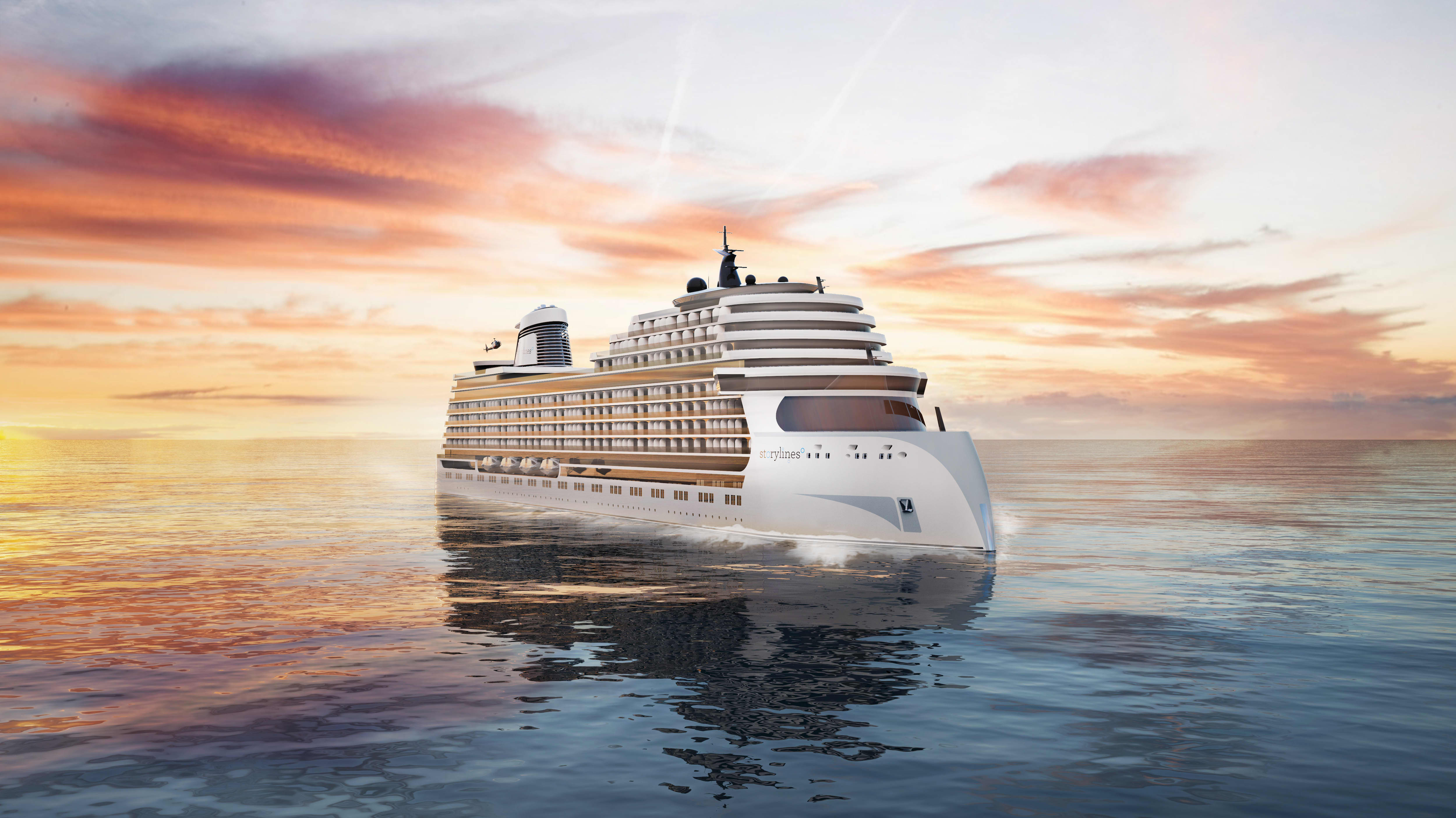
The MV Narrative has always promised more than a floating address. But Storylines, the Miami-based startup developing the residential cruise ship, moved the concept into materially different territory in late 2025 when it announced a formal partnership with Giostar - the Global Institute of Stem Cell Therapy and Research - to bring advanced regenerative medicine aboard the vessel. For a ship still under construction at the Brodosplit Shipyard in Split, Croatia, with a planned maiden voyage now targeting 2027 or 2028, the announcement was a significant signal: Storylines is not simply building a luxury home at sea. It is building what its own chief health officer, Dr. Brian Martin, calls a "floating longevity hub" - a place where residents might actually emerge healthier than when they arrived.
A Ship Designed Around Health, Not Just Comfort
The MV Narrative is a 753-foot vessel with 530 private residences, priced from roughly $1 million to more than $10 million for a lifetime lease. Unlike a conventional cruise ship where medical staff exists primarily to manage emergencies, Storylines has constructed its entire onboard philosophy around what it calls the "Blue Zone" concept - modeled after the communities in Okinawa, Sardinia, Nicoya, and Ikaria where people live measurably longer, healthier lives. The idea is not to replicate the serenity of those places but to engineer their outcomes using technology.
The ship will feature a 10,000-square-foot wellness center encompassing a gym, yoga rooms, a lap pool, relaxation pods, steam rooms, infrared saunas, and hydrotherapy facilities. Alongside the standard amenities, the onboard medical clinic will be staffed with doctors, nurses, pharmacists, physiotherapists, and mental health professionals. There is also a hospital-grade emergency facility and a helicopter landing pad for medical evacuations. What distinguishes this from even the most medically equipped luxury ship is the layer of proactive, longevity-focused care that sits above emergency medicine: a compounding pharmacy for individualized medications and supplements, wearable technology programs tracking residents' real-time health metrics including oxygen levels, blood pressure, and sleep quality, and full DNA sequencing to guide personalized health strategies.
Dr. Martin, a naturopathic physician who holds a residence aboard the ship himself, has described the ambition plainly: this is probably the only ship where residents will go on and actually get healthier. His team plans to conduct ongoing research, tracking health outcomes across the resident community - a living longitudinal study aboard a floating neighborhood.
What the Giostar Partnership Adds
The formal partnership with Giostar - headquartered in San Diego, California, and founded by Dr. Anand Srivastava with institutional ties to UC San Diego, UC Irvine, the Salk Research Institute, and the Sanford-Burnham Institute - moves the MV Narrative from advanced wellness into clinical regenerative medicine. Giostar has been operational since 2008, operates clinics in the United States, India, and Mexico, and secured US FDA approval in 2020 to treat COVID-19 patients with stem cell protocols under the Compassionate Use Program.
The partnership will give MV Narrative residents access to Giostar's stem cell and immunotherapy treatments at preferred pricing, integrated into the ship's broader health infrastructure. Stem cell therapy, as practiced by Giostar, involves using the body's own cells or donor-derived cells to repair damaged tissue, slow degenerative processes, and address conditions ranging from musculoskeletal disorders and autoimmune disease to metabolic illness and aging-related decline. The ship will also offer plasma-rich platelet injections, chelation therapy to clear heavy metals, nutraceutical protocols, and a full spectrum of diagnostics including genetic testing and biomarker analysis.
The strategy is not purely onboard. Dr. Martin has articulated an intention to use each port of call as an extension of the ship's medical ecosystem - engaging local specialists, incorporating regional medical traditions, and offering residents access to treatment centers in the ports where the most advanced care happens to be geographically located. Stem cell therapy in Mexico, immunotherapy in Germany, regenerative protocols in Japan - the ship's constantly shifting geography becomes a clinical advantage rather than a logistical complication.
The Market Logic Behind the Strategy
There is a clear commercial rationale for what Storylines is building. The global wellness economy has undergone a structural shift, with wealthy consumers no longer treating health optimization as a supplement to their lifestyle but as the primary reason they spend money. According to industry data, wellness cruising has grown by 52% in recent years, and over 90% of luxury travelers now actively seek wellness programs when making travel decisions. Demand for longevity clinics - offering treatments like hyperbaric oxygen therapy, NAD+ infusions, and stem cell protocols - has surged 40% year-over-year as affluent consumers prioritize biological age over chronological age.
For Storylines, the health proposition solves a specific sales problem. Residential cruise ships have historically struggled to convert interest into deposits. The typical buyer is affluent, often retired or semi-retired, and weighed against the appeal of a life at sea is the rational concern: what happens when my health deteriorates? By embedding clinical-grade longevity medicine into the product itself, Storylines removes that objection. A $1 million residence aboard the MV Narrative is not merely real estate - it is, in the pitch, a healthcare strategy. The ship already has over half of its 530 residences reserved, and Storylines CEO Alister Punton has pointed to the health and community model as central to that conversion success.
The wellness positioning also differentiates MV Narrative in a competitive field. The only operating precedent for a residential ship, The World by ResidenSea, has been sailing since 2002 with a model centered on luxury and travel rather than health. Storylines has explicitly chosen not to compete on that axis alone.
The Skeptics Are Watching
The medical ambition is real, but it arrives in the context of a project that has tested the patience of its buyers. Storylines was founded in 2016 by Alister Punton and Shannon Lee, both previously from land-based real estate. The MV Narrative was originally promised for 2019, then revised to 2025, then 2026, and now 2027 - with the maiden circumnavigation potentially slipping to 2028. No steel has yet been cut for the vessel, and industry analysts have pointed to the scale of the financing challenge - roughly $900 million in total project cost - as a central uncertainty. One maritime consultant noted bluntly that "nobody gives out a loan for near a billion dollars to a guy who's never built a ship."
The Brodosplit shipyard in Croatia, which holds the construction contract, filed for technical bankruptcy in 2022 in the aftermath of Russian sanctions and has limited prior experience with LNG-powered vessels of this complexity. Storylines renewed the contract in March 2024 and established an on-site office at the shipyard in June 2024. Construction supervision leadership was appointed in July 2024, and Finnish firm Bluetech was awarded the extensive basic design contract in September 2024 - incremental progress, but progress. Some early buyers have backed out, reportedly because of concerns about whether they would live to see the launch. That irony - a longevity ship whose buyers are aging out of the wait - is not lost on critics.
What the Giostar partnership does, amid all of that skepticism, is demonstrate that Storylines is continuing to invest in the substance of what it promises, not just the marketing of it. Institutional medical partnerships require negotiation, legal framework, and operational planning - they do not get signed by companies that have quietly given up. Whether that is reassurance or theater depends on how generously you read the company's track record.
Regulatory Waters and Ethical Dimensions
Operating clinical-grade regenerative medicine in international waters introduces genuinely complex regulatory terrain. Stem cell therapies, even those offered by accredited organizations like Giostar, occupy a contested space in medical regulation. The US FDA classifies many stem cell products as biologics subject to approval requirements, while patients traveling to Mexico or other jurisdictions often seek treatments that remain unapproved in their home countries. Aboard a vessel in international waters, the regulatory framework shifts further - maritime medical law applies, and the specific oversight of procedures involving live cells, genetic materials, and experimental protocols becomes a question without settled answers.
Storylines has not publicly addressed these complexities in detail, and Giostar's existing infrastructure - with clinics in jurisdictions outside US FDA authority - provides a template for how such services have historically been delivered to wealthy international patients. The ethical dimension is also present: stem cell therapies, despite genuine scientific progress, remain an area where commercial promises sometimes outrun clinical evidence, and not all conditions for which the treatments are marketed have robust randomized controlled trial data behind them. For buyers investing millions in a lifestyle premise built on extended vitality, the credibility of those treatments is not a peripheral question.
What It Means If It Works
If the MV Narrative launches and delivers on its health proposition, the implications extend well beyond one ship. A proven model for floating longevity infrastructure - where wealthy residents pay premium prices for permanent access to regenerative medicine, global medical tourism, and real-time health monitoring - would represent a new asset class at the intersection of real estate, healthcare, and hospitality. Several other residential ship concepts have been announced, including Utopia Residences and Njord by Ocean Residences. None has replicated The World's longevity. A successful MV Narrative, with its health-first differentiation, could change the template for what residential maritime living is supposed to offer.
The convergence Storylines is pursuing - of blue zone philosophy, cutting-edge diagnostics, stem cell medicine, and global port access - is a coherent thesis about where wealthy consumers are heading. Health is the new luxury, and the MV Narrative is, in its most ambitious reading, an attempt to build the world's first institution designed around that premise. Whether Alister Punton and his team can actually put that institution in the water remains the question that has shadowed the project for seven years. The Giostar partnership suggests they are still trying.