The "Operating System" for AI Labs: How Mostafa ElSayed is Scaling Automata's Robotic Renaissance
Automata is moving beyond simple liquid handling to create a software-defined laboratory environment where robotics and AI manage the entire experimental lifecycle.
By Carry and Conquer Publications
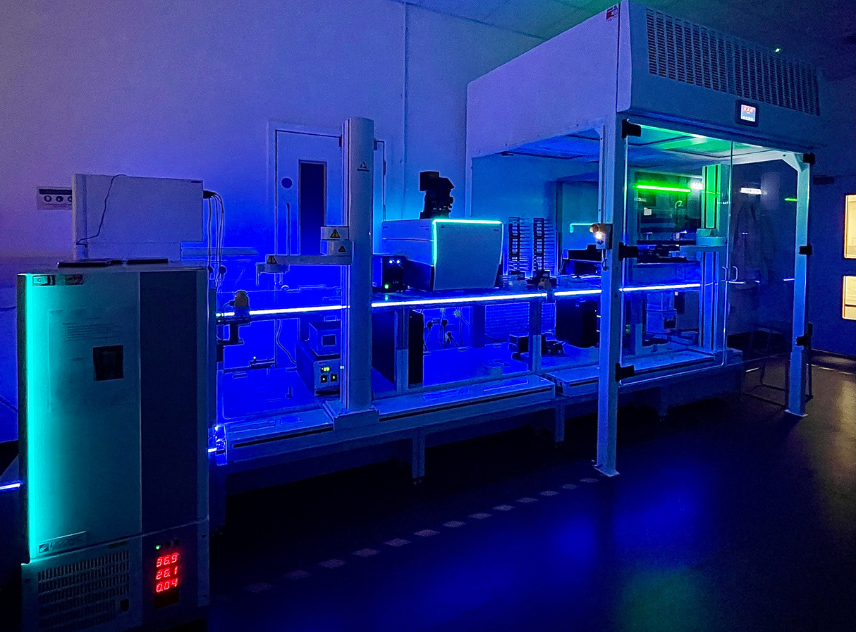
For most of its existence, the life sciences laboratory has been a fundamentally human place - a world of pipettes, benchtops, and researchers repeating the same manual steps thousands of times a day. Into this world, Mostafa ElSayed - an architect by training with no robotics background and no life sciences degree - has built one of the most quietly consequential automation companies in Europe. With a fresh $45 million Series C in hand, a strategic alliance with Danaher Corporation, and a partnership with Beckman Coulter Life Sciences announced on the same day in January 2026, Automata now stands at the center of a battle for what may be the most valuable piece of real estate in modern drug discovery: the software layer between artificial intelligence and the physical lab.
From Zaha Hadid to the Wet Lab
The origin story of Automata carries the particular texture of founders who stumbled into the right problem. ElSayed completed his degree in architecture at the American University of Sharjah before earning a Masters in Architecture and Urbanism, going on to join the world-renowned Zaha Hadid Architects, where he eventually served as Lead Designer in the Computation and Design Group. It was there he met co-founder Suryansh Chandra. Both men were immersed in computational design methodology - using algorithmic tools to solve complex spatial and structural problems. When they decided to leave Zaha Hadid in 2015, neither had a clear destination; they had a shared frustration.
Their first interaction with commercially available robots was, by ElSayed's own account, deeply disappointing. The machines they encountered were inflexible, difficult to program, and designed for a narrow audience of technical specialists. The experience formed the founding grievance from which Automata was built. Their initial product, Eva, was a compact six-axis collaborative robotic arm with a payload of 1.25 kilograms and precision within 0.5 millimeters - designed to be affordable, accessible, and useful across any industry that involved moving physical objects. Manufacturers responded enthusiastically. Smaller companies flooded their inbox. But the model had a ceiling.
Serving individual customers with bespoke robotic arms - one here, two there - was not a viable path to scale. ElSayed later described the problem using a household analogy: owning a dishwasher does not eliminate the labor of loading it, selecting settings, and unloading it. Partial automation merely transfers the bottleneck. The harder insight - and the one that reoriented the company entirely - came from observing life sciences laboratories during the pandemic years, when PCR testing facilities were running at maximum capacity and still unable to meet demand. The constraint was not the science; it was the infrastructure.
The LINQ Platform and the Pivot to Full Automation
In late 2021, Automata formally relaunched as a life sciences automation company with a new product: Automata Labs, later evolved into what is now called LINQ. The shift was not incremental. Where Eva had been a single robotic tool, LINQ is a complete operational environment - modular robotics, unified scheduling software, and a cloud-native orchestration engine that coordinates instruments, manages workflows, and feeds structured data into downstream AI systems.
The platform addresses a problem that has persisted in laboratories for decades: the disconnect between individual instruments. Most labs are collections of excellent but siloed devices - a centrifuge here, a liquid handler there, a plate reader somewhere else - each operating on its own software, generating data in its own format. For researchers running experiments manually, the friction is familiar and accepted. For AI-driven drug discovery pipelines that require high-volume, reproducible, machine-readable results, that fragmentation is a hard barrier to progress.
LINQ's architecture treats the laboratory as a programmable system rather than a collection of stations. Scientists define experimental protocols at the workflow level; the platform handles instrument coordination, scheduling, and data capture automatically. The company describes it as enabling scientists to "program experiments, not robots" - a formulation that captures the core shift from hardware provisioning to software-defined lab operations.
The February 2023 launch of the integrated LINQ platform coincided with a $40 million Series B-plus round led by Dimension, which also participated in the most recent Series C. That continuity of investor conviction matters: Dimension's Nan Li, Founder and Managing Partner, described software-defined lab operations as foundational infrastructure for the AI wave now sweeping life sciences.
$45 Million, Danaher, and the Infrastructure Play
On January 29, 2026, Automata closed its $45 million Series C, led by Dimension and including Danaher Ventures, Tru Arrow Partners, Octopus Ventures, and Entrepreneurs First. Simultaneously, the company announced its strategic investment partnership with Danaher Corporation - one of the most significant instrument portfolios in the life sciences industry, with subsidiaries including Molecular Devices and Beckman Coulter Life Sciences. Murali Venkatesan, Ph.D., Global Head of Danaher Ventures and Vice President of Science Technology and Innovation, joined Automata's Board of Directors as part of the arrangement.
The Danaher partnership is more than a financial signal. Danaher's instrument portfolio reaches thousands of laboratories globally. By integrating LINQ's orchestration software into Beckman Coulter Life Sciences' liquid handling, genomic analysis, and cell analysis technologies, Automata gains native compatibility with instruments already embedded in the workflows it wants to automate. The strategic logic runs in both directions: Danaher instruments become more valuable as components of a software-defined lab; Automata's platform gains distribution and institutional credibility it could not have secured through commercial sales alone.
Joe Fox, President of Beckman Coulter Life Sciences, framed the rationale plainly - agentic AI is set to transform wet-lab screening studies, and the partnership combines trusted laboratory instruments with automation infrastructure designed to make the lab of the future accessible now. ElSayed was more pointed in his framing of the broader thesis: AI-first biology requires fundamentally different infrastructure, and Automata is building the operating layer between AI models and the physical lab.
The Competition for the Lab Orchestration Layer
Automata's framing as the "operating system for AI labs" positions it in a specific and contested market segment: the software layer that coordinates instruments, schedules workflows, and feeds data to AI models. Several companies are pursuing adjacent territory, from established instrument makers adding connectivity software to venture-backed startups building similar orchestration stacks. Automata's Danaher tie-up gives it a meaningful distribution and instrument integration advantage - but it also anchors the platform more closely to Danaher's specific device ecosystem, a constraint worth noting as the company pursues pharmaceutical customers that may run mixed instrument environments.
The market context supports the urgency. The lab automation in drug discovery sector was valued at approximately $6.36 billion in 2025, with forecasters projecting consistent annual growth through 2033. But more relevant to Automata's positioning than total market size is a specific dynamic in AI-driven research: most AI drug discovery tools are currently bottlenecked not by computational capability but by data quality and consistency. A 2025 MIT study found that nearly 95 percent of enterprise generative AI pilots in industry settings failed to deliver measurable business impact, most often because systems remained disconnected from real workflows and data foundations. That finding describes exactly the gap Automata is trying to close.
Automata now counts five top pharma companies among its customers, with growth driven by repeat deployments and partnerships on some of the largest automation projects in the industry. The company's US presence has expanded through offices in Cambridge, Massachusetts and Newton, Massachusetts - the heart of the American biotech corridor - which signals a seriousness about competing for US pharma customers at scale.
Closed-Loop Systems and the CellVoyant Partnership
The clearest indication of where Automata is headed came not in the Series C announcement itself but in a partnership ElSayed highlighted separately at the start of 2026: a closed-loop automation system built with CellVoyant, an AI-powered cell culture company. The collaboration integrates LINQ with CellVoyant's FateDrive AI system to observe cells in real time, predict optimal interventions, and act autonomously - without manual checkpoints.
This is the architecture ElSayed has described as the company's real destination: not merely automating what humans already do, but enabling experiments that humans could not practically run at all. Closed-loop systems that respond to biological signals in real time, adjust protocols dynamically, and generate machine-readable data continuously represent a fundamentally different mode of scientific work than any previous generation of laboratory automation. Where earlier tools automated individual steps, LINQ is designed to orchestrate entire experimental lifecycles.
The capital from the Series C will be deployed across three areas: scaling customer deployments globally, building the next generation of closed-loop experimentation software, and expanding engineering, product, and customer success teams. The company has grown to 181 employees as of early 2026, a significant increase from its earlier stages, and its total funding since founding now stands at approximately $152 million.
What Mostafa ElSayed Built - and Why It Matters
The trajectory from Zaha Hadid Architects to a $152 million lab automation company is unusual enough to invite scrutiny. ElSayed is the first to acknowledge that his background carries no obvious credentials for the role. He has described himself in interviews as someone who chose architecture specifically to avoid mathematics, only to find himself writing robotics code years later. What he brought from computational design was not technical domain expertise in life sciences but a particular way of thinking about complex systems: not as fixed assemblies of components but as programmable environments that can be reconfigured in response to changing constraints.
That orientation - toward systems thinking, toward abstraction layers, toward software-defined architecture - is precisely what the laboratory automation industry needed from an outsider. The incumbents had built excellent instruments. They had not built an operating system to run them all.
The comparison ElSayed now reaches for - describing LINQ as the operating layer between AI models and the physical lab - is not incidental. It mirrors the language of platform companies in every other sector of technology: build the infrastructure that others depend on, make it open enough that the ecosystem expands around it, and capture the value as the layer through which everything else passes. In life sciences, that layer has historically been missing. Automata is making its most ambitious bet that it can fill it.
Whether the Danaher alliance accelerates or constrains that ambition will become clearer over the next few years, as the company attempts to land enterprise-scale pharmaceutical customers who run instruments from multiple vendors. The technical and commercial work ahead is substantial. But the combination of institutional backing, a proven orchestration platform, and a founding vision built around the gap between AI capability and physical lab reality has positioned Automata as one of the most credible contenders for a genuinely foundational role in how the next generation of drugs gets discovered.