The Neuroscientist Who Engineered a Molecule to Feel Like Wine Without Being Alcohol
David Nutt spent thirty years studying how alcohol hijacks the brain. Now he is trying to replace it, one GABA receptor at a time.
By Carry and Conquer Publications
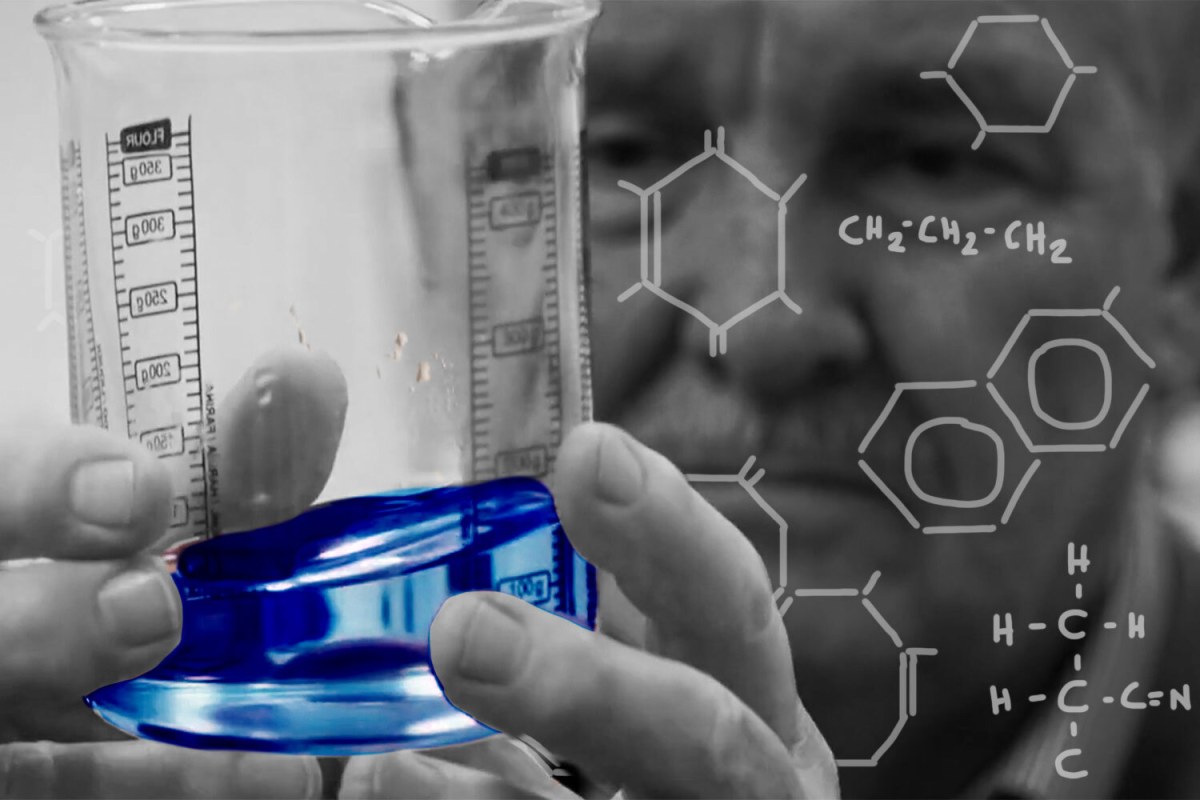
David Nutt keeps a bottle of Alcarelle in his lab, and he has tried it on himself. "It makes you a little slack around the jaw, a little bit chatty, mellow," he says of the effect. That, in a sentence, is the entire commercial thesis behind GABA Labs, the company Nutt co-founded to build a molecule that delivers the pleasant parts of drinking without the ethanol that causes them. Nutt is a professor of neuropsychopharmacology at Imperial College London, the former chairman of the UK government's Advisory Council on the Misuse of Drugs, and the scientist who, as a PhD student, provided the first proof that alcohol works by stimulating the brain's GABA receptors. He has spent a decade turning that discovery into a business.
A Scientist Who Was Fired for Following the Data
Nutt's path to building an alcohol substitute runs directly through his dismissal from UK government service. In January 2009 he published an editorial coining the term "equasy," comparing the roughly one-in-350 rate of serious injury from horse riding to the much lower risk profile of ecstasy, arguing that drug harms should be judged by evidence rather than by legal status. Nine months later, in an October 2009 lecture at King's College London, he went further, ranking alcohol and tobacco as more harmful than cannabis, LSD, and ecstasy across nine separate parameters of physical, social, and dependency harm. Home Secretary Alan Johnson fired him within weeks, telling The Guardian that Nutt "cannot be both a government adviser and a campaigner against government policy." Three of Nutt's ACMD colleagues resigned in protest.
Nutt has never backed away from the underlying claim. A follow-up study he co-authored in The Lancet in November 2010 used a formal multi-criteria decision analysis to conclude that alcohol was the single most harmful drug in the UK once its damage to others, not just to users, was counted. "I was forced to resign in 2009 after my colleagues and I published in a leading medical journal a chart listing the most dangerous drugs in the UK, within which we placed alcohol as number five in a list of twenty," Nutt has said. "One of the factors informing this list was the significant number of annual deaths relating to alcohol."
That firing turned out to be the origin story of a business. Rather than simply campaigning against alcohol, Nutt decided to build something that could replace it.
Targeting the Good Half of a Receptor System
GABA, short for gamma-aminobutyric acid, is the brain's primary inhibitory neurotransmitter, the chemical messenger responsible for calming neural activity. Alcohol produces its signature relaxation by binding to GABA receptors and amplifying their inhibitory signal. The problem, as Nutt explains it, is that alcohol is a blunt instrument: it floods every GABA receptor subtype in the brain indiscriminately, which is why a pleasant buzz can turn into slurred speech, poor coordination, aggression, blackout, and, over years, liver and brain damage.
Nutt's engineering thesis is that the receptor system has multiple subtypes, and only some of them are responsible for the sociable, relaxed feeling people actually want. "We applied cutting edge techniques to model the binding of compounds to the GABA molecule and to then synthesise and test the compounds for efficacy using modern assay systems," Nutt has said of the process. GABA Labs, formed in May 2016 by Nutt and entrepreneur David Orren, has been narrowing in on a shortlist of molecules, according to Nutt around thirteen candidate compounds with historical safety records, that bind selectively enough to produce the "two glasses of wine" feeling while leaving the receptor subtypes responsible for alcohol's toxic effects alone. The resulting ingredient is named Alcarelle, a deliberate echo of Canderel, the brand of artificial sweetener that let people keep the taste of sugar without the calories.
Nutt describes the ceiling effect as the molecule's defining feature. "We've developed the compound so that no matter how much Alcarelle you have in a drink, you won't get wasted, just tipsy," he has said. "It's like having two or so glasses of wine." Unlike ethanol, whose effects scale up the more you drink, Alcarelle is designed to plateau, a dose-response curve that behaves nothing like the substance it is meant to replace.
Nutt is candid that the science could still fail. He has told investors his odds of success are close to 50/50, citing the technical difficulty of getting the molecules into the bloodstream quickly, clearing them from the body before they overstay their welcome, and proving the effect is real without being intoxicating in the way regulators associate with alcohol. "This hasn't been done before, so regulators are going to assess it with quite a microscope," he says.
Proof of Concept Before the Real Thing
Because Alcarelle required years of safety testing before it could touch a consumer's lips, GABA Labs built an interim product to demonstrate the underlying idea was commercially viable. Sentia, launched in the UK in January 2021, is an entirely botanical formulation: plant extracts already established in the human food chain, selected for their ability to activate GABA receptors, cross the gut wall efficiently, and pass the blood-brain barrier, without requiring the additional safety testing a synthetic compound demands. GABA Labs CEO David Orren has described the goal plainly: Sentia exists to give adult consumers "the positive feeling" of drinking, without any alcohol at all.
Sentia now comes in three variants, Red, Black, and Gold, each built around a different botanical blend and designed to be mixed with a complementary drink. It launched in the US market in February 2024. Reviewers at outlets including The Independent, The Times, and Women's Health have described feeling a genuine, mild buzz after drinking it, and GABA Labs says some consumers have told the company Sentia "changed their lives" by letting them participate in social occasions they would previously have needed alcohol to get through.
But Sentia was never the endgame. "SENTIA is a proof-of-concept alternative to alcohol, and not a straight replacement for alcohol," Orren has said. The real business is Alcarelle, and the plan for it looks nothing like a typical beverage launch.
An Ingredient Business, Not a Drinks Brand
GABA Labs does not intend to sell Alcarelle to consumers directly. Its plan is to register the molecule as a food ingredient, then license it to the global drinks industry, the same commercial structure used by artificial sweetener makers, so that any beer, wine, spirits, or RTD company in the world could formulate Alcarelle into their own products rather than compete against a single GABA Labs-branded drink.
That licensing model requires clearing food-safety regulators first. GABA Labs is pursuing "novel food" registration in the UK, EU, and Canada, and Generally Recognized As Safe, or GRAS, status in the US. The company's own public timelines for that process have shifted as the science and the regulatory queue have moved: at various points GABA Labs and its consumer-facing Sentia brand have described completing US GRAS clearance by 2026, first ingredient sales into the US drinks industry by 2027, and full-scale licensing by 2028. Nutt has said the underlying food-safety testing alone takes two to four years. Whichever date proves closest, GABA Labs has been explicit that it wants to enter through the US first, on the theory that American regulators take a more rational approach to licensing novel food ingredients than either the EU or Nutt's native UK.
The timing intersects with a US regulatory environment that is itself in flux. The FDA has spent 2025 and 2026 moving toward a fundamental rewrite of how GRAS status gets granted, proposing to end decades of industry "self-affirmation" and require mandatory premarket notification for new food substances, with a presumption that unreviewed substances are not GRAS until the agency says otherwise. For an entirely novel ingredient class like Alcarelle, that tightening cuts both ways: it raises the evidentiary bar GABA Labs has to clear, but it also means that whichever synthetic alcohol alternative gets there first will have done so under a more rigorous standard than any wellness supplement that came before it, a credibility asset once cleared.
A Trillion-Dollar Market Currently Being Vacated
The commercial logic for Alcarelle does not depend on persuading anyone that alcohol is bad. It depends on a market that is already shrinking on its own. The global alcoholic drinks market was worth roughly $1.49 trillion in 2020, and consumer behavior inside that market has been moving for years: Bloomberg reported in January 2024 that UK brands were racing into what it sized as a $10 billion enhanced non-alcoholic drinks category, citing Sentia by name as one of the sector's most talked-about entrants. In the UK, the Office for National Statistics has found that 14 percent of adults never drink alcohol at all, and separate industry surveys have put the share of Americans making a conscious effort to drink less at over 41 percent, up seven percentage points in a single year.
Nutt argues the industry that should feel most threatened by Alcarelle may end up needing it most. He recalls pitching the concept to a major drinks company more than a decade ago: the company's own head scientist told him, "We all know that we're poisoning people," and predicted alcohol could be phased out entirely by 2050, only for the marketing department to kill the collaboration on the grounds that "we'll be all dead by then, so we can't be arsed to bring about any change." Nutt's read on the intervening decade is that the calculus has flipped. "The idea of it was a threat to the industry," he says. "Now it could be a solution."
He points to precedent for exactly this kind of pivot: the soft drinks industry embraced artificial sweeteners, the tobacco industry has poured capital into vaping, and the meat industry has invested in lab-grown alternatives. Each, in Nutt's telling, was a hedge against a product's own long-term liabilities. Alcarelle, licensed rather than branded, is built to be that hedge for the drinks industry itself, an ingredient a beleaguered category can add to its own portfolio rather than lose share to an outside challenger.
What Happens If It Works
Nutt has said that even a sliver of the alcohol market, something on the order of 1 percent of a trillion-dollar-plus category, would make Alcarelle a significant commercial success and, by his account, make him and his investors "very well-off." The more interesting number may be the one he does not put a figure on: what a genuinely non-intoxicating, non-addictive GABA-selective ingredient would be worth to a drinks company trying to hold onto a customer who has decided to drink less, without losing that customer to sparkling water altogether.
The molecule's exact chemistry remains undisclosed, a closely guarded trade secret protected by patents GABA Labs first filed in 2018 under the "mood enhancing compounds" heading. What is public is the wager underneath it: that a specific receptor-level intervention, built with the same tools used to develop CNS drugs, can be pointed at something as culturally ordinary as a Tuesday-night drink, and that the industry with the most to lose from that idea may turn out to be the one that helps bring it to market.