The Man Who Triple-Pledged Autolite's Invoices and Kept $700M for Himself
How Patrick James turned a mundane auto-parts roll-up into the largest alleged asset-based lending fraud in recent memory, and how Wall Street handed him the keys.
By Carry and Conquer Publications
The orange FRAM filter hanging in the automotive aisle at Walmart. The copper-tipped Autolite spark plug in a Jiffy Lube bin. The Raybestos brake pad stacked on a shelf at O'Reilly. These are the most unremarkable products in American commerce: ten-dollar purchases made by people who need their cars to run, not by people who follow credit markets. And yet, behind that wall of familiar orange packaging, federal prosecutors allege, sat one of the most ambitious financing frauds in the history of asset-based lending: $9 billion in liabilities, $12 million in cash, and hundreds of millions allegedly siphoned to pay for a Malibu oceanfront, a private celebrity chef, and a New York City townhouse at $3 million a year.
From Kuala Lumpur to Cleveland, via the College of Wooster
Patrick James was born in 1964 in Kuala Lumpur, Malaysia, to an Indian Catholic family, and spent his early years in Petaling Jaya before moving to the United States in the 1980s to study at the College of Wooster, a small liberal-arts college in northern Ohio. He stayed. Following graduation, James took a job at a mergers and acquisitions firm and began acquiring small manufacturers in the 1990s: local auto-industry suppliers assembled under a web of holding companies including Viking Industries and Hawthorn Manufacturing. By the 2000s he had pivoted toward the fragmented aftermarket auto-parts sector, and after the financial crisis he accelerated, using borrowed money to consolidate brands that had become orphaned from their original industrial parents.
The acquisition of Trico, a Michigan-based windshield-wiper manufacturer, in 2014 became the cornerstone of what he would rename First Brands Group in 2020. Jefferies, the investment bank that would later find itself holding $715 million in linked receivables, helped arrange the financing for that early deal. James recruited senior executives with deep Wall Street connections, built out a corporate campus in Cleveland's Public Square, and kept almost no public profile. In a decade, the brands accumulated under his holding company read like an aisle-by-aisle tour of the auto parts store: FRAM filters, Autolite spark plugs, Raybestos and Centric brake components, Cardone driveline parts, TRICO and ANCO wiper blades, Luber-finer filtration, StopTech performance brakes, Reese towing products. By 2025, the company reported approximately $5 billion in annual global sales. It had 17,000 employees across North America.
What it did not have, federal prosecutors allege, was anything close to the financial picture it presented to lenders.
The Mechanics of the Fraud
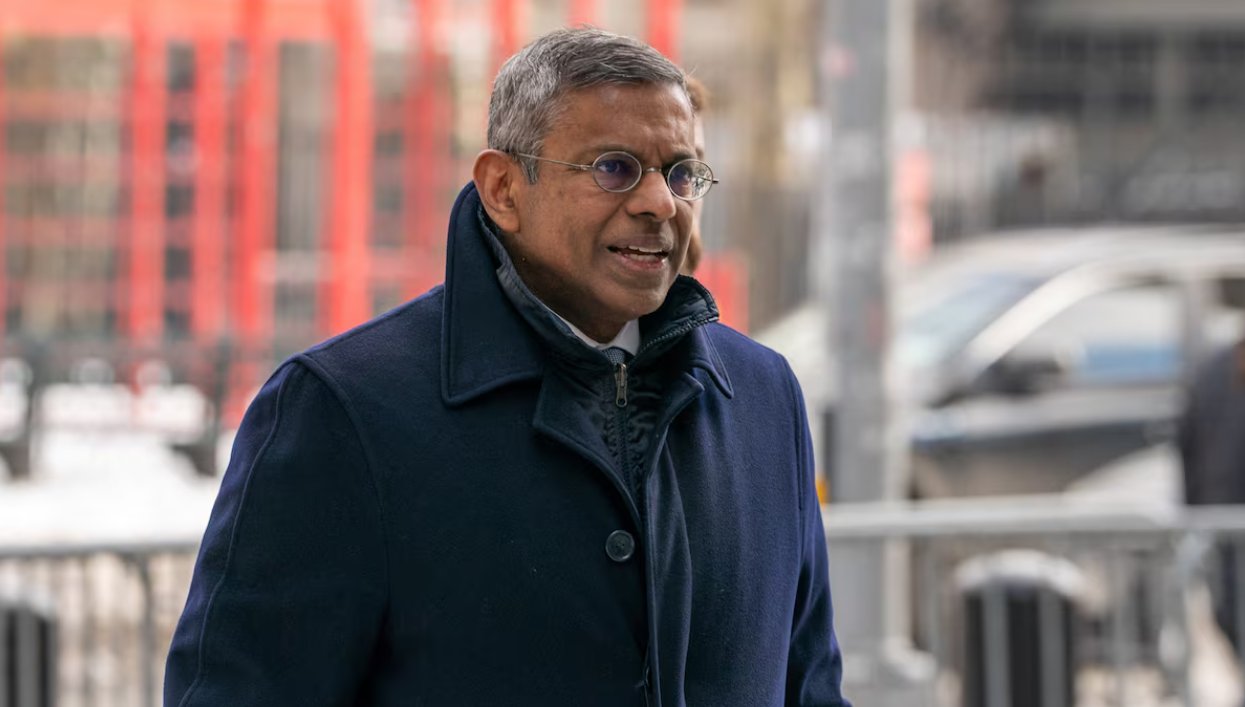
The indictment unsealed in Manhattan federal court on January 29, 2026 charges Patrick James, 61, of Chagrin Falls, Ohio, and his brother Edward James, 60, of Canton, with nine counts including operating a continuing financial crimes enterprise, bank fraud, wire fraud, and conspiracy to commit money laundering. A third executive, Vice President of Finance Peter Andrew Brumbergs, entered a guilty plea on January 26 and is cooperating with prosecutors. A fourth, former CFO Stephen Graham, has also pleaded guilty. The case has been assigned to U.S. District Judge Analisa Torres in the Southern District of New York. Trial is set to begin July 13.
According to prosecutors, the fraud ran from at least 2018 through the bankruptcy filing in September 2025 and operated on several interlocking tracks. The simplest, and most staggering, involved accounts receivable factoring. Factoring is a common financing tool: a company sells its outstanding invoices to a third party at a discount, receiving immediate cash while the factor collects payment from the end customer when the invoice comes due. First Brands used multiple forms of factoring, including customer-linked facilities where invoices were verified by the customer before a financing company paid First Brands on the customer's behalf, and unverified facilities where invoices were sold to independent factors without customer confirmation.
Prosecutors allege that First Brands systematically inflated and fabricated invoices, then sold the same invoice to two and sometimes three different factoring firms simultaneously. The indictment cites a specific example from June 2023: First Brands invoiced a customer for $8,976.24 in automotive parts. It then sold that invoice to one factor, presenting it as being worth $17,826.26. Three days later, it sold the same invoice again to a second factor, this time claiming the value was $463,734.92. By the time of the September 2025 bankruptcy filing, prosecutors say factors collectively held an estimated $2.7 billion in fabricated or inflated receivables from First Brands.
The scheme was not without its close calls. In approximately 2023, one of First Brands' factoring partners, identified as Factor-1 in the indictment, began an audit after a lower-level First Brands employee accidentally provided them with the actual invoices rather than the altered versions. The audit partner described what he found as "huge" discrepancies. After the incident, prosecutors allege, Patrick James directed that all communications from Factor-1 be restricted to a single senior company executive, containing the damage.
Round Trips and James Entities
The second track of the alleged fraud involved what First Brands insiders called "round trips." Under this arrangement, financing companies advanced funds to a third-party bill processing company under the belief the money was paying First Brands' suppliers. Instead, according to the indictment, the funds were routed directly back into First Brands itself. The purpose: inject liquidity at moments when the company could not meet its obligations from legitimate cash flow. One senior executive noted by 2021 that the practice was "getting out of control."
The third track involved off-balance-sheet debt concealed through entities owned and controlled by Patrick James, referred to in the indictment as the James Entities, which had no independent business operations. These entities borrowed money from lenders, used the proceeds to purchase inventory from First Brands, and then leased that inventory back to First Brands or affiliated SPVs, funneling cash into the company while keeping the debt invisible to senior lenders. In one documented exchange from July 2025, a lender sent a diligence request and received a written reply from a First Brands senior executive certifying the company had "no off-balance sheet financing" involving special purpose entities and that all related-party relationships were disclosed in the financial statements. At the time, prosecutors allege, First Brands had $2 billion in undisclosed off-balance-sheet debt.
The fourth track involved falsified financial statements distributed to lenders and potential acquirers, particularly relevant in 2025, when the James brothers attempted to refinance First Brands' debt or sell the company outright. Those efforts collapsed when counterparties demanded financial diligence that First Brands could not produce.
The Institutional Wreckage
The roster of institutions that held exposure to First Brands when it filed for Chapter 11 on September 28, 2025 reads like a damage report from a systemic event. UBS O'Connor, the Swiss bank's Chicago-based hedge fund unit, held more than $500 million in exposure through supply chain finance facilities. Jefferies' Leucadia Asset Management unit, through its Point Bonita Capital fund, held $715 million in receivables, nearly a quarter of the fund's entire $3 billion trade finance portfolio, tied to invoices from Walmart, AutoZone, O'Reilly, NAPA, and Advanced Auto Parts. Katsumi Global, a joint venture between Norinchukin Bank and Mitsui & Co., disclosed $1.75 billion in trade financing exposure. Millennium Management, the $79 billion multi-strategy hedge fund, took a $100 million writedown.
Point Bonita had marketed itself on "detailed research and credit analysis." Jefferies CEO Rich Handler stated on October 17, 2025 that the bank believed it had been "defrauded" by First Brands. The SEC subsequently opened an investigation into Jefferies' disclosures related to its First Brands involvement. Western Alliance later sued Jefferies for failing to complete $126.4 million in payments on loans tied to First Brands receivables. British Virgin Islands-based investors separately sued Leucadia Asset Management, alleging that Point Bonita had misrepresented having "cash dominion" over the receivables: a structure under which the fund would have been paid directly by the large retailers on the invoices, when in fact First Brands retained control of the payment flows, enabling the manipulation.
Both UBS O'Connor and Point Bonita had told their own investors that the underlying credit risk resided with the large corporate customers named on the invoices, Walmart rather than First Brands, a framing that, if accurate, would have made the facilities comparatively low-risk. The entire premise collapsed when it emerged that First Brands had retained control of collections rather than allowing payment to flow directly from the retailers to the factors.
The Employee of the Year
One Utah-based lender, Onset Financial, occupied a particularly peculiar position in the collapse. Onset advanced First Brands no more than $2.5 billion in inventory-backed financing and, according to the creditors' committee, collected approximately $2.9 billion in repayments before the bankruptcy, a net gain of roughly $400 million, while also asserting $1.9 billion in additional claims in the bankruptcy proceedings. The loans, structured as short-term sale-leaseback arrangements maturing in less than a year with large upfront fees, generated average internal rates of return exceeding 300%, the creditors' committee alleged. One specific loan to First Brands carried an alleged 179% internal rate of return.
Days after Edward James approved that 179% inventory deal, a First Brands employee sent an internal message to colleagues: "dude..whoever sold that onset deal to us is [Onset] employee of the century." According to a separate filing surfaced by the ABF Journal, employees later added: "3 months from now... 'who signed this f'n agreement???' LOL." The creditors' committee cited these messages as evidence that First Brands employees knew the company was being stripped. Edward James, according to First Brands' January 2026 lawsuit against Onset, personally invested nearly $150 million alongside Onset in these arrangements and stood to extract nearly $280 million before the collapse.
Onset's spokesperson described the creditors' committee claims as "unsupported and baseless" and characterized Onset as a victim of the fraud. Silver Point Capital subsequently acquired a controlling interest in Onset's bankruptcy claims.
$700 Million and a Celebrity Chef
Even as the frauds compounded and First Brands spiraled toward bankruptcy, prosecutors allege Patrick James continued to move money to himself and related entities. The indictment states that James caused billions of dollars in gross proceeds to flow into First Brands from counterparties and received at least hundreds of millions of dollars in gross proceeds into his personal accounts. A civil suit filed by First Brands' new management against Patrick James itemizes the spending in considerable detail: a collection of 17 exotic cars, properties in Malibu and the Hamptons, $2 million in payroll for a personal family office, $3 million annually for a New York City townhouse rental, $500,000 for a private celebrity chef, $150,000 for a personal trainer, and $110,000 for a six-week hotel stay. Transfers to James' personal accounts occurred, the suit alleges, in close proximity to the Malibu property acquisition in 2019 and the Hamptons purchase in 2021.
Across 2022 to 2025, nearly $12 billion flowed through a financial account called Bowery Finance II, controlled by James, according to an affidavit filed by interim CEO Charles Moore of Alvarez and Marsal. The filing also alleged that in some instances, funds received from Onset and Evolution Credit facilities arrived at First Brands entities on the same day that multi-million-dollar transfers departed to James' personal trust.
Patrick James pleaded not guilty on February 4, 2026 before U.S. Magistrate Judge Robyn Tarnofsky. His spokesperson issued a statement that James is presumed innocent and denies these charges, that he built First Brands from nothing into a global industry leader, and that he looks forward to presenting his case in court. James' attorneys have separately attributed the company's financial difficulties to macroeconomic factors including tariff pressures and have accused factoring lenders of "predatory" practices.
What Breaks When the Collateral Is Fake
The First Brands case has triggered a broader reckoning in asset-based lending, a market that expanded dramatically in the private credit boom of the 2020s. The company's ability to borrow against the same invoice two and three times, and to keep sophisticated institutions from comparing notes, exposed structural weaknesses in how factoring facilities are monitored and how off-balance-sheet obligations are verified.
Several lenders who declined to extend credit to First Brands noted that the company's reported margins significantly exceeded those of comparable peers and that it was unwilling to allow warehouse inventory inspections. One lender recalled telling Edward James that his team would need to inspect physical inventory against stock records for a proposed deal, and being told: "We don't let lenders into the warehouse." First Brands also bears an early connection to Greensill Capital, the supply-chain finance firm that collapsed in 2021 amid its own scandal. Greensill had extended tens of millions in financing to Crowne Group, James' earlier holding company, from 2015 onward.
For the 17,000 people who worked at First Brands across North America, the accounting of who knew what has a sharper edge. By February 2026, more than 1,200 employees in Ohio alone had received layoff notices. The Brake Parts, Cardone, and Autolite units had already been wound down and shuttered, eliminating 4,000 jobs. Another 13,000 positions remained at risk as the company operated week-to-week on emergency prepayments from General Motors and Ford, who agreed to advance $48 million for parts deliveries to keep their supply chains intact. More than 13,000 claims have been filed in Houston bankruptcy court, one of them seeking $4.7 billion from Wilmington Savings Fund Society alone.
The criminal trial is set for July 13 before Judge Analisa Torres in Manhattan. The brands that built a $5 billion company, FRAM, Autolite, Raybestos, remain on store shelves. The invoices behind them, prosecutors say, were sold three times over.