The Japanese Startup Selling Egg Embryos You Rub on Your Face
IntegriCulture set out to grow cultivated meat, but an egg-derived skincare serum called Cellament, backed by a world-first regulatory listing, became the company that stayed solvent while rivals collapsed.
By Carry and Conquer Publications
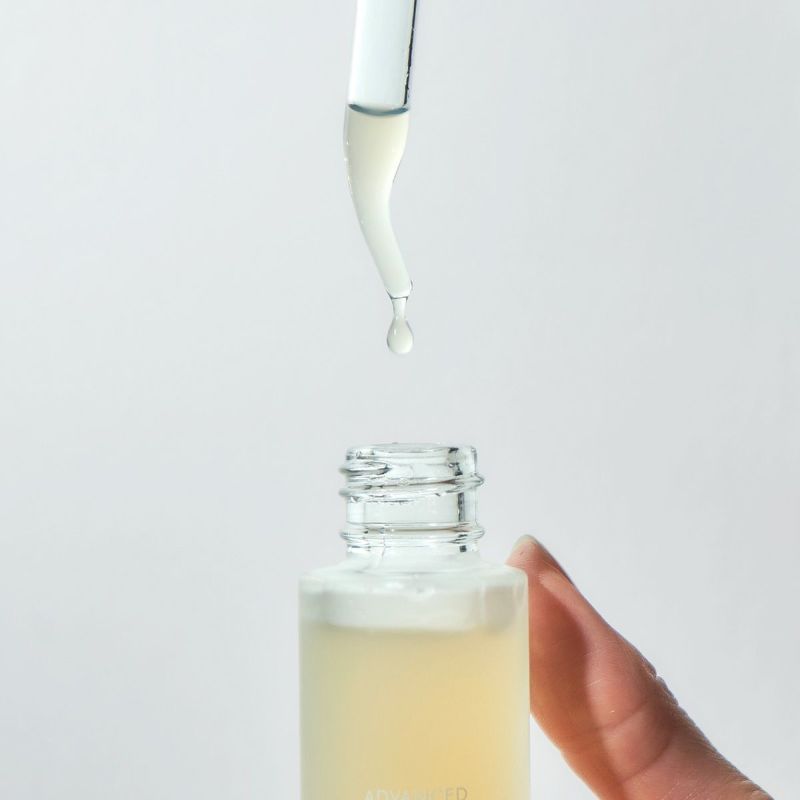
IntegriCulture set out to grow meat in a bioreactor. It ended up paying its bills with a serum made from egg cells that customers spread on their cheeks.
Tokyo-based IntegriCulture has spent a decade chasing a science-fiction ambition: cultivated meat grown without slaughtering animals, cheap enough to feed anyone, eventually built to sustain colonists on the Moon or Mars. That is still the company's stated mission. But the business keeping the lights on is Cellament, an egg-derived skincare ingredient that IntegriCulture built almost as a side effect of the same lab work. In the fiscal year ending September 2025, IntegriCulture posted a net profit of roughly JPY40 million, about $255,000, according to CEO Yuki Hanyu. It is one of the only cellular agriculture companies on the planet that can say that, and it got there by selling something people put on their skin, not something they eat.
From citizen-science meat club to Cellament
IntegriCulture traces back to the Shojinmeat Project, a citizen-science collective Hanyu launched in 2014 after deciding that cultivated meat was, in his words, a staple of science fiction whose time had come. Hanyu holds a Ph.D. in chemistry from the University of Oxford and had worked as a researcher at Tohoku University and Toshiba's R&D center before turning a hobbyist meat-growing community, built around manga fans and DIY biologists, into a for-profit company. IntegriCulture was incorporated in October 2015, initially as little more than a vehicle to get lab equipment for the volunteer project. Hanyu co-founded it with Ikko Kawashima, a biologist with an agricultural science doctorate from Hiroshima University, who became chief technology officer.
The company's core invention is the CulNet system, a network of interconnected chambers of organ cells that continuously secrete growth factors, proteins, and metabolites into a circulating fluid. Rather than buying expensive purified growth factors, the way most cultivated-meat labs do, IntegriCulture lets living cells manufacture their own supply, recycling and optimizing it as it flows between chambers. The approach was built to solve cultivated meat's central cost problem, but it turned out to be equally good at making something else: a nutrient-dense conditioned medium derived from chicken eggs.
Three cell types, one supernatant
Cellament is built by selectively culturing three distinct cell types harvested from a fertilized chicken egg: the amnion, the yolk sac, and the plasma membrane. Each is cultured separately, then the resulting fluids are combined into a single serum base. IntegriCulture says the process amplifies the potency of nutritional elements already present in eggs to levels a cracked egg alone could never deliver, while using a fraction of the resources of conventional egg farming. The company reports the serum can reduce the enzymatic activity responsible for degrading skin elasticity by ten to 70 percent, accelerate skin cell turnover, boost moisture retention in the skin's outer layer, and calm the inflammatory response tied to redness and acne.
It is also, notably, free of live pathogens in a way that egg-derived and placenta-derived competitors are not, since the product never touches a living animal after the initial cell harvest. Hanyu has framed Cellament's competitive set as stem-cell conditioned media, drawn from human or plant cells, and animal placenta extracts pulled from pigs and other livestock. Against both, he argues Cellament offers comparable or superior skin benefits, greater supply stability, and a milder odor that makes it easier for cosmetics chemists to formulate around.
A regulatory first that opened the door
Cellament launched in April 2021, inside a skincare line from the Japanese company Euglena. But the moment that mattered most for the industry came the following year. In June 2022, when the ingredient was adopted by a second brand, essensebase's L'Oeuf, French for "the egg," Japan's INCI registry, the International Nomenclature of Cosmetic Ingredients, accepted "chicken egg embryo extraembryonic cell conditioned culture solution" as a newly listed ingredient name. IntegriCulture describes it as the world's first cosmetic ingredient of its kind to receive that designation, a regulatory foothold that gave formulators a defined, approved name to put on an ingredient list rather than treating the product as a novel, undefined substance.
That listing helped Cellament move from a single novelty product into a recurring ingredient supply business. It now sits inside more than ten commercial skincare formulations from brands including Euglena, Epolar, Fabius, Oppen Cosmetics, and essensebase's L'Oeuf line, whose name was inspired directly by the ingredient. Hanyu has said K-beauty brands in particular have been the most willing to experiment with a cell-cultured ingredient still unfamiliar to most shoppers. IntegriCulture has since launched a "Cell-Ag" open brand initiative, an effort to get retailers and regulators to recognize cell-cultured cosmetics as their own category, sitting alongside "animal-based," "plant-based," and "bio-pharma," rather than being lumped in as simply animal-derived.
Profitable in an industry defined by cash burn
The context that makes IntegriCulture's numbers remarkable is how badly the rest of cultivated agriculture has been doing. Global funding for cultivated meat startups peaked at $989 million in 2021 and collapsed to somewhere between $65 million and $83 million in 2025, depending on the count. Believer Meats, formerly Future Meat Technologies and the first foreign company to win US regulatory approval for a cultivated meat product, shut down in late 2025 despite operating a North Carolina facility built to produce 12,000 tonnes of cultivated chicken a year. Dutch cultivated pork maker Meatable dissolved days later, writing off tens of millions in investor capital. CellRev, Upstream Foods, and SCiFi Foods all closed in the same stretch. The Good Food Institute counted 140 cultivated meat companies globally in 2025, down from 155 the year before.
IntegriCulture avoided that fate by refusing to bet everything on meat reaching consumers first. "We're financing ourselves from two fronts," Hanyu told AgFunderNews in February 2026, "revenue from non-food applications, mainly cosmetics, and supplies and CRO services for startups and non-food sector players." He has described the company's evolution as moving from a supplier and contract research organization toward a full CRDMO, a contract research, development, and manufacturing organization, serving cellular agriculture players of every size rather than racing to sell a single consumer meat product. IntegriCulture has raised comparatively little to get here: under $20 million in equity to date, alongside a roughly $13.1 million Japanese government grant and a $685,000 overdraft facility from Mizuho Bank, small sums by cultivated-meat standards.
Cosmetics money, meat ambitions
The revenue split is telling. IntegriCulture's cell-based cosmetics ingredients business alone generated roughly $300,000 in profit in a recent year, according to figures the company shared with Green Queen, while total company sales reached about $1.5 million in 2025, the year the firm says it broke even for the first time in its decade-long history. Hanyu has cautioned that heavier depreciation is coming in 2026 as infrastructure investment ramps up, but expects EBITDA to stay positive.
That infrastructure push is where the cultivated-meat ambitions come back into view. In March 2026, IntegriCulture signed a strategic partnership memorandum with Sumitomo Riko, the Nagoya-headquartered rubber and polymer manufacturer and a member of the Sumitomo Electric Group, whose automotive and industrial products business generates well over $4 billion a year in revenue. The partnership builds on years of joint work inside IntegriCulture's CulNet Consortium that already produced the Oxy-thru Cultivator, a low-cost, oxygen-permeable bioreactor described by Hanyu as "cell culture in a bucket," simple enough for small institutions to run. Under the new agreement, the two companies are demonstrating avian-cell production processes in Singapore, working alongside Malaysian contract manufacturer Cell AgriTech, with the goal of filing for regulatory approval from the Singapore Food Agency by the end of 2026. They are also launching a domestic Japanese contract manufacturing service to expand IntegriCulture's CRDMO business. It is a partnership aimed squarely at cultivated meat's industrialization, built on the financial runway cosmetics money bought the company.
An unlikely order of operations
Hanyu has never pretended the cosmetics business was the plan. Asked directly about it, he has described IntegriCulture as "a cellular agriculture infrastructure company, not just a cell-cultured meat company," and pointed to Cellament as a way to popularize the broader idea of cellular agriculture while the meat side matures. It is a reversal of the order most cellular agriculture founders expected: meat was supposed to prove the technology and cosmetics, if it came at all, would follow as a value-added afterthought. At IntegriCulture, the beauty aisle got there first, and it is now what is paying for the harder, slower, far more capital-intensive work of trying to grow food. Whether that sequencing becomes a template other struggling cultivated-meat companies borrow, or stays a Tokyo-specific curiosity built on an unusually patient CEO and an ingredient nobody else had thought to register, is still an open question. For now, IntegriCulture is one of the few companies in this industry with an answer to the question every cultivated-meat investor eventually asks: how do you stay solvent long enough to find out if the meat works.