The Harvard Robot That Finishes Braids a Human Started
A patent-pending device from two Nigerian Harvard alumni just raised $7 million to automate the one part of the $270 billion salon industry no machine has ever touched.
By Carry and Conquer Publications
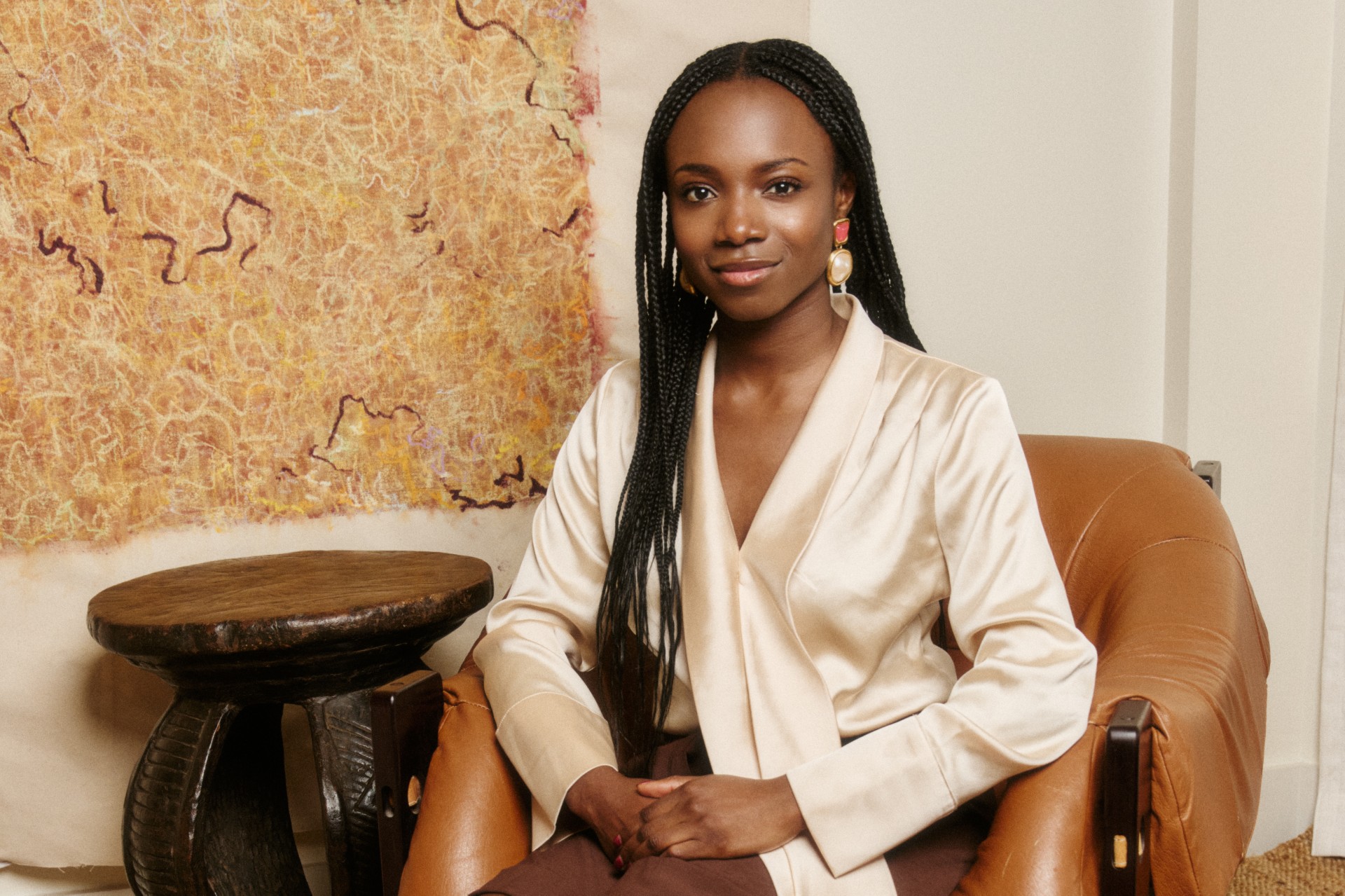
In the spring of 2020, Yinka Ogunbiyi was alone in a London apartment during lockdown, attempting to braid her own hair for the first time. It took her four days. By the second day, her mind had drifted from the pain in her hands to a stranger question: why did a process this old still take this long? She holds a bachelor's degree, a master's in engineering, and an MBA, all from Harvard, and her instinct was to treat the question as an engineering problem rather than a beauty routine. Six years later, that question has become HaloBraid, a patent-pending robotic device that finishes a braid once a stylist has started it, working at roughly five times human hand speed. In June 2026, the company she co-founded with fellow Harvard alumnus David Afolabi closed a $7 million seed round led by Alexis Ohanian's venture firm Seven Seven Six, with participation from AlleyCorp and Bling Capital, positioning Halo for a salon launch this September.
A Category Untouched by a Century of Automation
Ogunbiyi's pitch line, delivered when Halo Braid won Harvard's 2025 President's Innovation Challenge and its $75,000 grand prize, framed the opportunity in a single image: imagine if every haircut took six hours, cost $200 to $300, and gave the stylist arthritis by age 29. That, she told the audience, is what it is like to get your hair braided, a process she said has not changed since braiding was invented roughly 5,000 years ago. The comparison she reaches for most often is the sewing machine, invented over a hundred years ago to mechanize a manual textile task. Braiding, done by hand for millennia across continents and cultures, never got its equivalent.
The scale behind that observation is larger than most outsiders would guess. Ogunbiyi's research put global time spent braiding hair at an estimated 8 billion hours a year, with individual appointments frequently running six hours or longer and needing to be repeated every six to eight weeks. Custom Market Insights values the global hair braiding market at over $625 million by 2032, and other estimates cited by the company put the broader category near $2.93 billion today, growing toward $6.8 billion by 2035. Braidiant is the only other company attempting anything comparable, and the field has stayed thin for a straightforward reason: hair is, in Ogunbiyi's words, one of the trickiest substrates in the world to manipulate. It has no fixed shape, no consistent tension, and behaves nothing like the rigid stock that robotics labs are built to handle.
Four Hundred and Fifty Prototypes
Solving that materials problem took Ogunbiyi and Afolabi roughly 18 months and more than 450 prototype iterations, later reports put the figure closer to 600, refining a device that had to grip and manipulate real human hair extensions reliably enough for commercial use. The pair surveyed more than 2,200 braid wearers and interviewed some 200 stylists before locking in a design that, in one company survey of 2,000 braid wearers, found 95% would get their hair braided more often if the process were faster. The device that resulted looks less like a robot arm than a standing salon dryer, cream and gold, sitting beside the chair rather than looming over it. A stylist begins each braid by hand, setting the pattern, the parting, the tension, then hands the section off to the machine, which finishes it while matching the stylist's own technique.
That handoff is deliberate positioning. Ogunbiyi has been explicit that HaloBraid is designed to work alongside stylists rather than replace them, a distinction that matters in an industry where the reflexive fear of automation runs high. "We designed this with stylists, using their perspective to build a product that supports them, without replacing them," she has said. The device targets specifically the repetitive middle section of a braid, the part most associated with the carpal tunnel syndrome and early-onset arthritis common among professional braiders, while leaving the creative and scalp-level work to the human doing it.
From Barbecue Grills to Braids
Ogunbiyi's path to hair robotics runs through an unlikely prior venture. As a Harvard engineering undergraduate in 2015, she co-founded Desora, a smart-grill startup that grew out of a class project with client Williams-Sonoma and raised early funding from Morningside Ventures. Desora went on to license technology to Kamado Joe and acquire the smart countertop grill brand Cinder, and Ogunbiyi served first as chief operating officer and later chief technology officer, co-inventing six patented smart cooking devices over roughly four years. She then spent a year working as a chef and recipe developer in London before the pandemic-era braiding attempt redirected her toward HaloBraid in 2023. That background, moving from precision temperature control in barbecue smokers to tension and pattern control in hair, is part of why she describes herself as a repeat hardware founder rather than a first-time inventor solving a problem she stumbled into.
Afolabi, her co-founder and a fellow Harvard Business School alumnus, has kept a lower public profile than Ogunbiyi, whose viral pitch video drew roughly 4.9 million views across Instagram and TikTok and an estimated 4 billion impressions, pushing Halo's waitlist past 5,000 stylists and consumers.
The Ohanian Bet
Halo's seed round carries a personal subplot. Alexis Ohanian, the Reddit co-founder now running Seven Seven Six, is married to Serena Williams, and the couple's two daughters regularly wear braided hairstyles. Ohanian has said he has watched the ritual firsthand: his older daughter loves the first few hours of a braiding session, he said, but by hour nine everyone is ready to stop. His stated investment thesis was blunt. "I look for founders that see something broken that everyone else has accepted as fixed," he said. "Braiding is a perfect example: it is a process that has not materially changed in thousands of years, despite being one of the most popular hairstyles for millions of Americans and a significant part of the salon services industry." He has also drawn a direct comparison to Dyson, arguing that mainstream haircare has been transformed by engineering-driven consumer hardware while textured hair has been left out of that wave entirely.
The $7 million will fund product development, expanded stylist testing, manufacturing readiness, and salon partnerships ahead of a commercial rollout. Halo's team has grown to roughly 15 people, and the company is already looking past its first device toward a machine that can undo braids, a process Ogunbiyi notes can take nearly as long as putting them in.
What the Pilot Has to Prove
Halo Braid's Boston pilot salon, which launched in 2025 following the Harvard prize, is the proving ground for whether a robot can operate reliably inside a working commercial salon rather than a lab or a competition stage. A consumer launch is slated for September 2026, and the company has been candid that many technical details remain undisclosed while patents are still pending. Ogunbiyi has said building the device required borrowing methods from outside robotics entirely, including material science and inkjet printing, precisely because conventional robotics approaches assume a rigidity that hair does not have.
What makes the story bigger than a single product launch is the framing Ogunbiyi keeps returning to: HaloBraid is meant to be the first entry in a broader technology platform for textured hair, a category she argues has received systematically less engineering investment than the rest of the beauty industry despite serving hundreds of millions of consumers, heavily concentrated in cities like Lagos, Nairobi, Accra, and Johannesburg where braiding is not a niche service but a major local industry. If Halo can prove the mechanics work at commercial volume this fall, the company's real bet is that the white space it just claimed, an ancient craft with zero robotics penetration, was less about hair specifically and more about which parts of the service economy venture capital had simply never bothered to look at.