The End of Evolution's Monopoly on Chemistry
De novo enzyme design has crossed a threshold: AI can now write proteins that catalyze reactions no living thing has ever performed, in weeks, from a description of the chemistry you want.
By Carry and Conquer Publications
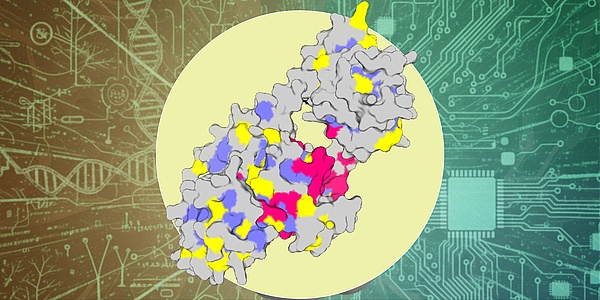
For four billion years, every chemical reaction performed by a living cell was invented by evolution. Every enzyme that exists in nature arrived through mutation and selection, a process with no foresight, no objectives, and no timeline shorter than millions of years. Industrial chemistry learned to work within that constraint, borrowing, modifying, and improving what evolution had already made. That constraint ended in January 2026.
A Sixty-Year Problem, Solved
Since the 1960s, the operating assumption of industrial biochemistry has been unchanged: if you need a catalyst for a chemical reaction, you find an enzyme evolution has already invented and engineer it toward your purpose. You search databases. You mutate residues. You accept the tradeoffs of starting from a scaffold designed by biology for biology's own needs. When David Baker's lab published the first computationally designed retro-aldolases in Science in 2008, the proof of concept was thrilling but the numbers were humbling: 72 designs tested, just 32 with detectable activity, and catalytic efficiencies orders of magnitude below natural enzymes. Years of directed evolution were still required to make any of them industrially meaningful. The constraint was fundamental: computational design could propose an active site, but building a stable protein scaffold around it with precision was another problem entirely.
January 2026 produced two papers that closed that gap simultaneously, from opposite sides of the Atlantic.
Riff-Diff: One Shot from Scratch
At Graz University of Technology and the University of Graz in Austria, a team led by Gustav Oberdorfer published in Nature the details of a method called Riff-Diff (Rotamer Inverted Fragment Finder-Diffusion). The technique inverts the traditional design logic. Rather than searching existing protein databases for scaffolds that could accommodate a desired active site, Riff-Diff starts from the catalytic chemistry itself. The researcher specifies the reaction geometry, the arrangement of atoms needed to perform a transformation, and the model generates a complete enzyme sequence in a single forward pass, building the protein architecture around the chemistry from scratch.
The performance numbers signal a genuine phase shift. Active enzymes for different reaction types emerged from just 35 tested sequences. The designed proteins showed thermal stability up to 90 degrees Celsius, a threshold that matters enormously for industrial deployment where reaction vessels run hot and catalysts must not denature. Previous computational designs had required costly high-throughput screening of thousands of candidates and subsequent rounds of directed evolution before reaching anything industrially viable. Riff-Diff compresses that process by an order of magnitude.
Lead author Markus Braun described the practical implication directly: the enzymes produced are highly efficient biocatalysts suitable for industrial environments, and the screening effort previously required has been drastically reduced. For the broader biotechnology community, this matters because enzyme design has historically required deep structural biology expertise. Riff-Diff works from a description of a reaction; expertise in protein folding is no longer the bottleneck.
RFdiffusion2: Flow Matching and the 96-Sequence Test
Simultaneously, at the University of Washington's Institute for Protein Design, David Baker's group published RFdiffusion2 in Nature Methods. The model represents a fundamental architectural advance over its predecessor. Where the original RFdiffusion required researchers to pre-specify not just functional group geometry but also backbone coordinates and residue positions for each catalytic amino acid, RFdiffusion2 eliminates those constraints. The model takes functional group geometries derived from quantum chemistry calculations of the transition state and generates complete protein scaffolds without the researcher needing to specify where along the sequence the catalytic residues should land.
The in silico benchmark result captures how large the performance gap is: RFdiffusion2 solved all 41 problems in a diverse enzyme design benchmark based on the M-CSA database. Previous best methods solved 16. In laboratory validation, the team designed working enzymes for five distinct catalytic mechanisms, including retroaldolase, cysteine protease, and zinc hydrolase functions, with fewer than 96 tested sequences per case. The zinc hydrolases produced catalytic efficiencies of 16,000 M/s, orders of magnitude higher than previously engineered metallohydrolases. Jason Yim, a graduate student at MIT who co-led the project, put it plainly: the field is no longer just predicting structures; it is building functional molecules from first principles. Seth Woodbury, another co-lead, summarized the timeline compression: enzymes that begin to rival those evolved over billions of years, created in weeks.
The Industrial Targets Already in Motion
These tools are not waiting for commercial deployment. Three research programs running in parallel illustrate the scope of what is now being pursued.
At the University of California Santa Barbara, Kaipeng Hou and colleagues published in Science in May 2025 the de novo design of porphyrin-containing proteins as stereoselective catalysts. Four of ten designed proteins achieved cyclopropanation reactions with enantiomeric ratios exceeding 99:1, a level of selectivity that pharmaceutical synthesis demands and that chemical catalysts achieve only under narrow conditions. The proteins showed high thermostability and organic solvent tolerance, the two properties that typically doom laboratory enzymes when they encounter industrial-scale synthesis conditions.
The CRISPR design problem received its own AI-native treatment at the Arc Institute, where researchers published in Nature the design of novel Cas9 proteins using large language models trained on a dataset of more than one million CRISPR operons, systematically mined from 26 terabases of assembled genomes and metagenomes. The resulting AI-designed gene editors performed precision editing of the human genome, demonstrating that the model was not merely recombining known structures but generating functional new protein architectures.
On the plastics recycling front, PET hydrolase engineering has become a proving ground for AI enzyme design at scale. The Align Foundation launched its 2025 Protein Engineering Tournament in October of that year, a global open-science challenge pairing AI-driven enzyme design with large-scale experimental validation. More than 290 teams from 40 countries registered to work on PETase variants. The target: an enzyme that can withstand the harsh conditions of industrial recycling plants while degrading PET plastic efficiently enough to enable true closed-loop recycling at scale. Plastic waste is projected to triple by 2060, yet less than 10% is currently recycled.
What the Constraint Removal Actually Means
The private equity framing of this moment requires clarity about what has changed structurally, not just scientifically.
For sixty years, the specialty chemicals, pharmaceutical synthesis, and industrial biotech sectors operated under a shared constraint: the universe of available catalytic chemistry was whatever evolution had produced in 4 billion years. Engineering work meant navigating that existing universe, improving what was there, adapting natural enzymes to unnatural conditions, accepting the inefficiencies that came with forcing biological machinery into industrial applications. The enzyme engineering market, currently valued at approximately $8.6 billion and growing at 9.5% annually, reflects decades of work conducted almost entirely within that constraint.
What Riff-Diff and RFdiffusion2 represent is the removal of that constraint as the binding limit on what is designable. The question for a catalyst is no longer "what did evolution make that is closest to what I need?" It is "what chemistry do I want, and how quickly can I specify the geometry?" The answer is now: weeks, with fewer than 100 sequences to screen.
The pharmaceutical supply chain implications run specifically to chiral synthesis. Most drug molecules have stereochemistry that must be precisely controlled: the wrong enantiomer is either inactive or toxic. Chemical synthesis routes for chiral pharmaceuticals typically involve expensive transition metal catalysts, often palladium or rhodium-based, with environmental and supply chain risks. Biological catalysts that achieve greater than 99:1 enantioselectivity, stable enough to function in industrial solvents and at elevated temperatures, represent a direct substitute for some of the most capital-intensive steps in pharmaceutical manufacturing.
The plastic recycling application addresses a different structural problem. PET represents 12% of global solid waste. Enzymatic recycling is the only pathway to genuine molecular-level closed-loop recycling, returning PET to its constituent monomers for reuse rather than downcycling. The constraint has been enzyme performance: wild-type PETase functions too slowly and denatures at the temperatures industrial recycling requires. AI design shortens the iteration cycle from years to weeks.
The Competitive Structure That Will Emerge
For investors and operators, the relevant observation is that access to custom enzyme design is no longer gated by the size of a structural biology department or the length of a directed evolution campaign. API-accessible diffusion models, combined with increasingly affordable gene synthesis and cell-free expression systems, compress the enzyme development cycle to a point where competitive differentiation shifts from who can design enzymes to who can most efficiently deploy them at scale.
The incumbent enzyme producers, including Novonesis (the merged Novozymes and Chr. Hansen entity), BASF, and IFF, hold manufacturing infrastructure, regulatory relationships, and existing customer integration. These are durable advantages. What they no longer hold exclusively is the design capability. A specialized chemical company with a specific synthesis problem and API access to RFdiffusion2 or Riff-Diff is now six weeks from a candidate enzyme sequence, not six years.
Baker himself, who shared the 2024 Nobel Prize in Chemistry for his foundational work in computational protein design, framed the ambition that now applies to the entire industrial biotechnology sector: the creation of enzymes capable of catalyzing any desired chemical reaction was the grand challenge. RFdiffusion2 and Riff-Diff are the answer. The companies that recognize this shift earliest will be the ones redesigning supply chains around it while competitors are still running directed evolution campaigns.