The Empire Under the Shingles: Standard Industries' Quiet Consolidation of the Global Roofing Market
Standard Industries has built one of the most dominant industrial empires in the world -- almost entirely without the world noticing.
By Carry and Conquer Publications
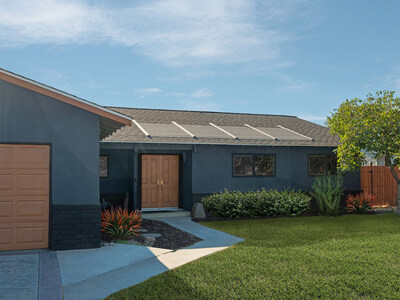
Standard Industries, the New York-headquartered privately-held conglomerate led by co-CEOs David Winter and David Millstone, has spent three decades methodically assembling the world's most comprehensive roofing platform. With roughly $11 billion in annual revenue and operations spanning approximately 50 countries, Standard has quietly become one of America's top 50 private companies by the Forbes ranking -- a feat of industrial consolidation executed almost entirely below the radar of mainstream financial media. Its crown jewel, GAF, is North America's largest roofing and waterproofing manufacturer, and together with BMI Group -- the dominant force in European roofing -- Standard controls the two largest regional roofing platforms on earth. In 2025 and 2026, a series of strategic moves is making it increasingly clear that this private industrial giant is not merely protecting market share, but actively reshaping the global roofing industry's technological and competitive future.
The Architecture of Dominance
Standard Industries traces its origins to 1886, when the Standard Paint Company was founded -- a lineage that would evolve through decades of mergers and name changes before eventually becoming GAF. For most of the 20th century, the company was a competent but unremarkable roofing manufacturer. The transformation into a global industrial conglomerate began in earnest in the 2010s under Winter and Millstone, who recognized that the fragmented nature of global building materials markets presented an unusual opportunity for patient, long-horizon consolidation.
The European push came first, and it came fast. In January 2016, Standard acquired the Danish company Icopal for roughly one billion euros, instantly gaining a pan-European presence in flat and pitched roofing. Just over a year later, in April 2017, it acquired the German Braas Monier Building Group for approximately 1.1 billion euros and merged both companies to form BMI Group -- making it at a stroke the largest manufacturer of both flat and pitched roofing systems in Europe. The message was unambiguous: Standard intended to become the world's roofing company, not just America's.
On the North American side, GAF had already secured its dominant domestic position through earlier moves, including the 2007 acquisition of ElkCorp, a leading residential roofing manufacturer. By the time Standard's European acquisitions were complete, GAF was protecting one in four American homes with its roofing products. That market penetration is not marketing language -- it is infrastructure-scale distribution, meaning that the contractor networks, distributor relationships, and brand loyalty GAF commands would be extraordinarily expensive for any competitor to replicate.
The W.R. Grace Gambit
The most strategically ambitious move in Standard's history was the 2021 acquisition of W.R. Grace & Co., completed in an all-cash transaction valued at approximately $7 billion. Grace is a leading global producer of specialty chemicals, with two primary business segments: Catalysts Technologies and Materials Technologies, serving clients in more than 60 countries. On the surface, a roofing company buying a specialty chemicals business appears opportunistic or diversionary. In practice, it reflects a sophisticated thesis about the vertical integration of building materials and performance chemicals that directly serve both roofing systems and industrial processes.
Grace was brought into Standard's portfolio as a standalone operating company alongside GAF and BMI -- a structure that preserves operational independence while enabling capital allocation and technology-sharing at the parent level. The 40 North Management entity, Standard's related investment platform, had been a long-standing shareholder of Grace before the acquisition, suggesting that the deal was anything but impulsive. Standard had been watching, investing in, and preparing to acquire Grace for years before the transaction closed.
The result is a conglomerate that can meaningfully claim to sit at the intersection of roofing, building materials science, and specialty chemistry -- a combination that opens product development pathways unavailable to pure-play roofing companies.
Building the Innovation Stack
Standard's consolidation play alone would be notable. What makes the story more complex -- and more interesting to private equity observers -- is the parallel innovation agenda being driven through GAF Energy, the solar business unit launched in 2019.
In February 2025, GAF Energy announced the Timberline Solar ES 2, the second generation of what it describes as the world's first nailable solar shingle. The product first launched in 2022, and the ES 2 delivers 23% more power than its predecessor -- generating 57 watts per shingle while maintaining a depth of less than a quarter inch. Key upgrades include enhanced StrikeZone installation efficiency, compatibility with the complete GAF Timberline shingle collection, and simplified wiring with smaller transition boxes. The product is manufactured at GAF Energy's facilities in Georgetown, Texas, and San Jose, California.
Martin DeBono, President of GAF Energy, described the launch as raising the bar the company itself had set. The commercial logic is clear: by making solar roofing faster to install, more aesthetically compatible with traditional shingles, and more powerful per unit, GAF Energy is addressing the two primary objections that have kept solar-integrated roofing from reaching mass-market adoption -- installation complexity and output limitations. With residential solar installations projected to more than double their market share by 2030, Standard is positioning GAF Energy to capture a category that competitors cannot easily enter without both a dominant roofing distribution network and proven solar manufacturing capability.
That distribution advantage is not theoretical. One in four U.S. homes already carries a GAF roof. The contractor training programs, the Golden Pledge warranty infrastructure, and the Master Elite contractor network represent a sales channel for solar roofing that companies like Tesla or SunPower would have to build from scratch. Standard does not need to build it -- it already owns it.
The Kansas Investment and What It Signals
On June 5, 2025, GAF broke ground on a new shingle manufacturing facility in Newton, Kansas -- the company's first ground-up residential manufacturing expansion since 2004. The facility represents a capital investment of approximately $300 million, backed by up to $350 million in Industrial Revenue Bonds issued by the City of Newton. Production is expected to begin in 2027, with full capacity reached by mid-2029. When complete, it will create more than 130 high-skilled manufacturing jobs and will produce GAF's Timberline HDZ and Timberline ArmorShield II shingle lines -- among the best-selling residential roofing products in America.
John Barkhouse, who became GAF's CEO on January 1, 2026 (succeeding John Altmeyer, who moved to Executive Chairman), described the Newton groundbreaking as a statement about GAF's long-term commitment to domestic manufacturing and to serving customers across the country. The plant's central U.S. location in Kansas Logistics Park was chosen deliberately -- proximity to end markets reduces distribution time and cost for contractors in the country's interior, where hurricane and hail damage drive disproportionate roofing demand.
The Newton investment also reflects a broader manufacturing expansion underway. GAF's new polyiso insulation plant in Peru, Illinois, and its TPO roofing plant in Valdosta, Georgia, together extend the company's commercial roofing production capacity -- a segment John Altmeyer deliberately expanded during his tenure before the leadership transition. GAF now operates more than 30 manufacturing locations across the United States, a domestic footprint that provides supply chain resilience at a moment when tariffs and logistics disruptions are pressuring competitors.
The Consolidation Backdrop
Standard's manufacturing push comes against a roofing industry undergoing consolidation from multiple directions simultaneously. Private equity firms were acquiring U.S. roofing contractor platforms at a rate of roughly one every 48 hours by mid-2025, with 134 deals expected across the full year -- more than double the transaction volume of 2021. The U.S. roofing market, valued at $23.35 billion in 2024, is projected to grow at a compound annual rate of 6.6% through 2034, driven by aging housing stock, storm damage repair demand, and the ongoing shift toward energy-efficient building envelopes.
In the distribution layer, The Home Depot's $18.25 billion acquisition of SRS Distribution and QXO's $11 billion deal for Beacon Building Products represent fundamental restructuring of how roofing materials reach contractors. These transactions create potential new dependencies -- and leverage -- in the supply chain that Standard must navigate carefully as both a manufacturer selling through these channels and a company with its own Standard Logistics subsidiary.
The critical distinction between Standard and the private equity platforms rolling up contractors is the time horizon. PE rollups are typically structured to generate returns over a five-to-seven year cycle. Standard, as a privately-held, family-linked industrial conglomerate with roots stretching back to 1886, operates on the kind of generational timeline that allows it to plant manufacturing facilities, develop technology platforms, and build contractor ecosystems that no fund vehicle could sustain.
The Competitive Risk That Remains
Not all observers are sanguine about the trajectory. Critics of manufacturer consolidation at the scale Standard represents point to pricing dynamics: both GAF and CertainTeed announced price increases of 5-10% in 2025 alone, even as raw material costs -- particularly for tar and asphalt -- remained elevated at roughly 41% above 2020 levels. For contractors squeezed between rising material costs and insurance market instability, the concentration of pricing power in a handful of manufacturers is a legitimate concern.
The Timberline Solar product line has also attracted some skepticism, primarily around durability and long-term performance claims for a product still relatively early in its deployment cycle. Solar shingles operate in fundamentally different degradation environments than rack-mounted panels, and long-term installer confidence will ultimately depend on real-world performance data accumulated over time.
Standard's opacity as a private company also creates asymmetric information dynamics. Unlike Owens Corning, which reports quarterly to public shareholders, Standard discloses little about internal financials, acquisition targets, or strategic rationales beyond press release-level communication. This opacity is by design -- it is one of the structural advantages of staying private -- but it limits external analysis of how well the conglomerate's diverse businesses are actually performing against one another.
The Long Game
The leadership transition now in place at GAF -- with John Barkhouse in the CEO seat, John Altmeyer as Executive Chairman, and the newly appointed Mark Fedorcik as Standard's CFO, arriving from Deutsche Bank's Co-Head of Global Investment Banking -- suggests a company preparing to expand, not consolidate. Fedorcik's capital markets background is a notable hire for a privately-held industrial company with no stated intention of going public. Standard's debt markets activity and its management of the $7 billion Grace acquisition financing require institutional-grade CFO capabilities, and the hire signals that Standard intends to continue using sophisticated capital structures to fund future moves.
For private equity observers, the Standard Industries story is both a reference model and a caution. It demonstrates that patient, private capital applied with genuine sectoral expertise over decades can produce industrial dominance that would be impossible to replicate through short-cycle fund structures. It also demonstrates that the building materials industry -- often dismissed as unglamorous infrastructure -- contains embedded competitive advantages in distribution, contractor loyalty, and brand recognition that can be leveraged for surprisingly high-margin innovation plays like solar-integrated roofing.
GAF currently protects one in four American homes. Standard's BMI Group covers Europe's rooftops at comparable scale. With a new CEO at GAF, a new CFO at the parent, and a $300 million plant rising in Kansas, the empire under the shingles is not standing still.