The Distributor That Accidentally Became America's Fourth-Largest Grocery Chain
How a century-old New Hampshire wholesaler became one of America's largest grocery retailers through the wreckage of the biggest failed supermarket merger in U.S. history.
By Carry and Conquer Publications
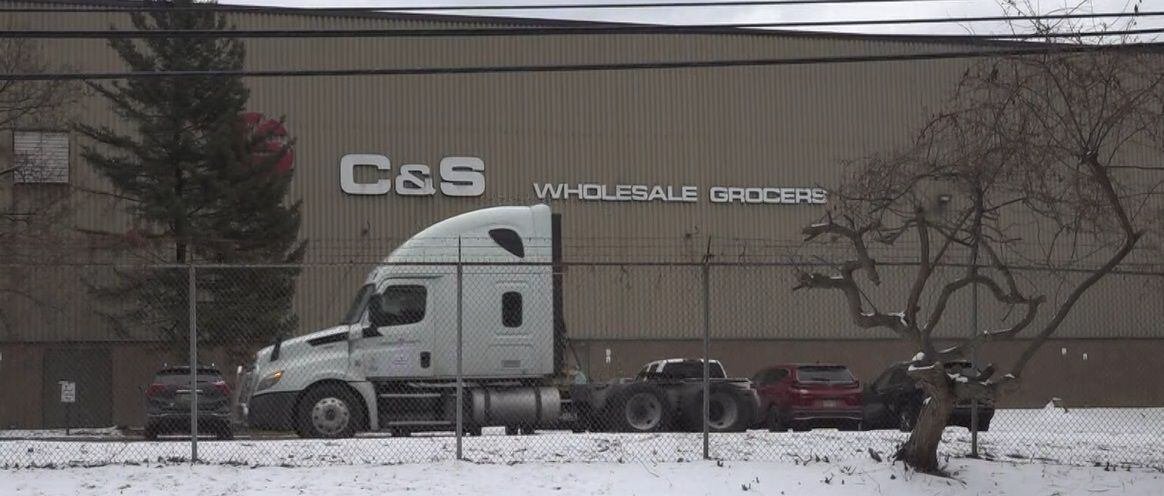
The wholesale grocery business is supposed to be invisible. You move product. You fill trucks. You never own the shelf. For 106 years, that was C&S Wholesale Grocers, a privately held distributor out of Keene, New Hampshire that supplied more than 7,500 supermarkets, chain stores, and military bases across the country while remaining almost totally unknown to the shoppers it fed. Today, C&S controls hundreds of retail grocery locations spanning multiple banners, operates across dozens of states, and has transformed itself, through a series of forced opportunities, collapsed mega-mergers, and aggressive acquisitions, into one of the largest brick-and-mortar grocery retailers in the United States. Nobody planned it this way.
The Merger That Started Everything
In October 2022, Kroger announced a $24.6 billion deal to acquire Albertsons, a combination of the two largest traditional supermarket chains in the country, representing nearly 5,000 stores and 700,000 employees. To appease regulators, the companies needed to divest hundreds of stores, and they needed a buyer. They found one in C&S.
In September 2023, C&S agreed to purchase 413 stores, eight distribution centers, two regional offices, and five private label brands across 17 states and Washington, D.C. as the designated divestiture buyer. By April 2024, that number had grown to 579 stores, a package worth roughly $2.9 billion. The pitch to regulators was that C&S, a century-old distribution veteran with supply chain infrastructure already threaded through the American grocery system, would become a legitimate competitor in the markets where Kroger and Albertsons overlapped.
The courts did not agree. On December 10, 2024, U.S. District Judge Adrienne Nelson granted the FTC's request for a preliminary injunction blocking the merger, and a Washington state court issued a parallel ruling the same day. Both courts found that C&S, which at the time operated just 23 corporate supermarkets mostly under the Piggly Wiggly brand, was not a credible replacement for the competitive pressure Albertsons would exit. The merger terminated the next day. The divestiture deal died with it.
C&S was left with nothing.
The Company That Kept Accelerating
What happened next is what makes the C&S story genuinely unusual. Rather than retreating to its wholesale core, the company accelerated. Within weeks of the merger's collapse, C&S was moving on two fronts simultaneously.
On February 7, 2025, Aldi announced it would sell approximately 170 of the Winn-Dixie and Harveys Supermarket locations it had acquired from Southeastern Grocers, along with the company itself, to a private consortium led by Southeastern Grocers' own CEO, Anthony Hucker. C&S was a key investor in that consortium. The deal preserved roughly 170 stores across Alabama, Georgia, Louisiana, Mississippi, and Florida, plus more than 150 Winn-Dixie liquor stores, operating under banners that remain recognizable across the Southeast. C&S CEO Eric Winn called it a continuation of a 20-year supply relationship with Southeastern Grocers, framing it as retail investment layered on top of an existing wholesale partnership.
Then, in June 2025, C&S went larger. The company announced a $1.77 billion acquisition of SpartanNash, a Michigan-based food solutions company that operated nearly 200 corporate supermarkets across a dozen grocery banners in 10 states, including Family Fare, Martin's Super Markets, and D&W Fresh Market, while also running a major wholesale distribution business of its own. The SpartanNash deal closed in September 2025, after shareholders voted to approve on September 9. The combined entity now operates nearly 60 distribution centers, serves close to 10,000 independent retail locations, and runs more than 200 corporate-owned grocery stores. S&P affirmed a B credit rating on C&S, noting that while the acquisition strengthens the company's long-term prospects, it carries integration risks that could keep leverage elevated.
The $48.4 Million Discount
The SpartanNash acquisition came with a notable footnote. According to a 202-page proxy statement SpartanNash filed with the SEC on July 31, 2025, the deal had originally been negotiated at a higher price. C&S had progressed through multiple rounds of offers, starting at a range of $24.08 to $26.32 per share, then moving to $28 per share in April 2025, before a last-minute development involving the loss of a wholesale customer forced SpartanNash to accept a revised offer of $26.90 per share. The total haircut came to $48.4 million.
The proxy also revealed that SpartanNash had not sought competing bids from other buyers. The company entered exclusive negotiations with C&S and stayed there. SpartanNash ended the first quarter of 2025 with $762 million in long-term debt, which exceeded its $738.5 million in shareholder equity. The combination of leverage, customer loss, and an absence of competing interest left the company negotiating from a position of weakness. The deal closed anyway. The acquisition, at a 52.5 percent premium over SpartanNash's June 20 closing price, was still described by both boards as fair.
For C&S, which had spent more than a year preparing to integrate hundreds of Kroger-Albertsons stores before seeing that deal evaporate, the SpartanNash acquisition offered something the Kroger situation never could: regulatory simplicity. C&S and SpartanNash had minimal geographic overlap in retail operations, touching only in Wisconsin and parts of the Mid-Atlantic. There were no antitrust fights, no state attorneys general, no FTC injunction proceedings. The deal moved from announcement to close in roughly three months.
A Structural Arrangement With Almost No Precedent
The organizational structure C&S now operates is genuinely difficult to categorize. The company simultaneously runs a national wholesale distribution business serving tens of thousands of independent retailers, including many who compete directly with C&S-owned stores, while managing retail banners including Piggly Wiggly, Grand Union, Family Fare, Martin's Super Markets, D&W Fresh Market, Winn-Dixie, and Harveys Supermarket. It supplies competitors. It competes with customers. It is both a service provider and a direct market participant in the same geographies.
This structural duality is unusual even by the standards of modern American food retail. Traditional grocery cooperatives like Wakefern, which owns ShopRite, have long operated with this kind of tension: a wholesale entity that also represents competing retail operators. But they evolved that way over decades under a cooperative governance model. C&S arrived here through two years of opportunistic acquisition, with no publicly stated integration roadmap and no playbook for managing the conflict of interest at scale. Industry analysts have noted that the tension between C&S's wholesale neutrality and its retail ambitions raises real questions: Can a company simultaneously serve as the preferred supplier of independent grocers and compete against those same grocers with its own banners?
The Man Behind the Curtain
Rick Cohen, the third-generation chairman who has run C&S for decades, is not a grocery industry figure most Americans would recognize, but he is one of the most influential people in American food supply. Under his leadership, the company grew from a regional New England distributor into the largest wholesale grocery operation in the United States, generating approximately $35 billion in annual revenue. Cohen holds about 70 percent of Symbotic, a warehouse automation company he founded in 2007 that now carries a market capitalization in the tens of billions and counts Walmart among its largest customers. Symbotic's robotics are deployed in C&S warehouses, meaning that Cohen's two major enterprises have a direct commercial relationship: C&S is both a customer of and a showcase for the automation technology Cohen controls.
That vertical integration has implications for C&S's retail expansion. As the company absorbs more stores, it expands the potential addressable market for Symbotic's systems, doing so in a domain where no public financial disclosure is required. Cohen's consolidated control over both companies, and the opaque nature of their financial relationship, means the full picture of how the grocery empire is being financed and structured is largely invisible to outside observers.
The Legal Reckoning With Kroger
C&S's transformation has not been without friction. After the Kroger-Albertsons deal collapsed, C&S filed suit against Kroger in Delaware Superior Court in March 2025, seeking the $125 million termination fee the two parties had agreed upon as part of the revised divestiture plan. Kroger fought back, alleging that C&S had breached its contract by having unauthorized conversations with Albertsons employees about the merger arrangement and by failing to take required preparatory steps to operate the divested stores. C&S called Kroger's response a bad-faith defense to an unambiguous contractual obligation. The two companies settled confidentially in August 2025, with terms undisclosed and neither party confirming whether any money changed hands.
The lawsuit and its aftermath added a layer of institutional bitterness to an already complicated episode. C&S had spent years preparing to become a major retailer through the Kroger divestiture. It had hired retail leadership, developed integration plans, and publicly committed to operating the stores as a functioning chain. Courts rejected that commitment as insufficient. And then, when the deal collapsed, the company that had positioned itself as a credible buyer found itself in litigation with the partner that had chosen it.
An Empire Built in the Dark
What C&S has constructed in the span of roughly 18 months is remarkable less for its scale than for its opacity. The company is privately held. It files no public financial statements. Its retail strategy, if it has one, has not been disclosed. Its integration plans for Winn-Dixie and SpartanNash have not been made public. Eric Winn has spoken in broad terms about scale, efficiency, and purchasing power, but has offered nothing resembling a retail playbook.
The absence of disclosure is not unusual for a private company; C&S has operated this way for over a century. But the scale of what it is now attempting is unusual for any company, private or public. It has taken on hundreds of retail locations under banners with distinct regional identities, serving shoppers in the rural South, the Midwest, and the Northeast who have decades-long relationships with their local grocery chains. The challenge of integrating those banners, managing real estate, labor contracts, supplier relationships, and consumer loyalty, while simultaneously running a wholesale operation that supplies thousands of competitors, is a project of staggering complexity.
Industry observers who cover the private brand dynamics of the combined entity have already flagged the tension. SpartanNash's Our Family brand has generational loyalty in Michigan. C&S's Best Yet private label was relaunched in 2025 with a refreshed look. The combined portfolio includes at least a half-dozen private brands in overlapping categories. Rationalizing them efficiently risks destroying shopper loyalty built over decades. Preserving them all raises cost and complexity. The right answer requires a deliberate strategy. C&S has not said what that strategy is.
What is clear is that the company the FTC dismissed as unqualified to operate 579 stores in 2024 is now, by any reasonable count, one of the largest grocery retail operators in the United States, assembled from the wreckage of the biggest failed supermarket merger in American history, a distressed Michigan wholesaler, and the remnants of what was once Southeastern Grocers. It got here without a single public filing, without a stated plan, and without anyone quite noticing until the stores were already open.