The Death Certificate of a Thesis: Greg Abel Walks Away from Kraft Heinz
Greg Abel's decision to register Berkshire's 27.5% Kraft Heinz stake for sale is the first concrete proof that post-Buffett Berkshire is willing to admit when Buffett was wrong.
By Carry and Conquer Publications
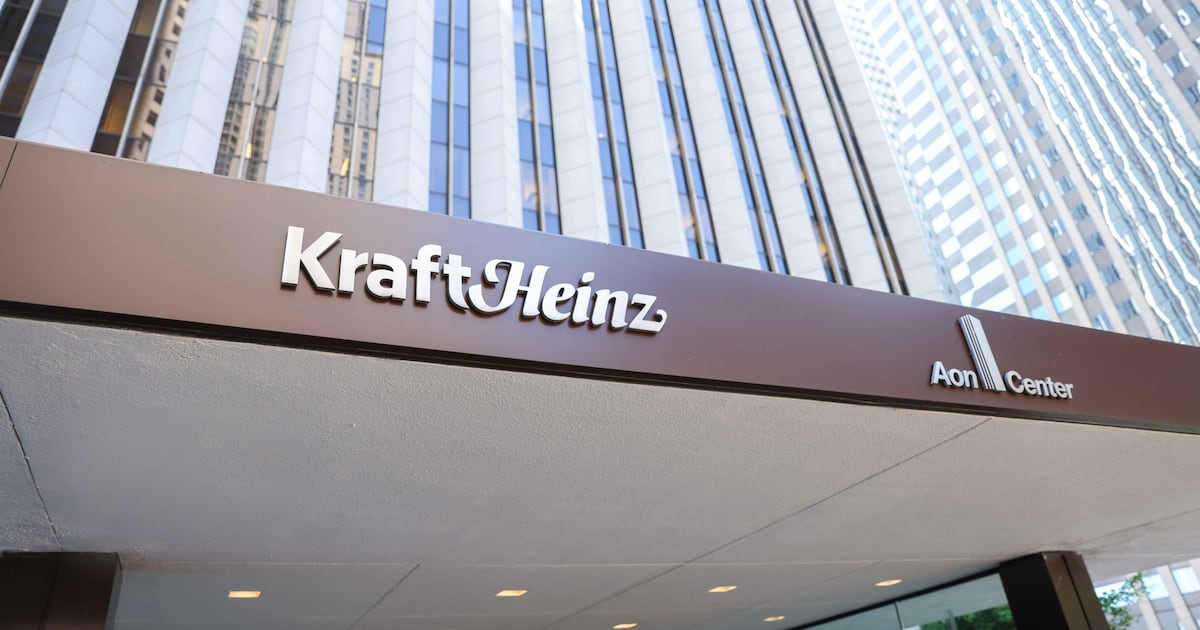
Berkshire Hathaway's decision to register its entire 27.5% stake in Kraft Heinz for sale is not just the unwinding of one bad investment. It is the official burial of the most celebrated cost-cutting thesis in modern consumer investing, and the first public act of a new CEO willing to admit that Warren Buffett was wrong.
How the Deal Was Supposed to Work
The architecture of the 2015 Kraft-Heinz merger was, in its moment, considered a masterpiece. Warren Buffett and Brazilian private equity firm 3G Capital had already proven the formula once: in 2013, they acquired H.J. Heinz for $23 billion, at the time the largest acquisition in food industry history. The playbook was 3G's signature: install zero-based budgeting, which required every expense to be justified from scratch each quarter rather than built incrementally on prior years. Cut headcount aggressively. Harvest cash flows from durable brands. Then do it again at scale.
In 2015, Buffett and 3G merged Heinz with Kraft Foods Group in a deal valuing the combined entity at roughly $46 billion, creating one of the largest food companies on the planet. Kraft Heinz launched with iconic brands across every shelf of the American grocery store: Heinz Ketchup, Kraft Mac and Cheese, Oscar Mayer, Philadelphia cream cheese, Lunchables, Capri-Sun. Buffett called it his kind of transaction. The investment community largely agreed. Stable brands, captive consumers, and 3G's scalpel would produce returns for years.
The formula did not survive contact with reality.
What Zero-Based Budgeting Actually Did
3G's approach eliminated 17,000 jobs in the first years after the merger. Marketing spend fell to roughly 4% of sales, about half the level of Kraft Heinz's industry peers. Research and development budgets were gutted. The cuts showed up on the income statement as efficiencies; they showed up in the brands as slow-motion starvation.
Consumers who were already migrating toward fresher food, private-label alternatives, and health-conscious products found no reason to come back to brands that were being milked rather than nurtured. As one analyst put it afterward, the thesis assumed brand equity was a static asset you could harvest. It turned out to be a living thing that required feeding.
The reckoning arrived in February 2019. Kraft Heinz announced a $15.4 billion goodwill impairment charge, one of the largest in corporate history, writing down the value of the Kraft and Oscar Mayer brands. The stock fell 27.5% in a single day, erasing more than $16 billion in market capitalization. Simultaneously, the company disclosed an SEC subpoena related to its procurement accounting practices, which the company eventually settled for $62 million. Buffett acknowledged on CNBC's Squawk Box that he had overpaid and had relied too heavily on the cost-cutting strategy. "I was wrong in a couple of ways about Kraft Heinz," he said.
The company never fully recovered. Berkshire had paid an average of approximately $75.50 per share for its stake. The stock was trading near $28 when the registration filing landed in January 2026, a decline of more than 60% from Berkshire's cost basis.
Greg Abel's First Move
Greg Abel officially took over as CEO of Berkshire Hathaway on January 1, 2026, following Buffett's retirement. Within three weeks, a regulatory filing appeared showing Berkshire had registered its entire stake of approximately 325 million shares for potential sale. The filing did not obligate Berkshire to sell, but its intent was clear.
"This appears to have changed with the hiring of Steve Cahillane, who has reshaped KHC's 2026 plans much more significantly than we had expected in just the six weeks since he started as KHC's CEO," Greggory Warren, senior equity analyst at Morningstar, noted at the time. The financial community read the filing as Abel declaring that Berkshire's decade of patient suffering with Kraft Heinz was approaching its end. The stake, once worth over $20 billion at the post-merger peak, was valued at approximately $8.5 to $8.9 billion when the filing was made.
What made the registration especially resonant was its symbolic weight. Buffett had held Coca-Cola and American Express through every market cycle for decades, treating them as permanent holdings regardless of short-term performance. Kraft Heinz had been carried in that same mental category, a "forever" stock, even as it destroyed value year after year. Abel's decision to formally prepare an exit marked the first concrete departure from Buffett-era orthodoxy.
A Company Under Siege on Every Front
The registration filing arrived at a moment of unusual convergence of pressures on Kraft Heinz as a business. Each of the major forces bearing down on the company in early 2026 would, on its own, be significant. Together they suggested a company whose structural problems had become impossible to defer.
The announced corporate split, first disclosed in September 2025, was itself an admission that the merged entity had never achieved its promised synergies. The plan called for Kraft Heinz to divide into two publicly traded companies: a "Global Taste Elevation" business anchored by Heinz, Philadelphia, and Kraft Mac and Cheese, and a "North American Grocery" business holding the legacy staples including Oscar Mayer, Kraft Singles, and Lunchables. The split was designed to unlock value by separating faster-growing brands from slower ones. But the arrival of new CEO Steve Cahillane, who joined January 1, 2026, having previously led Kellanova before its acquisition by Mars, prompted a full reversal. By February 11, Cahillane announced the split was paused, telling Bloomberg News he had the board's full backing. He committed instead to a $600 million investment in marketing, sales, and research and development to attempt a more fundamental operational recovery.
On the legal front, San Francisco City Attorney David Chiu filed what he described as a first-of-its-kind government lawsuit in December 2025 against ten major food manufacturers, with Kraft Heinz named at the top of the complaint. The suit, filed in San Francisco Superior Court as People of the State of California v. Kraft Heinz Company, Inc., et al., alleged that the defendants knowingly engineered ultra-processed foods to be addictive, marketed them deceptively as nutritious, and targeted Black and Latinx communities. Chiu drew explicit parallels to tobacco litigation. "These companies engineered a public health crisis, they profited handsomely, and now they need to take responsibility for the harm they have caused," he said at a press conference. A separate consumer class action filed in the Eastern District of Wisconsin sought over $1 billion in damages on similar grounds.
The MAHA movement added a third layer of regulatory pressure. Health Secretary Robert F. Kennedy Jr.'s sustained campaign against synthetic food dyes had already prompted Kraft Heinz to announce in June 2025 that it would remove all petroleum-based artificial colors from its U.S. products by the end of 2027. The FDA under Commissioner Marty Makary moved to accelerate that timeline, initially targeting voluntary compliance. What had once been a quiet regulatory footnote became a front-page compliance obligation with cost and reformulation implications across Kraft Heinz's entire portfolio.
The 3G Thesis, Officially Dead
The deeper significance of Berkshire's registration filing was not about one position. It was about a theory of value creation in consumer staples that had guided billions of dollars of private equity and public market capital through the 2010s.
3G Capital's zero-based budgeting model was applied not just at Kraft Heinz but at Anheuser-Busch InBev, Restaurant Brands International, and a series of other consumer roll-ups. The premise was that large, mature brands were fundamentally over-staffed and under-disciplined, and that the application of financial rigor could extract value without undermining the underlying franchise. Kraft Heinz was the clearest test of that thesis at scale in the food sector.
The result was a $15.4 billion goodwill write-down, over $37 billion in cumulative goodwill and intangibles impairments across the company's history, a securities class action that settled for $450 million, an SEC procurement investigation, four different CEOs in under a decade, and now a government lawsuit accusing the company of deliberately engineering addictive products. The brands that were supposed to be harvested had been damaged in ways that went beyond what cost discipline could reverse.
As University of Maryland management professor Paul Prochno described the arc: extreme cost-cutting produces a predictable trajectory. A string of positive results for the stock, then gradually shrinking returns, then a thud as the company's austerity, its lack of investment in innovation and creativity, catches up with it.
The thud, in Kraft Heinz's case, has lasted six years and counting.
What Comes Next
Abel's move to register the stake was followed, somewhat unexpectedly, by a partial reversal. Following Cahillane's decision to pause the split and commit to a turnaround, Abel told CNBC in March 2026 that Berkshire had no current plans to sell its Kraft Heinz position. The registration filing remained in place, preserving the option, but the timing of any actual sale became less certain.
The situation left Berkshire in an uncomfortable middle position: too large a holder to exit cleanly without moving the stock, not sufficiently convinced of the turnaround to recommit. Kraft Heinz's analysts remained skeptical, with projections showing revenue declining in 2026 before returning to marginal growth in subsequent years. The stock continued to trade at a steep discount to the broader market, reflecting that same institutional uncertainty.
For private equity investors watching from the outside, the signal is structural rather than transactional. The Kraft Heinz experiment represented the apex of the financial engineering thesis in consumer staples. Its failure, and the visible difficulty that even a company of Berkshire's scale has had in unwinding the position, is a case study in the difference between harvesting brand equity and building it. The brands that endure are not those that were optimized into submission. They are the ones that were allowed to grow.
Abel's willingness to even prepare an exit, to formally consider admitting the loss that Buffett would not, is the most honest thing Berkshire has done with Kraft Heinz in a decade.