The Company Betting That Curing Cancer Is Now an Industrial Problem
Cellares has raised nearly seven hundred million dollars to build automated factories for cell therapy, arguing the science is solved and the bottleneck is manufacturing.
By Carry and Conquer Publications
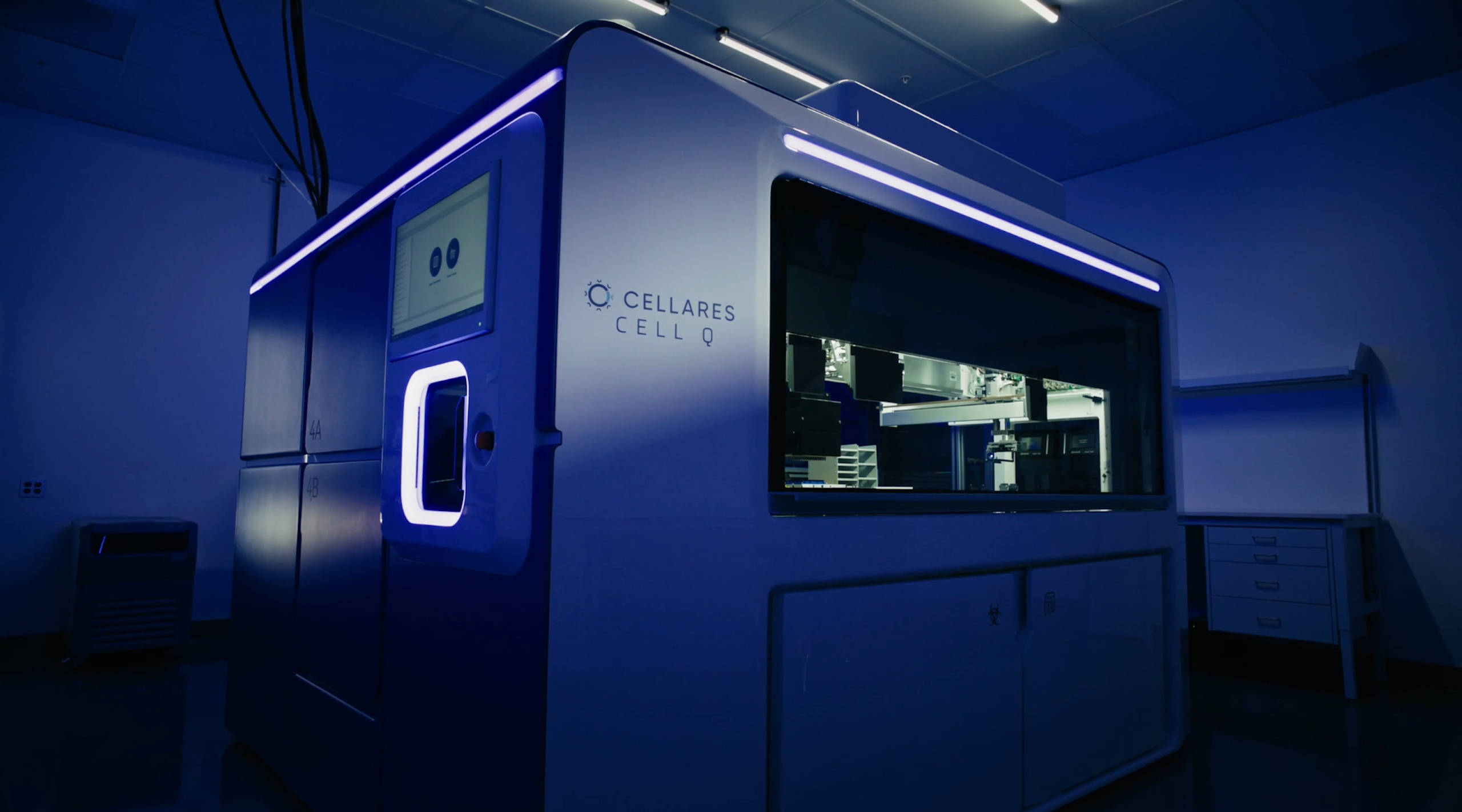
In 2017, the first CAR T-cell therapy won FDA approval, and the cell and gene therapy field erupted in celebration. Fabian Gerlinghaus remembers the mood at industry conferences that year as celebratory but strangely uneasy. People were shouting from the rooftops that cancer had a cure, he recalls, and in the same breath admitting nobody had a way to manufacture it at commercial scale or a sustainable cost. Two years later, Gerlinghaus left his post as Chief Innovation Officer at the gene-editing company Synthego and co-founded Cellares with Omar Kurdi, a fellow Synthego alumnus, to build the industrial infrastructure the field was missing. Seven years and roughly $682 million later, Cellares is one of the best-funded private companies in cell therapy, and it has never developed a drug.
The Problem Cellares Says It Exists to Solve
The case Cellares makes is blunt: cell therapy manufacturing has barely changed since the first CAR T products reached the market, and the human cost of that stagnation is measured in patients who die waiting. Autologous CAR T therapy requires extracting a patient's own T cells, shipping them to a centralized facility, genetically engineering and expanding them over roughly three to five weeks, then shipping the finished product back for infusion. That span is known in the industry as vein-to-vein time, and it typically runs a median of about 31 days. For aggressive cancers, a month can be the difference between eligibility and progression. Roughly one in five patients approved for CAR T therapy dies before their cells are ready, and manufacturing failures or delays render a meaningful share of leukapheresis collections unusable altogether.
Gerlinghaus's diagnosis is that the process remains manual, artisanal, and unscalable because it was built by biologists solving a biology problem, not by engineers solving a production problem. Cellares calls itself an Integrated Development and Manufacturing Organization, or IDMO, a category it says it invented to describe a company that owns both the automation hardware and the manufacturing operations rather than licensing equipment to others or running conventional contract development and manufacturing services.
What the Cell Shuttle Actually Does
The centerpiece of that pitch is the Cell Shuttle, a fully automated, closed manufacturing system roughly the size of a truck. A technician loads patient starting material into a proprietary consumable cartridge, which handles cell selection, activation, transduction, expansion, and formulation inside a single sealed instrument, without the open-air cleanroom steps that traditional manufacturing requires. Cellares says a single Smart Factory site can run sixteen independent batches simultaneously, and that automation cuts labor requirements by up to eighty percent and facility footprint by up to ninety percent compared with conventional methods. A companion platform called Cell Q automates the release testing that normally adds days or weeks after manufacturing ends, running quality control at the same pace as production. Company leadership has said newer manufacturing processes across the industry, including automated platforms, have compressed cycle times that once took ten days down toward two, a shift with direct implications for how many patient doses a single facility can produce in a year.
In February 2024, the Cell Shuttle became the first platform in any modality to receive the FDA's Advanced Manufacturing Technology designation, a regulatory signal that the agency views the system as aligned with its push toward more standardized, quality-assured production. Cellares has since been selected for the FDA's PreCheck pilot program, which moves manufacturing and facility discussions with regulators years earlier than the traditional pre-approval inspection timeline, a change Gerlinghaus has described as taking manufacturing readiness off the critical path for the companies that build on the platform.
From a Garage to $682 Million
Cellares' funding trajectory tracks the industry's growing conviction that manufacturing, not biology, is the binding constraint. The company started with a five-person team and an eighteen million dollar Series A in 2019, followed by an eighty-two million dollar Series B in 2021 and a two hundred fifty-five million dollar Series C in 2023. In late January 2026, Cellares closed a two hundred fifty-seven million dollar Series D co-led by BlackRock and Eclipse, bringing in a new class of public-markets crossover investors including funds managed by T. Rowe Price and Baillie Gifford, along with Duquesne Family Office, capital that rarely touches pre-revenue biotech hardware companies. In June 2026, Cellares grew that same Series D round to three hundred twenty-seven million dollars, adding a fifty million dollar investment from Prime Radiant Partners along with ARK Invest, and pushing the company's total capital raised to roughly six hundred eighty-two million dollars. Cellares has said the extended round finances the company through the start of commercial-scale operations and an IPO it is targeting for 2027.
The new capital is funding a genuinely global buildout: a commercial-ready Smart Factory already operating in Bridgewater, New Jersey, the original site in South San Francisco, and new facilities under construction in Leiden in the Netherlands and Kashiwa City in Japan, the latter anchoring Cellares' European headquarters after the company signed a lease for over one hundred thousand square feet of lab and office space. Cellares expects to support clinical-scale manufacturing in the first half of 2026, with commercial-scale production beginning in 2027, which the company says would represent the fastest ramp-up of any CAR T therapy launched to date.
Selling Capacity, Not Drugs
Cellares' business model looks less like a biotech and more like an industrial supplier. Its largest disclosed customer relationship is with Bristol Myers Squibb, which in April 2024 signed a worldwide capacity reservation and supply agreement worth up to three hundred eighty million dollars in upfront and milestone payments. Under that deal, Cellares dedicates multiple Cell Shuttle and Cell Q systems exclusively to BMS across its US, European, and Japanese factories to manufacture BMS's CAR T therapies, including Breyanzi and Abecma. It is a structure closer to a semiconductor foundry reserving fab capacity for a chip customer than a typical pharma manufacturing contract. Cellares' relationship with Cabaletta Bio has moved further than most: after successfully manufacturing Cabaletta's CAR T candidate Rese-cel on the Cell Shuttle through a technology adoption partnership, the two companies signed a ten-year commercial supply agreement in April 2026, and Cellares has since delivered the first GMP-manufactured doses to actual patients on the platform, a concrete answer to the question of whether the automation actually works outside a pilot program. Cellares has separately struck evaluation and technology adoption agreements with Autolus Therapeutics, City of Hope, TScan Therapeutics, ProTgen, Sonoma Biotherapeutics, Papillon Therapeutics, and Kite, the CAR T unit of Gilead, and in 2026 launched a research collaboration with Stanford Medicine to extend the same automated platform to gene-edited stem cell therapies beyond T cells. The Sonoma and Papillon deals in particular push the platform outside oncology, into an engineered regulatory T cell therapy for rheumatoid arthritis and a gene-corrected stem cell therapy for the rare neurodegenerative disorder Friedreich's ataxia, evidence that Cellares is trying to become the default manufacturing layer for cell therapy broadly rather than a CAR T specialist. In June 2026, Cellares also joined the New American Industrial Alliance, a trade coalition focused on rebuilding domestic industrial capacity, positioning its US factories as part of a case for reducing dependence on foreign biologics manufacturing.
That breadth of partners is also a reminder that Cellares is not the market leader by installed base, whatever its funding headlines suggest. Independent industry estimates put Lonza's Cocoon platform, deployed across more than one hundred fifty instruments globally, at eighteen to twenty-two percent of the automated closed-system manufacturing market, versus roughly ten to fourteen percent for Cellares. Ori Biotech, which took a different path by licensing its IRO platform into partners' existing facilities rather than owning capacity outright the way Cellares does, has also secured its own FDA AMT designation and built a preferred-partner network spanning Charles River Laboratories and ElevateBio. Miltenyi's CliniMACS Prodigy, Cytiva's Sefia platform, and Catalent's UpTempo system round out a field that one market analysis counted at eleven or more competing closed-system platforms as of 2025. When Cellares first proposed integrating cell selection, engineering, expansion, and testing into a single closed instrument, Gerlinghaus recalls being told flatly that the company was, in his words, positively nuts.
The Bet Underneath the Bet
What makes Cellares unusual is the thing it is explicitly not doing. It has no drug pipeline, no royalty stream from a therapy it invented, and no claim on the clinical outcomes of the products that pass through its factories. Its revenue depends entirely on convincing pharmaceutical companies that the economics of building their own automated manufacturing are worse than renting Cellares' capacity, at a moment when at least a dozen credible competitors are making adjacent pitches, several with their own FDA blessing. The model Cellares chose, owning and operating its own Smart Factories rather than licensing the technology into other companies' facilities the way Ori Biotech does, is also the more capital-intensive one: independent cost analyses of automated closed-system manufacturing put the up-front equipment cost at roughly five times a conventional manual facility, with a payback period that can run three to five years or longer, a timeline that sits awkwardly against the funding cycles most biotech investors expect. Payers, meanwhile, remain an open question of their own, with reimbursement models still unsettled on whether automation's efficiency gains translate into lower per-dose pricing. Cellares is betting that owning the full stack, rather than licensing pieces of it, is what lets it capture BMS-scale capacity-reservation contracts that a modular competitor cannot. If the wager pays off, Cellares becomes something like infrastructure for an entire therapeutic category, the way a foundry underwrites an entire generation of chip designers. If it does not, the company has built a global network of factories on the premise that pharma would rather rent throughput than own it or buy it piecemeal from a cheaper modular vendor, a bet that will not be fully tested until commercial-scale production, and the 2027 IPO built on top of it, actually arrive.