The Chip That Was Right Too Early: How Esperanto Technologies Built a 1,000-Core RISC-V Marvel and Still Lost
A decade of engineering, $63 million in venture capital, and a technically validated AI chip - undone by market pivots, the CUDA moat, and a talent war it could not win.
By Carry and Conquer Publications
Esperanto Technologies spent eleven years and $63 million building what many semiconductor engineers considered the most architecturally elegant AI inference chip ever constructed on the RISC-V instruction set. Its ET-SoC-1 packed 1,088 custom cores onto a single 7nm die, ran a 13-billion-parameter language model on 25 watts, and drew early evaluations from Samsung SDS and others. In July 2025, the company shut down - not because its chip failed technically, but because the market moved faster than a small startup could follow, and Nvidia's GPU monopoly proved more durable than any efficiency argument could overcome.
The Legend Behind the Bet
To understand Esperanto, you have to understand Dave Ditzel. He co-authored "The Case for RISC" alongside UC Berkeley professor David Patterson - the foundational paper that launched the reduced instruction set computing movement in the early 1980s. He designed multiple generations of SPARC processors at Sun Microsystems. He co-founded Transmeta, a company that raised more than $600 million and went public at a $6 billion valuation on the strength of its energy-efficient x86 emulation chips. He then spent six years at Intel working on processor architecture.
When Ditzel founded Esperanto in 2014, the bet was explicit: that RISC-V, the free and open-source instruction set architecture incubated at Berkeley, could be engineered into a chip capable of displacing both CPUs and GPUs for AI inference workloads - at a fraction of the power cost. Western Digital made a strategic investment in 2017, signaling serious industrial backing. A $58 million Series B closed in 2018, bringing total disclosed funding to $63 million. At its peak, the company had 140 employees across Mountain View, Portland, Barcelona, and Belgrade.
What the ET-SoC-1 Actually Was
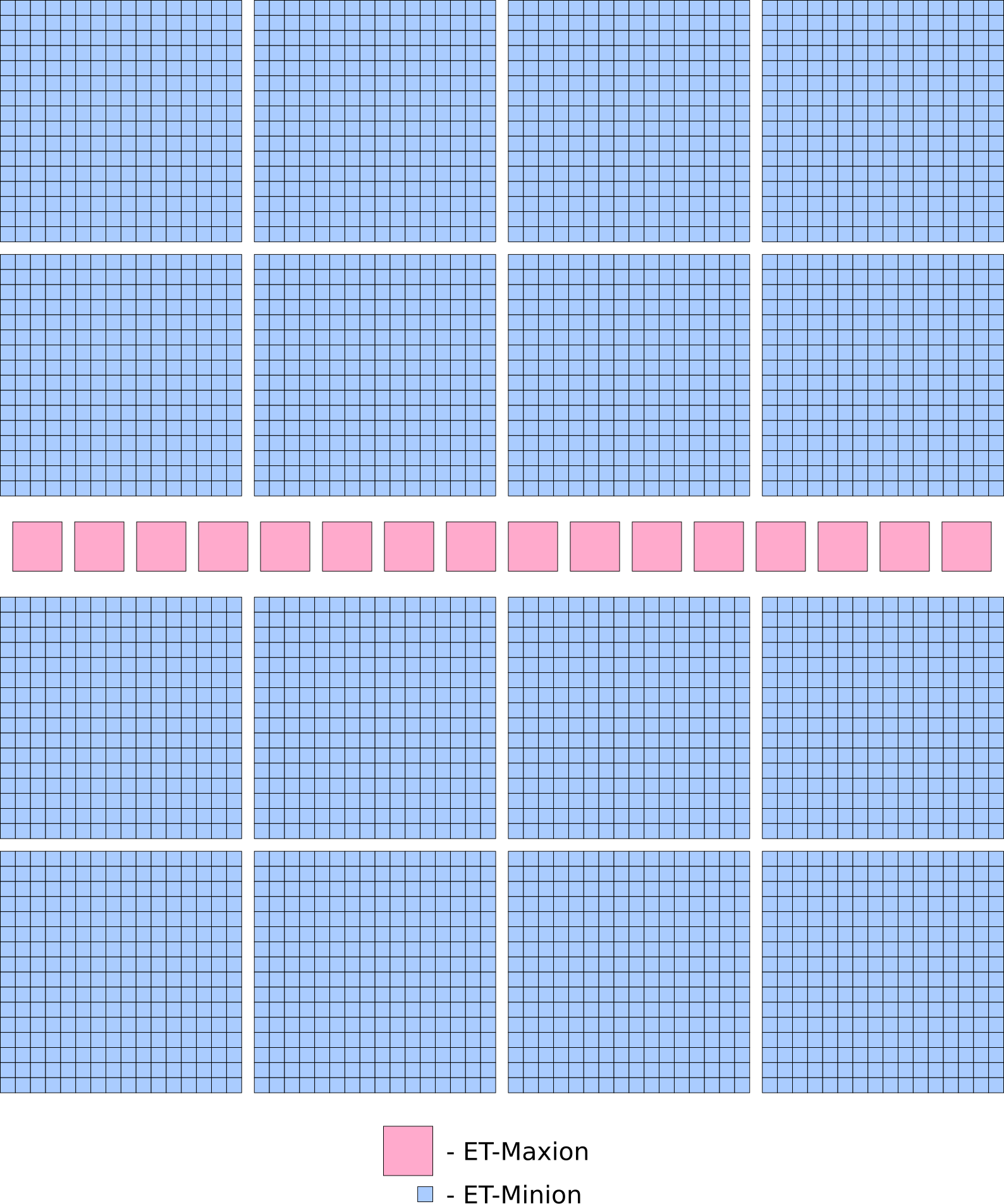
The chip Esperanto eventually taped out on TSMC's 7nm process was genuinely unusual. Rather than following the industry default of a handful of powerful, power-hungry cores, the ET-SoC-1 deployed 1,088 custom "Minion" cores - small, energy-efficient, in-order multithreaded processors each equipped with vector and tensor acceleration units - alongside four high-performance "Maxion" cores for scheduling and system management. The result was a chip capable of running AI inference workloads at roughly 25 watts per chip, with up to 16 chips per server.
The architecture gave Esperanto a real claim: its inference-per-watt figures for certain workloads genuinely outperformed incumbent GPU solutions. Samsung SDS ran early evaluations and called the platform fast, performant, and easy to use. The chip supported PyTorch and TensorFlow via ONNX, ran Meta's OPT-13B language model, and was designed to scale cooperatively across hundreds or thousands of chips in a data center cluster. In 2023, the company introduced what it called the first RISC-V generative AI appliance - a complete hardware and software stack targeting enterprises that wanted private, on-premises LLM deployment with low power consumption and total cost of ownership.
Three Pivots, One Chip
The problem was market timing compounded by repeated strategic pivots - all executed on a single chip design that could not keep pace with where the industry was running.
Esperanto launched the ET-SoC-1 targeting recommendation workloads - the engines that power content feeds at Meta and TikTok. By the time the chip reached production in 2023, transformer-based LLMs had eclipsed recommendation models as the dominant AI inference workload. The company pivoted to generative AI. But the ET-SoC-1's memory bandwidth of 132 GB/s was roughly one twenty-fifth that of Nvidia's H100, which severely constrained its ability to serve models larger than 13 billion parameters. DeepSeek-R1, one of the most widely deployed open models at the time of Esperanto's shutdown, has 671 billion parameters.
A planned second-generation chip, the ET-SoC-2, was designed to add FP64 double-precision capability for HPC customers and incorporate high-bandwidth memory. But while Esperanto was planning that roadmap, Nvidia and AMD were already trimming FP64 from their own upcoming architectures to make room for more low-precision AI math units - a recognition that no single chip could serve both the HPC and AI inference markets simultaneously. The second chip never reached production.
Death by Talent Raid
The proximate cause of Esperanto's collapse was not a failed product launch or a lost customer. It was attrition. As CEO Art Swift told EE Times in July 2025, deep-pocketed competitors - Nvidia, AMD, Google, Apple, and the growing roster of well-funded AI chip startups flush with venture capital - offered Esperanto's engineers packages two, three, and four times what a 140-person startup could match. The Barcelona and Belgrade engineering teams, where much of the chip's circuit design expertise resided, were effectively dismantled. Mountain View headcount fell by 90 percent. Swift and a skeleton crew remained to seek a technology buyer or licensor.
The broader context was brutal for the entire alternative chip sector. Untether AI, another energy-efficient AI inference startup, had folded just before Esperanto's announcement. The gravitational pull of Nvidia's CUDA software ecosystem - a decade of developer tooling, library support, and institutional familiarity - had proven nearly impossible for any new architecture to overcome, regardless of how compelling the silicon specs were on paper.
The IP Lives On - as Open Source
In October 2025, a startup called Ainekko acquired all of Esperanto's intellectual property, including chip designs, software tooling, and development frameworks. Ainekko's founders had a different thesis: that Esperanto's architecture had never been wrong, only mismatched to its target market. Where Esperanto chased hyperscale data centers, Ainekko saw the edge - robotics, industrial automation, IoT, embedded security - as the natural home for a massively parallel, ultra-low-power RISC-V compute platform.
Ainekko released the ET-SoC-1's RTL code and toolchain under Apache License v2 through its AI Foundry platform on GitHub, making it one of the most significant open-source silicon releases in the RISC-V ecosystem's history. Dr. Allen Rush, a former AMD Senior Fellow responsible for GPU AI acceleration architecture, called the original design ahead of its time. The Ainekko founders described their ambition in terms that Esperanto's engineers would have recognized: what Linux did for servers, open hardware could do for AI inference.
What Investors and Operators Must Now Reckon With
Esperanto's failure carries a specific lesson for capital allocators in the semiconductor and deep tech sectors that goes beyond the familiar narrative of a startup outgunned by incumbents.
The company's architecture was validated. Its efficiency claims held up. Its partnerships - Western Digital, Samsung SDS, Intel Foundry Services, NEC, Rapidus - were legitimate. What defeated it was the combination of a long development cycle inherent to chip design, a market that rotated three times during that cycle, a talent market so overheated by frontier AI investment that a $63 million company could not retain the people it had trained, and a software moat (CUDA) that had been quietly compounding for a decade before the AI boom made it visible to everyone else.
For private equity sponsors and growth investors evaluating semiconductor bets, the Esperanto post-mortem suggests that the relevant question is not whether an alternative chip architecture is technically superior. Many are. The question is whether the company has the balance sheet depth to survive the time between tape-out and volume production, the talent retention tools to hold its engineering core during that window, and a software ecosystem story that can compete with a decade of incumbency. Esperanto had one of those three. It was not enough.
The Right Chip at the Wrong Time
There is a particular kind of failure in technology that is harder to learn from than simple incompetence: the failure of being correct about a technology but wrong about the timing, the market, or the resources required to outlast a hostile environment. Esperanto Technologies was right about RISC-V. It was right about energy efficiency as a structural advantage. It was right about the long-term architecture of AI inference. It ran out of time and people before any of those things could become revenue.
The ET-SoC-1 is now open source. Ainekko is extending it to the edge. The RISC-V ecosystem that Esperanto helped build continues to expand, with serious investment from European governments, Chinese semiconductor firms, and now a wave of post-CUDA startups who see the architecture as the only viable path to breaking Nvidia's structural grip. Dave Ditzel's chip did not win the market it was designed for. It may yet win a different one.