The Chinese Biotech Brewing Breast Milk Sugar in a Bioreactor for Toddler Drinks
A Beijing startup is fermenting a bioidentical human milk protein in steel tanks, and its next stop is the drinks aisle for children who stopped breastfeeding years ago.
By Carry and Conquer Publications
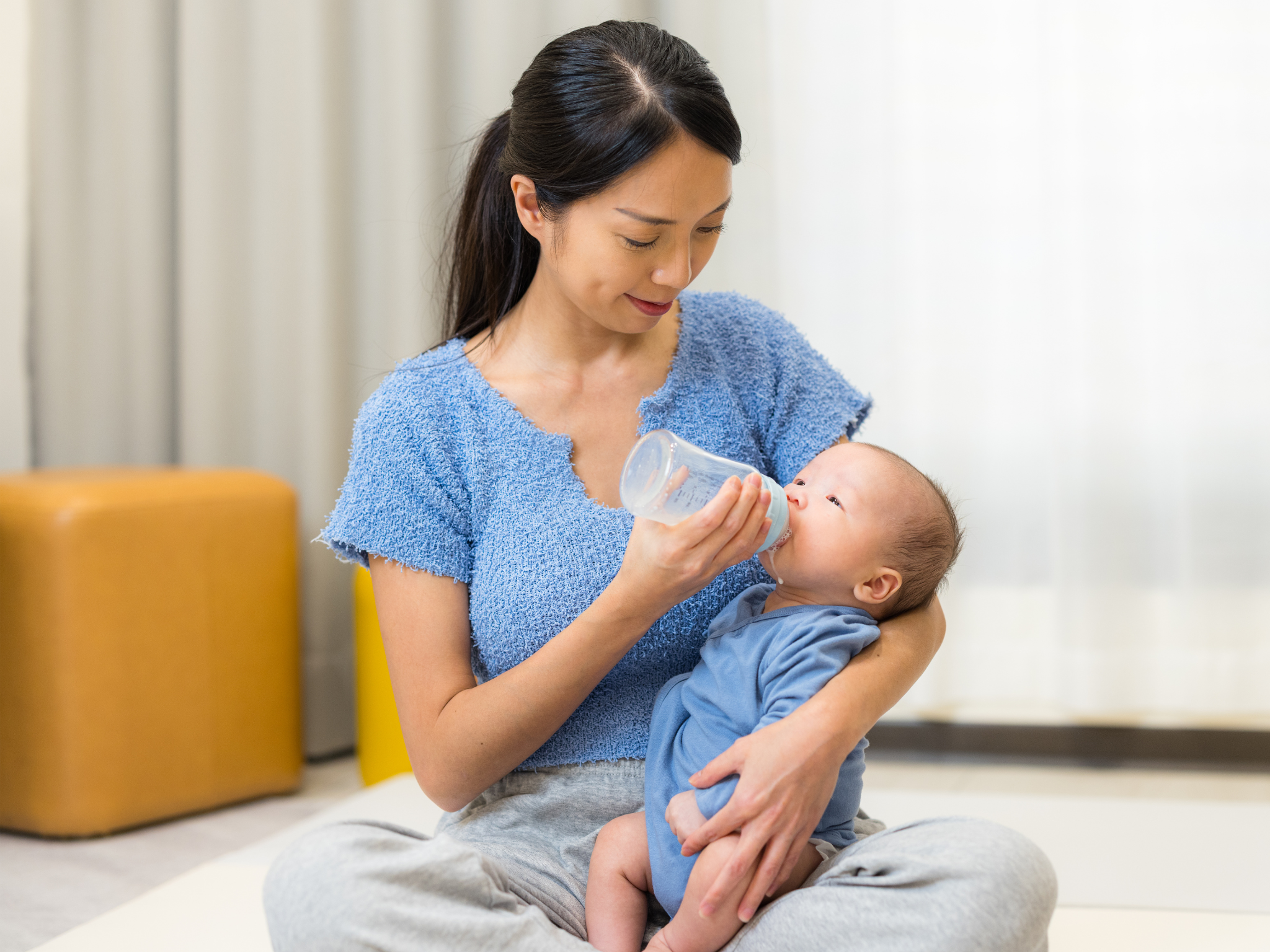
Beijing Guoke Xinglian Technology Co has just closed 100 million yuan ($14.6 million) in Series A+ funding to scale up a technology that sounds like it belongs in a biotech thriller rather than a supermarket freezer case: microbes engineered to brew the exact proteins found in human breast milk, at industrial volume, in fermentation tanks. The round pushes the four-year-old company's total raised past 200 million yuan ($29.2 million), and it arrives at a moment when a handful of biotech firms across three continents are racing to solve the same improbable problem, replacing a substance mothers make for free with one that microbes can make at scale. Guoke Xinglian's ambition does not stop at infant formula. It extends into "functional food and beverage" products aimed at toddlers and young children, years past the age at which any of them would still be breastfeeding.
A protein that costs more than gold, per kilogram
The Series A+ round was led by Shanghai Zhuiguang Julian, Lenovo Capital, and a fund under Changjin Holdings. Liao Jieying, a partner at CEC Capital Group, which advised on the deal, called Guoke Xinglian a leader in what he termed the active glycoprotein sector, and described the company's founding logic in a striking turn of phrase: proteins that originate from mothers, given back to the maternal and infant market.
The company's first target is lactoferrin, an iron-binding glycoprotein and the most abundant immune protein in breast milk, where it appears in concentrations roughly ten times higher than in cow's milk. Lactoferrin is credited with antibacterial, antiviral, and gut-strengthening properties, and it is already a fixture in premium infant formulas worldwide, sourced almost entirely from cow's milk. That sourcing is the bottleneck the entire industry is trying to engineer its way around. Purified lactoferrin extracted from dairy costs between 600 and 2,000 dollars per kilogram, and pulling one kilogram out of cow's milk requires somewhere between 10,000 and 30,000 liters of it, according to figures cited by multiple precision fermentation firms. Some of the largest conventional producers have reportedly been sold out for two to three years running.
Guoke Xinglian's pitch is that it does not need a single cow. Built on research from the Chinese Academy of Sciences, the company inserts genetic instructions into a chassis cell derived from the yeast species Kluyveromyces martensii, then edits the glycosylation pathway, the process by which sugar molecules attach to a protein and determine its folding, stability, and resistance to breakdown, so the resulting molecule matches the structure found in actual human milk rather than its bovine cousin. The company claims this makes it the only firm to have expressed human milk glycoproteins through food-grade yeast. Its lactoferrin has entered trial production, and the fresh capital is earmarked for pushing that process to industrial scale while pursuing the regulatory approvals it will need in each market it wants to enter.
A crowded bioreactor
Guoke Xinglian is not alone in the tank room. Only four companies globally have so far won clearance to sell precision-fermented lactoferrin, bovine or human, and all four can sell in the United States: Singapore's TurtleTree Labs, New York-based Helaina, the Netherlands' Vivici, and Australia's All G. Helaina's human lactoferrin already appears in roughly a dozen products across women's wellness, gut health, and recovery categories, and the company is now working with Nestle on baby formula. TurtleTree sells its bovine-identical protein through its own consumer brand, Intentional, and has struck a manufacturing and commercialization deal with Novonesis, a sister company to Ozempic maker Novo Nordisk.
All G, founded in Sydney in 2020 by serial entrepreneur Jan Pacas, has emerged as the sharpest-elbowed competitor. The company has raised roughly 36 million dollars, holds a self-affirmed GRAS determination in the United States, and became the first company worldwide to win Chinese regulatory approval for animal-free lactoferrin. It has already shipped its bovine ingredient, LFX, to US supplement makers and expects a self-affirmed GRAS filing for its human lactoferrin before the end of 2026, with a market launch to follow within six months of that. Pacas has pointed to China's roughly 35 billion dollar infant formula market as the real prize, predicting that human lactoferrin will become dominant in infant formula within five to ten years. Meanwhile All G's chief scientific officer Jared Raynes has filed a patent covering a formulation of five separate human breast milk proteins, alpha-lactalbumin, lactoferrin, beta-casein, kappa-casein, and serum albumin, aimed squarely at reproducing breast milk's protein profile wholesale rather than one molecule at a time.
France's Standing Ovation is chasing a related but distinct thesis. The company raised 34.2 million dollars in a Series B round in early 2026, backed by Bpifrance, Credit Mutuel Innovation, and dairy giants Bel Group and Danone Ventures, to scale a fermentation process that converts acid whey, a cheese and yogurt byproduct, into casein, the protein that makes up roughly 80 percent of milk's protein content. Unlike Guoke Xinglian and All G, Standing Ovation's focus is bovine-identical casein for mainstream dairy manufacturing rather than a human-identical infant nutrition play, but its capital raise underscores how much institutional and government money is now chasing the broader premise that a fermentation tank can replace a cow, or in Guoke Xinglian's case, a mother.
The numbers behind the race are large enough to explain the crowd. The global precision fermentation ingredients market is valued at roughly 5 billion dollars in 2025 and is projected to reach 36.3 billion dollars by 2030, according to MarketsandMarkets, a compound annual growth rate above 48 percent. Whey and casein proteins currently lead the ingredient mix, but functional proteins built for infant and specialty nutrition, the category Guoke Xinglian is targeting, are among the fastest-growing subsegments as more companies chase regulatory clearance in China, the United States, and Europe simultaneously.
From formula to the drinks aisle
Where Guoke Xinglian's ambitions diverge most sharply from its Western peers is in how far past infancy it wants to push its proteins. Liao Jieying's comments about the company's mission specifically named functional food and beverage applications for the maternal and infant market, and Guoke Xinglian is explicit that its glycoproteins are meant to travel beyond formula cans into fortified drinks aimed at toddlers and young children, well past the point at which a child would still be nursing.
That ambition lands the company squarely inside a fight that has nothing to do with fermentation technology and everything to do with marketing. So-called toddler milks, also called follow-up or growing-up formulas, have drawn sustained criticism from pediatric and public health bodies for years. The American Academy of Pediatrics issued a clinical report concluding that toddler formulas offer no nutritional advantage over a normal diet and can carry higher sodium, added sweeteners, and inconsistent protein levels compared to plain cow's milk, and it recommended the products be labeled and shelved separately from infant formula rather than positioned as a natural next step. Pediatric gastroenterologist George Fuchs, who led that report, has said the added sugars in these drinks can increase a toddler's preference for sweetened foods and contribute to obesity risk. Harvard Health has been blunter still, noting that toddler formulas exist mainly to keep formula customers past their first birthday rather than to meet any medical need, and that some variants are nutritionally worse than the cow's milk they are meant to replace. In the United States, toddler milk sales already average more than 500 million dollars a year despite that criticism, and lawsuits have accused major manufacturers of leaning on deceptive labeling to sustain it.
Layering a genuinely novel, human-identical protein onto that category does not resolve the underlying question public health researchers keep raising: whether a three-year-old drinking a fortified beverage needs anything that a varied diet, and plain milk, do not already provide. It does, however, change the marketing pitch available to the companies selling it. A toddler drink built around a molecule extracted, or in this case brewed, from actual human milk carries a different kind of claim than one built around vitamin premixes and added sugar, whether or not that claim survives scientific scrutiny once the product reaches a shelf. Guoke Xinglian is betting that a decade from now, the distinction between a bioreactor's output and a mother's own biology will matter less to regulators and consumers than the price per kilogram does today.