The Channel That Out-Told CNN: How Arise News Rewrote Africa's Media Playbook
Africa's first truly pan-continental private broadcaster is no longer chasing the global giants - it is surpassing them.
By Carry and Conquer Publications
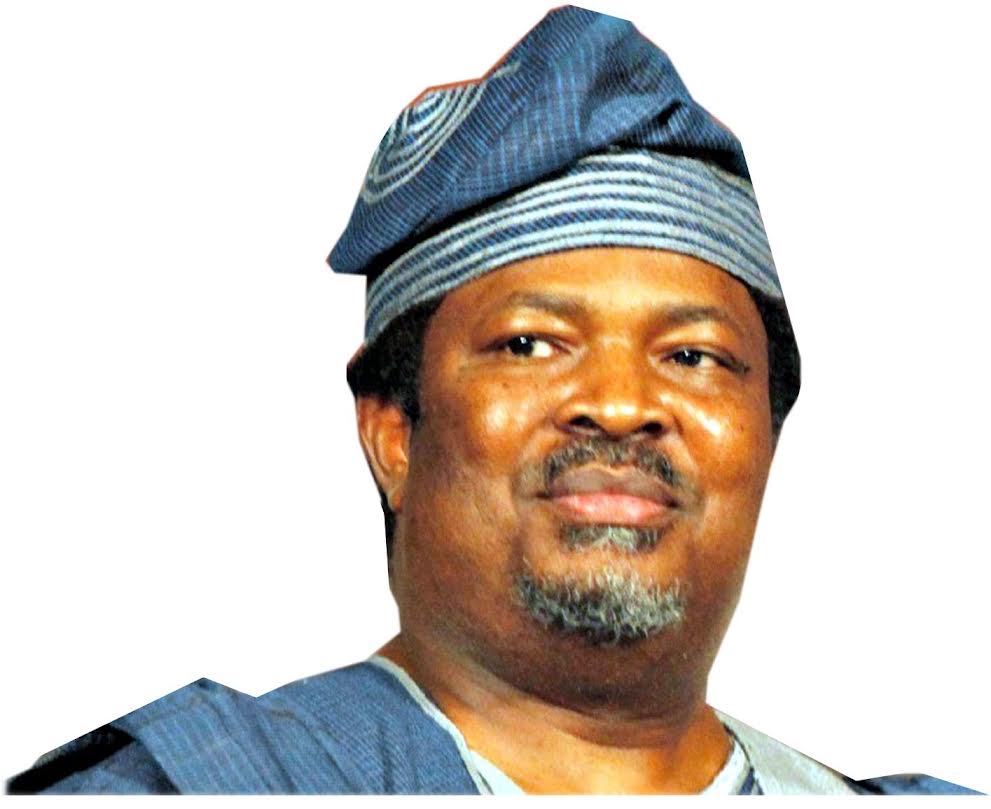
In early 2026, reports from key African markets confirmed what Nigerian advertisers and media buyers had suspected for years: Arise News, the Emmy-winning broadcaster launched in 2013 by media mogul Prince Nduka Obaigbena, had begun outpacing CNN in viewership across the African continent. For a channel that once struggled to meet payroll in its early years, the milestone represents one of the most striking reversals in international broadcast history - and a case study in what happens when a media operation stops trying to imitate the West and starts building for the audience in front of it.
The Man Behind the Mission
The story of Arise News begins with Obaigbena, born July 14, 1959, in Ibadan, into the royal family of the Owa Kingdom in Delta State. He was already a household name in Nigerian journalism when he founded THISDAY newspaper in 1995 - a publication that would become the go-to read for Nigeria's political and business elite. By 2013, with broadcast media shifting rapidly and Africa's information needs going systematically underserved by international networks, Obaigbena decided to build something that had never existed: a world-class news channel with Africa at the center, not the margins.
Arise News launched on February 4, 2013, with studios in London, New York, Johannesburg, and Lagos, and a roster of talent recruited from the world's top broadcasters. Jeff Koinange, formerly CNN's star Africa reporter, came aboard as anchorman and Johannesburg correspondent. Neil Stainsby, a senior BBC director, became Global Lead Director. The ambition was explicit: to give Africa the kind of international news infrastructure that the West had long taken for granted. Obaigbena put it plainly at the outset - "No one will shape your narrative better than you."
The early years were difficult. Staff payment delays became public. An investigation by Nigeria's Economic and Financial Crimes Commission into a $2.1 billion fund rattled operations and sapped momentum. The channel existed but had not yet found its moment.
Lekki and the Breakthrough
That moment arrived on the night of October 20, 2020.
As Nigeria's #EndSARS protests against police brutality culminated at the Lekki Toll Gate in Lagos, where soldiers opened fire on demonstrators, Arise News did what no other broadcaster dared: it kept its cameras live and its correspondents on the ground. The footage was carried simultaneously on DStv Channel 416, YouTube, Twitter, and the Arise TV website. A study published in 2021 in the GVU Journal of Communication Studies found that Arise TV accounted for 51.8% of national EndSARS coverage - more than the government-owned Nigerian Television Authority. More significantly, the study noted that Arise went deeper, providing greater analytical depth than its rival.
The moment transformed the channel's standing overnight. Social media was flooded with endorsements from influencers and activists who had found, for the first time, a television station that behaved as though it were working for Nigerians rather than around them. Corporate advertisers who had previously split their budgets between CNN and BBC began redirecting spending toward Arise. The President of the Association of Advertising Agencies of Nigeria noted the shift explicitly: top brands that had struggled for advertising exposure in CNN and BBC started looking inward to Arise Television. The channel had not just covered a story. It had staked out a position.
The Architecture of Scale
From that platform, Arise built methodically. By April 2024, marking its 11th anniversary, the Emmy-winning channel announced it had gone live across all 54 African nations, with the latest expansion bringing South Africa, Angola, Botswana, Lesotho, Malawi, Mozambique, Namibia, Swaziland, Zambia, and Zimbabwe online on DStv Channel 416 - the same infrastructure CNN and BBC had long used to reach African subscribers. Arise now broadcasts 24 hours a day from studios in Lagos, Abuja, Johannesburg, Cape Town, London, and New York, with additional access on Sky Channel 516 in the UK, Freeview Channel 136, and the Hot Bird satellite platform reaching Europe, North Africa, and the Middle East.
The channel operates with a staff of over 500 journalists and broadcasters. Its streaming platform, Arise Play - launched in 2021 and carrying a catalogue that includes BBC Studios productions for Nigerian subscribers - extends its reach to mobile-first audiences that no traditional broadcast signal can fully serve. Audience data from Similarweb shows that arise.tv's core online audience skews 60.1% male, aged 35-44, and is overwhelmingly sourced from Nigeria - a direct line into the continent's largest economy and most influential media market.
The competitive landscape helps contextualize the achievement. CNN's US primetime viewership fell 15% in 2025, averaging 580,000 viewers in a market where African-oriented local channels were gaining. CNN Africa's Facebook following sits at 1.2 million - dwarfed by competing regional digital presences and increasingly challenged by Arise's own expanding footprint on X and YouTube. Western media influence in Africa, as the Reuters Institute's 2025 Digital News Report confirmed, has plateaued while domestic and regional broadcasters continue to take ground.
The Hyper-Localization Thesis
The strategic logic of Arise's rise is straightforward even if the execution required years of institutional discipline. International broadcasters like CNN and BBC cover Africa as a beat - one desk among dozens, competing with Washington, London, and Beijing for airtime and editorial resources. Arise covers Africa as the entire mission. Politics in Abuja, commodity markets in Lagos, elections in Nairobi, reform debates in Johannesburg - these are not periphery stories assigned to stringers. They are the front page.
This approach resonates in a media environment shaped by what the Reuters Institute identifies as Nigeria's rapidly changing consumption patterns. Digital-native audiences across the continent - overwhelmingly young, overwhelmingly mobile - are not waiting for CNN to file its Africa segment. They are watching Arise on YouTube and streaming it on data plans that reward lean, fast, locally-anchored content.
The competitive implication is significant: what looks like a niche play from New York or London is, from Lagos or Nairobi, the mainstream. Africa's 1.4 billion people have long been consumers of media platforms built for other realities. Arise was built specifically for theirs.
Beyond Broadcast: A Platform Strategy
The Arise playbook has not stopped at television. In February 2026, Obaigbena launched LekeeLekee, a social media platform engineered specifically for African connectivity conditions - low-bandwidth, high-speed feeds; voice note messaging; community groups built for multilingual environments. The platform is live on the App Store, Google Play, and the web as a Progressive Web App, designed to function optimally even in low-bandwidth environments. President Bola Tinubu himself endorsed the platform publicly, telling a gathering of Nigerian media proprietors and editors - hosted at the State House in Abuja - to support African digital innovation and protect Nigeria's media ecosystem. He pledged that his administration was already in direct talks with Meta and Google to address their impact on Nigerian media.
Obaigbena's framing at the 21st All Nigeria Editors Conference in November 2025 made his ambitions explicit. Africa, he warned, risks becoming "a passive spectator in a world where one or two countries control global content distribution." LekeeLekee, he said, was not just for Arise or THISDAY - it was a challenge to the entire structure of how African content is produced, distributed, and monetized. In an AI-driven era where Google's search algorithms and Meta's advertising systems increasingly determine who gets heard, Obaigbena is betting that the next phase of the contest will be fought at the platform layer, not just the broadcast layer.
What the Numbers Signal
Nigeria's media sector is projected to reach $540.50 million in total revenues by 2029, with digital accounting for roughly half. The country's population of approximately 240 million - the largest in Africa - makes its media market the continent's most valuable. Arise, rooted in Lagos and broadcasting nationally before it ever expanded beyond Nigeria's borders, is positioned at the center of that market's growth.
The critical question for investors and analysts watching African media is whether Arise's viewership advantage in key markets will translate into sustained advertising revenue growth, or whether the structural challenges facing all African broadcasters - currency volatility, rising operational costs, declining Google-driven traffic, and cuts to US funding for media support organizations - will constrain the next phase of expansion. The Reuters Institute's 2025 report notes that Nigerian news media rely heavily on advertising for online monetization while changes to Google's algorithms have strained revenue models sector-wide.
Arise's answer to that pressure has been vertical integration: own the broadcast infrastructure, own the streaming platform, build a social media layer on top, and position the whole stack as the definitive African media ecosystem. Whether the strategy holds under commercial stress will determine how far the story travels.
The Narrative Shift
What Arise News has accomplished is not merely a ratings victory. It represents a structural shift in the geography of credibility - the transfer of journalistic authority over African stories from institutions based in London and New York to an institution based in Lagos. For decades, the authoritative account of a Nigerian election, a Kenyan infrastructure deal, or a South African market crisis came with a dateline from a Western capital. Increasingly, it comes with a dateline from a city that actually lives inside the story.
That shift has implications that extend beyond media economics. Advertisers follow audiences. Governments engage more deeply with broadcasters who hold their publics' trust. International investors in African markets calibrate their information diets toward the sources their counterparts on the ground actually watch. Arise News, in outpacing CNN across Africa, has not just won a ratings war. It has repositioned itself as infrastructure - the default channel through which a continent of 1.4 billion people increasingly understands itself.