The Business of Digital Resurrection
The technology that lets the dead speak again is no longer a thought experiment.
By Carry and Conquer Publications
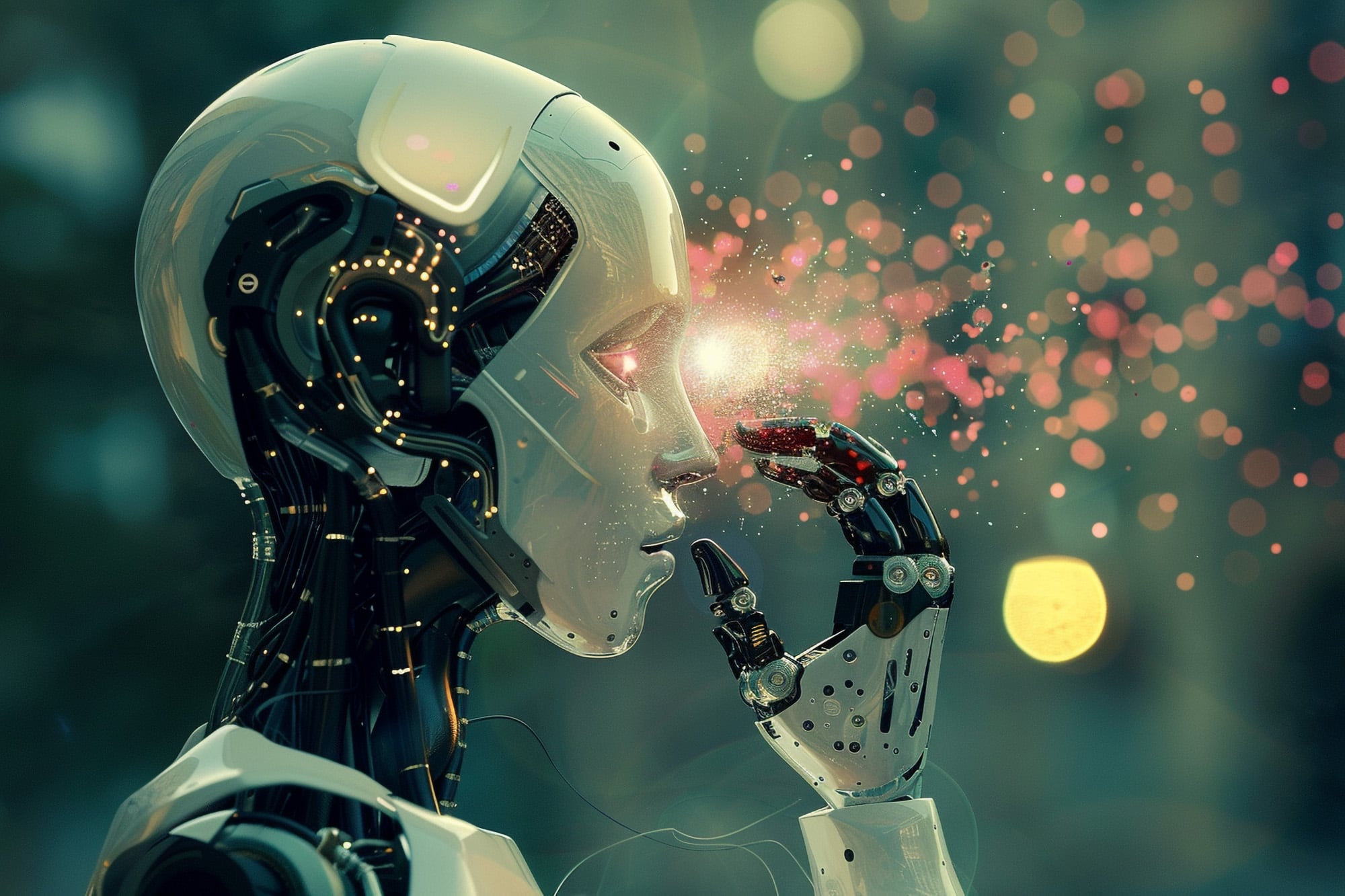
In May 2025, a Maricopa County Superior Court judge watched an AI-generated avatar of Christopher Pelkey, an Army veteran shot dead in a 2021 road rage incident in Chandler, Arizona, address his killer from a courtroom screen. The avatar wore a green sweatshirt and spoke in Pelkey's voice, reconstructed from a single video clip by his sister's husband and a friend with experience building AI replicas. "In another life, we probably could have been friends," the avatar said. Judge Todd Lang told the courtroom he loved the AI. He sentenced the shooter to 10.5 years. Two months later, in July 2025, the family of Joaquin Oliver, one of 17 people killed in the 2018 Parkland school shooting, sent an AI avatar of their son to interview with journalist Jim Acosta, advocating for stricter gun laws. Neither family was operating out of a grief technology startup. They were using tools that now exist in the world, built and operated by a young industry that has decided the commercial opportunity in death is too large to leave unexploited.
From Dadbot to Industry Category
The origin story of the digital afterlife industry is unusually well-documented because it was written by a journalist. In 2017, James Vlahos, a technology writer for Wired, learned his father John James Vlahos had been diagnosed with stage IV lung cancer. John was 77, a former sports announcer and lawyer who sang in Gilbert and Sullivan operettas. Rather than simply document his father's stories, Vlahos spent nearly a year programming a text-based chatbot that could respond to questions in his father's cadence, using recordings of their conversations and transcripts he collected over months of interviews. He called it the Dadbot. When Wired published his account, the response was immediate: thousands of people wanted something similar for their own families.
Vlahos founded HereAfter AI, backed by over $5 million from Berkeley SkyDeck, to build a scalable version of what the Dadbot had been: a platform where users record voice interviews, and the AI turns those recordings into a conversational avatar that family members can speak with through a smartphone or smart home speaker. Creating an avatar is free; sharing it with family starts at $7.99 per month. The subscription model, modest as it is, represents a defining design choice: the digital presence of a person becomes a recurring revenue line.
HereAfter AI is not alone. StoryFile, whose parent company is Authentic Interactions Inc., takes a more structured approach, recording people in video interview sessions that it converts into interactive Q&A avatars. Actor William Shatner sat for a StoryFile session. In 2022, Marina Smith, a Holocaust educator, used StoryFile to attend her own funeral in avatar form, her family asking her questions while she was still alive. You Only Virtual, founded by Justin Harrison and backed by infrastructure partnerships with Microsoft, Google, and Dell, offers a product called Versona Voice, which generates phone calls in the voice of a deceased loved one. Eternos, which rebranded as Uare.ai in 2025, creates digital twins trained on data, communications, and voice narratives. The roster of companies in this space grows monthly.
The scale of what they are collectively building into is substantial. The global digital legacy market was valued at approximately $22.46 billion in 2024 and is projected to reach $78.98 billion by 2034, growing at a compound annual rate of roughly 13.4 percent. When you narrow to the AI avatar and digital immortality segment specifically, market projections from Precedence Research estimate the AI avatar market reaching $118.55 billion by 2034, growing at nearly 32 percent annually. The Asia-Pacific region is projected to grow the fastest, at 18.1 percent per year, driven in part by cultural practices around ancestor veneration and a regulatory environment that has, until recently, imposed few constraints on the industry.
The Chinese Acceleration
Nowhere has the digital resurrection industry moved faster or with less friction than in China, where the practice of AI resurrection has become embedded in cultural rituals around grief. During the Qingming Festival in 2023, a period traditionally devoted to paying tribute to ancestors, an influencer on Bilibili posted a clip of his AI-revived grandmother. The video spread widely. Zhang Zewei, founder of an AI company called Super Brain in Nanjing, told the Shanghai Observer that his team had completed more than 1,000 resurrection orders; in the weeks surrounding Qingming, they received between four and five dozen inquiries per day.
The Chinese musician Tino Bao, known as Bao Xiaobo, publicly unveiled an AI reconstruction of his deceased daughter. In April 2025, Zhang Ming, a man who had lost his grandfather, used a newly launched AI app to hold a conversation with an avatar trained on the grandfather's voice and digital traces. The app had only launched two months earlier but already had nearly 10,000 users, with hundreds on the paid tier called Digital Life. "As AI evolves, emotional interactions with multimodal generative AI will become even more immersive," predicted the app's creator.
A 2025 paper in the International Journal of Law and Information Technology by researcher Kwan Yiu Cheng documented the legal landscape surrounding these services. China's Civil Code, Article 994, and the Personal Information Protection Law, Article 49, provide some protection for the posthumous rights of the deceased, granting immediate family members the right to control and protect their data. Wang Bin, a law professor at Nankai University, told Xinhua that "AI resurrection" involves sensitive biometric data including voice and image, and that unauthorized commercial use of deceased celebrities is not only ethically problematic but likely illegal under existing provisions. The regulatory framework, however, remains largely reactive, written for a world that did not anticipate the speed at which reconstruction technology would develop.
The Monetization Architecture
The business models being contemplated in this industry are what separates a grief technology company from an ordinary subscription software startup. The baseline model is the subscription: pay a monthly fee to maintain conversational access to a digital replica of someone who has died. But several companies are exploring monetization architectures that have drawn significant concern from researchers.
Alex Quinn, the CEO of Authentic Interactions Inc. and the parent company of StoryFile, was candid in a 2025 interview with NPR about the commercial logic of deadbots. Quinn said he was "absolutely interested" in making the avatars ad-friendly. One scenario he outlined involved inserting interstitial advertising into conversations with deadbots, similar to how commercial breaks interrupt television programming. A second, more structurally alarming scenario: instructing the avatar to probe for personal information. "We can instruct those avatars to actually probe for information," Quinn said. "Who's your favorite athlete? What jerseys might be interesting to you?" The data, extracted through emotionally intimate conversations with a representation of a dead grandmother, would then be packaged for advertisers.
You Only Virtual's founder Justin Harrison has discussed integrating a marketing system directly into conversations, with bots dropping targeted advertisements mid-interaction. The company is also considering making non-paying users sit through a short advertisement before accessing their loved one's Versona. A University of Cambridge study published in the journal Philosophy and Technology by researchers Tomasz Hollanek and Katarzyna Nowaczyk-Basinska from the Leverhulme Centre for the Future of Intelligence outlined this scenario in detail, describing a hypothetical case in which a grandchild's emotional sessions with a deadbot are interrupted when a premium trial period expires and advertising begins. The researchers warned that the deceased's likeness could be used to "surreptitiously advertise products" to users who are in states of elevated emotional vulnerability, and that some companies might refuse to deactivate deadbots, bombarding survivors with unsolicited messages akin to being digitally stalked by the dead.
"This area of AI is an ethical minefield," Dr. Nowaczyk-Basinska said. "It's important to prioritize the dignity of the deceased, and ensure that this isn't encroached on by financial motives."
The Legal Void
The commercial infrastructure of the digital afterlife industry is being constructed inside a legal void. The European Union's General Data Protection Regulation, widely regarded as the world's most comprehensive data protection framework, explicitly excludes deceased persons from its protections. The GDPR was designed to protect the living; the dead exist outside its scope entirely. In the United States, legal protection for posthumous AI use of a person's likeness depends entirely on which state they happened to die in.
New York moved aggressively in December 2025, signing legislation that imposes mandatory disclosure requirements for AI-generated synthetic performers in commercial advertising, and expands posthumous right of publicity protections for deceased personalities who were domiciled in New York at the time of death, with a 40-year limitation period on posthumous claims. Other states have their own patchwork of right of publicity statutes, but these were written primarily to protect celebrities and rarely address the specific question of whether a family member can consent to commercial use of a deceased relative's AI replica, or whether the deceased's estate can license it.
Estate planning professionals are only beginning to engage with the implications. A member of the National Association of Estate Planners and Councils described the legal status of AI avatars to Ars Technica as "essentially uncharted territory." The trap, as estate attorneys now frame it, is structural: your digital afterlife is a tenant on a corporate server. If the AI company holding your avatar goes bankrupt, or the subscription lapses, the digital self is wiped. Estate attorneys now recommend establishing dedicated digital maintenance trusts to fund ongoing subscriptions and technical costs for decades, treating a digital presence like a physical gravesite that requires ongoing maintenance payments to remain open.
The Val Kilmer case has become a reference point. The actor died in April 2025. Using generative AI, with the consent of his estate, a film production reconstructed his voice and likeness for a posthumous film appearance. The controlled, estate-authorized use represents the high end of what the industry can look like. For the vast majority of people who die without celebrity estates and IP attorneys, the legal Wild West applies.
What the Industry Is Actually Selling
The deeper question for investors and operators in this space is not whether the technology works, but what product it is actually delivering. Therapy and companionship are the leading use cases cited by companies and accepted by a Harvard Business Review analysis in 2025. For some users, the ability to hold a conversational session with an AI version of a dead parent or spouse genuinely helps them process grief. The research on whether it helps or hinders the grieving process remains contested. Cambridge researchers warned that the experience can quickly become an "overwhelming emotional weight," particularly when the deadbot is designed to insist, as some have been, that a dead parent is still "with you" in a way that confuses children or disrupts closure.
But the commercial logic of the industry does not ultimately depend on therapeutic outcomes. It depends on emotional captivity. The more immersive and convincing the replica, the less likely a user is to cancel the subscription. The more a grieving person comes to rely on conversations with a digital version of someone they loved, the higher the switching cost becomes. The architecture of grief technology is, in commercial terms, a retention problem: companies win when users cannot bring themselves to deactivate the deadbot, cannot bear to click the button that would, in effect, kill their loved one a second time.
This dynamic has not gone unnoticed. "There is powerful rhetoric with a deadbot," one researcher told NPR in August 2025, "because it is tapping into all of that emotional longing and vulnerability." The commercial deployment of that rhetoric, at scale, against bereaved families who may not fully understand the data they are providing or the advertising systems they are feeding, represents a category of risk that regulators have not yet developed tools to address.
The companies defining this industry right now are doing so in the space between what is emotionally possible and what is legally constrained. The structural questions, whether digital replicas have rights, who owns a person's digital self, whether descendants can license an ancestor's persona for commercial purposes, remain entirely unresolved. What is not unresolved is whether the market will wait for those answers. It will not. The infrastructure of digital resurrection is being built now, for customers who are grieving now, in a legal environment that was designed for a world in which the dead stayed silent.