The Bathhouse Boom: Gyms Reinventing Themselves as "The New Nightclub"
Bathhouse, Othership and Sauna House have raised more than $65 million between them to bet that sweating together can replace drinking together as the country's default night out.
By Carry and Conquer Publications
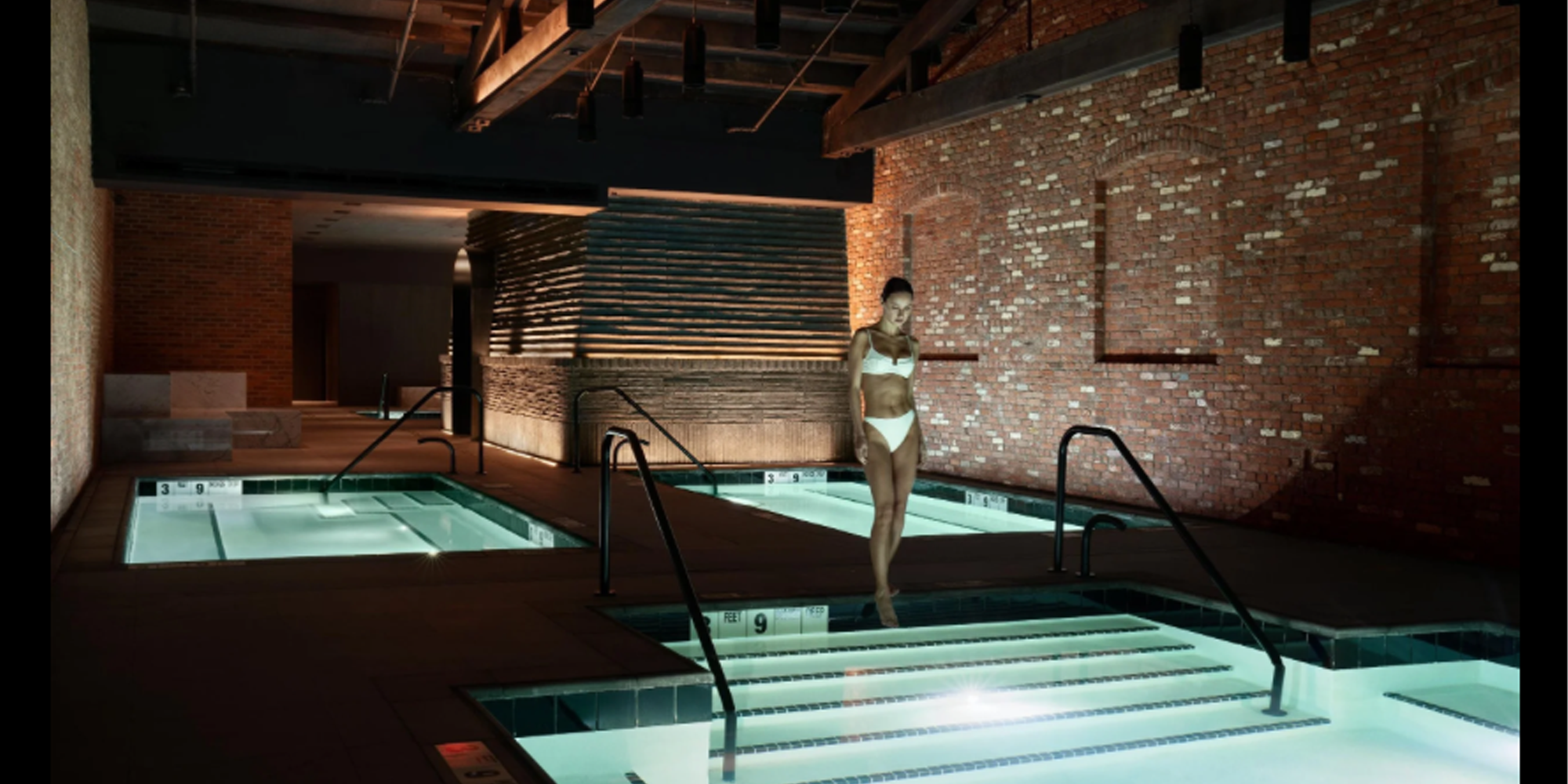
A cluster of venture-backed sauna operators is betting that Americans will pay club-cover prices to sweat together instead of drink together, and the capital committed to prove it now runs into the tens of millions.
Three days after opening its third New York location on Atlantic Avenue in Downtown Brooklyn, Bathhouse confirmed what industry insiders had suspected for a year: it had quietly closed a $35 million round the previous spring. Imaginary Ventures, the firm behind Skims and Glossier, led the raise, joined by 28 backers including NBA guard Klay Thompson and NFL receiver DK Metcalf through the Plus Capital athlete collective. The money is not going toward another New York sauna. It is going toward an eight-city buildout that includes an 85,000-square-foot flagship on the former Amoeba Music site on Sunset Boulevard in Los Angeles, plus outposts planned for Chicago, Nashville, Philadelphia, Minneapolis and Stamford, Connecticut. Bathhouse is chasing a specific number: 10 U.S. locations, up from three today.
A land grab dressed as a wellness trend
What makes the Bathhouse round notable is not the dollar figure but the framing. Imaginary Ventures has spent a decade backing direct-to-consumer brands with software-like margins; a chain of 35,000-square-foot buildings with pools, cedar saunas and treatment rooms is a different animal entirely, closer to a restaurant group or a boutique hotel operator than a Skims. Co-founders Travis Talmadge, a former real estate investor, and Jason Goodman, a hospitality operator, built the company's two existing New York venues in partnership with Rockwell Group and Colberg Architecture, and Goodman has described the aesthetic to Forbes as a "Dune, John Wick" sensibility. That is branding language for what is, underneath, a capital-intensive real estate rollout: each New York location runs roughly 35,000 square feet, and the Los Angeles flagship alone will add another 85,000, including 30,000 square feet of outdoor space.
Bathhouse told CNBC it expects to hit $120 million in run-rate revenue by the end of the year, spread across four locations once Philadelphia opens. That works out to roughly $25 million in annual revenue per location. Day passes start around $39, with memberships running $145 to $225 monthly, and the two existing New York clubs together see roughly 1,000 visitors a day. Talmadge told CNBC the business runs on a "very healthy margin" and has a "surplus of demand," with seven more locations planned through 2027.
Othership and Sauna House are racing on different tracks
Bathhouse is not alone in believing the model scales. Othership, which began in 2019 as co-founder Robbie Bent's backyard sauna experiment in Toronto, has raised approximately $20.6 million across three rounds, including an $8 million Series A led by Vine Ventures and a follow-on SAFE disclosed as either $8.5 million or $11.3 million depending on the source, a discrepancy CEO Bent has publicly corrected downward to $8.5 million. The company now operates two Toronto locations and is expanding aggressively in New York, where it is opening a third location, a 13,000-square-foot Williamsburg flagship that will double the footprint of its current club and add a dedicated "bathing wing." Its Flatiron location already houses a 90-person cedar sauna and eight cold plunges, and its programming has moved well past straightforward wellness into ticketed, DJ-led events: alcohol-free, phone-discouraged sauna raves that run from evening dance parties to 6 a.m. "heatwave" sessions that wrap before the workday starts.
Sauna House, a Charlotte-based operator with a fourth track entirely, is pursuing the category through franchising rather than venture capital. It has committed $9.6 million to open a minimum of three new locations a year for five years, layering warm pools, heated furniture, salt rooms and massage suites onto its core sauna-and-plunge circuit. Unlike Bathhouse's corporate buildouts, Sauna House sells franchise territories at an initial investment of roughly $1.6 million to $4 million and has already placed units across Florida, the Carolinas, Colorado and Tennessee. Three different capital structures, venture equity, franchise fees and platform SAFEs, are being deployed against the same underlying real estate bet.
The thesis: a paid alternative to nightlife
The industry's pitch rests on two demographic trends that trade coverage keeps repeating: declining alcohol consumption among younger consumers and what the U.S. Surgeon General labeled a loneliness epidemic in 2023, with roughly half of American adults reporting they feel lonely. Sociologist Ray Oldenburg coined "third place" in 1989 to describe informal gathering spots between home and work, historically coffee shops, bars and barbershops. Bathhouse, Othership and rivals like Remedy Place and Lore Bathing Club are explicitly positioning themselves as the paid, wellness-branded successor to that category. Othership co-founder Myles Farmer has framed the pitch simply as offering "a new form of socializing," and consumers interviewed by CNBC describe choosing a $40 sauna session over a bar tab specifically because it lets them build a social life without alcohol.
Whether that reframing survives contact with real unit economics is the open question. Newsletter writer Joe Hovde, comparing Bathhouse to two public hospitality rollouts, Life Time and Soho House, estimated that Bathhouse generates roughly $7 million in annual contribution per location at a 30% margin, a figure that would need to clear both real estate buildout costs and rising corporate overhead as the chain scales. Life Time, which invests $25 million to $30 million per new location and averages $3,500 in annual revenue per member, has more than doubled its share price since its 2021 IPO. Soho House, which spent roughly $10 million per new House and generated closer to $1,500 per member annually, went public the same year and was taken private in 2026 after failing to convert profitable individual locations into sustainable corporate-level cash flow.
Bathhouse has one additional lever its unit economics comparisons often miss: it heats its New York pools in part by running Bitcoin-mining hardware on site, converting waste heat from the mining rigs into pool and sauna heating and effectively subsidizing its highest fixed cost. That kind of operational engineering may matter more than membership pricing as the chain moves into markets like Minneapolis, where cold winters and an existing sauna culture cut both ways: cheaper heating math, but a consumer base for whom communal bathing is already unremarkable rather than novel.
What could break the thesis
The skeptical case is not that people dislike saunas; Google review volumes for Bathhouse, Othership and newer entrants like Akari and World Spa suggest genuine, sustained demand in New York specifically. The risk is scale and frequency. Sauna and cold plunge sessions are, for most consumers, closer to a biannual indulgence than a daily or weekly habit, which means every new location has to continuously acquire new customers rather than compound an existing base the way a coffee shop or gym might. Crowding complaints are already common at Bathhouse's most established locations, suggesting the model may be closer to its ceiling on throughput than its founders' expansion math assumes. And heating dozens of pools and saunas across ten or more cities is an energy-intensive proposition at a moment when data center demand is pushing electricity costs upward in many of the same metro markets where these companies want to build.
None of that has slowed the capital flowing in. Between Bathhouse's $35 million, Othership's $20.6 million and Sauna House's $9.6 million franchise commitment, more than $65 million has now been staked on the same underlying claim: that a hot room and a cold pool can out-compete a bar for a generation's social life, and that whoever builds the most square footage first wins the category before anyone proves the economics hold at scale.