The "Amazon for Proteins" That Doesn't Ferment Anything Itself
Shiru turned itself into an AI discovery layer for the entire protein industry, licensing what it finds to Ajinomoto and Griffith Foods rather than fermenting anything itself.
By Carry and Conquer Publications
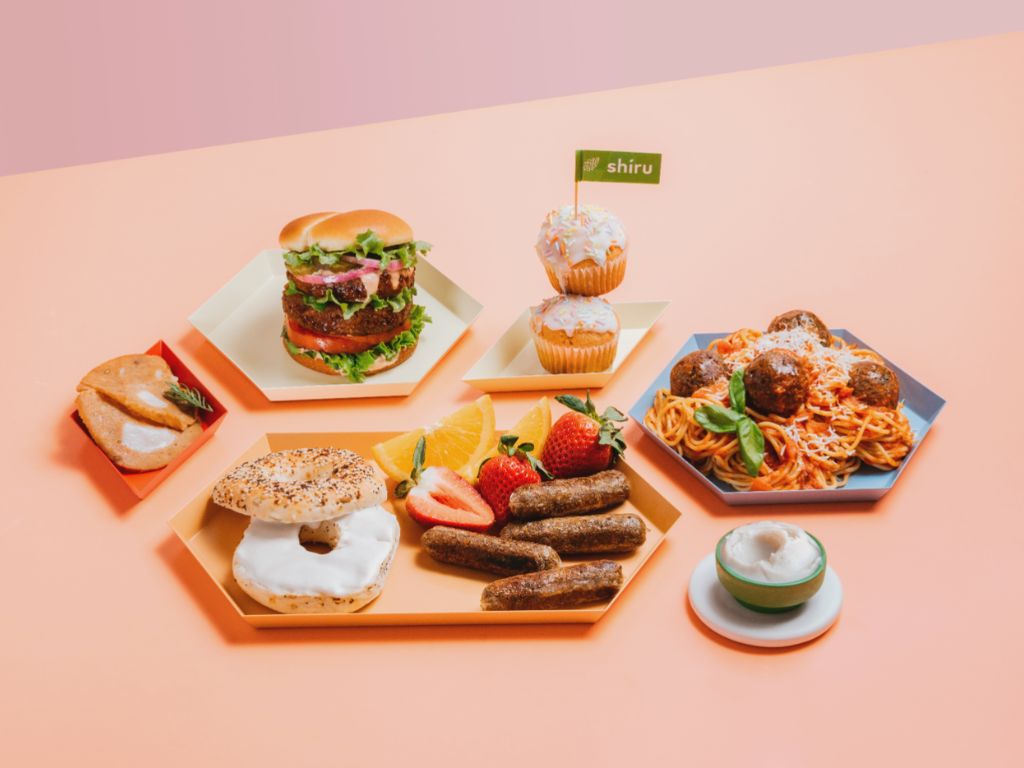
Shiru built a business on the bet that the hardest part of precision fermentation was never the fermenting.
When Jasmin Hume founded Shiru in Berkeley in 2019, the field of alternative proteins was crowded with companies racing to build their own fermentation tanks and defend their own strains of engineered yeast. Hume, who holds a PhD in materials chemistry and protein engineering from New York University and previously served as Director of Food Chemistry at JUST, took the opposite position. Rather than committing capital to microbial strains and bioreactors, Shiru built a searchable catalog of proteins that already exist in nature and sold the insight of which ones to make, not the manufacturing itself. That decision is now paying off in licensing deals with two of the largest ingredient companies in the world, even as much of the precision fermentation industry around Shiru struggles to get product out of the lab.
An AI Layer Underneath the Fermentation Tanks
Shiru's core product, ProteinDiscovery.ai, launched in May 2024 as what Hume called the "Amazon for proteins." The platform lets food scientists and CPG manufacturers search a database that Shiru has since said distills more than 450 million known natural protein sequences from plants, algae, and microbes down to a working set of roughly 33 to 77 million candidates worth cataloging, depending on which disclosure is used. Customers do not need to arrive with a known molecule. They can submit a functional brief, such as a natural emulsifier stable under acidic conditions or a plant protein that mimics casein, and Shiru's models return candidates scored on sequence, functional performance, and an "Expressor" rating that estimates how efficiently the protein could actually be produced via microbial fermentation at commercial volume.
That last variable is the strategic tell. Shiru is not simply cataloging biology; it is pre-screening for manufacturability before a partner ever commits capital to a fermentation run. Hume has framed the wager plainly: a food ingredient traditionally takes tens of millions of dollars and a team of fifty scientists working at the bench for ten to fifteen years to develop, and Shiru's AI compresses that into months. The company is betting that the scarce resource in this industry is knowing which of nature's millions of proteins to chase, not the fermentation infrastructure required to grow the winner.
Licensing the Discovery, Not the Vat
The clearest evidence of the model working is Shiru's deal with Ajinomoto Health & Nutrition Partners, announced in early 2025, to identify and commercialize sweet proteins found in tropical fruits and berries that can register up to 5,000 times sweeter than sugar with no glycemic impact. Hume has described the arrangement as a straightforward licensing structure: Shiru cannot patent a naturally occurring sequence, but it can patent the discovery that a given protein is sweet and license that intellectual property to Ajinomoto within defined categories of food and beverage, letting Ajinomoto's fermentation and formulation expertise handle the rest. A parallel collaboration with Griffith Foods, through its venture arm Nourish Ventures, helped launch Shiru's first branded ingredient, OleoPro, at the Future Food-Tech conference in San Francisco. Ingredion later signed on for a global R&D partnership targeting next-generation prebiotics, giving Shiru's discoveries a distribution path through Ingredion's network of more than 18,000 customers across 120 countries.
Each of these deals follows the same shape: Shiru supplies the molecule and the intellectual property around its discovery, and a larger partner supplies the scale.
The Wrinkle in the "Doesn't Ferment Anything" Story
The cleanest version of Shiru's positioning, that it is a pure discovery layer sitting above an industry of fermenters, does not fully survive contact with its own flagship product. OleoPro, the structured fat ingredient Shiru launched with Griffith Foods, is explicitly not made via precision fermentation. Hume has said it is instead built by combining commercially available plant protein isolates, including a potato-derived structured protein Shiru calls uPro, with unsaturated plant oils through a proprietary blending process, delivering a greater than 90 percent reduction in saturated fat versus conventional solid fats. Shiru also keeps a wet lab in Berkeley where its own scientists synthesize and validate candidate proteins before they ever reach a partner, and in 2025 it partnered with GreenLab to produce proteins through a corn-based expression system that has nothing to do with microbial fermentation at all.
In other words, Shiru is not purely upstream of the vat. It touches production more than the "picks and shovels" framing suggests, and it has deliberately kept more than one path to market rather than tying its fortunes to fermentation exclusively. That may be the more durable version of the strategy: Shiru is less a company that refuses to make anything, and more a company that refuses to bet its whole business on any single production method.
Discovery Was Never Going to Be the Only Bottleneck
Shiru's underlying thesis, that discovery rather than production is the constraint holding back precision fermentation, is being tested in real time by the rest of the industry. At the Future Food-Tech summit in San Francisco in March 2026, executives from Synthesis Capital, Unilever, and fermentation biotech Pow.bio described a sector where facilities capable of producing fermentation-derived ingredients at scale can cost hundreds of millions of dollars to build, and where the United States lacks the food-grade contract manufacturing capacity that pharma and biofuels built up over decades. Analysts at Bright Green Partners have put it more bluntly: as of mid-2026, not a single precision-fermented egg or dairy product had cleared the European Union's regulatory process, even as at least seven had been approved for sale in the United States since 2018. The scientific bottleneck, in other words, is mostly solved. What remains is bioreactor capacity, downstream processing costs, and regulatory friction, none of which an AI discovery platform can shorten.
That leaves Shiru's positioning as a genuine bet rather than an obvious inevitability. If manufacturing capacity keeps constraining the industry the way it did through 2025 and into 2026, a discovery layer only matters as much as the partners downstream who can actually build and run the fermenters, corn systems, or blending lines to turn a discovered molecule into a shelf-stable ingredient. Shiru's $36 million in total funding, including a $16 million Series B led by S2G Ventures in late 2024, and a round of layoffs at the end of 2023 to conserve cash, are reminders that the company has had to manage its own runway carefully while waiting for that downstream capacity to catch up.
Why the Position Still Matters
Nearly every company in precision fermentation is telling investors a version of the same story: better strains, better bioreactors, better yield. Shiru is telling a different one, that the real value sits in knowing which of nature's uncataloged molecules is worth fermenting, extracting, or blending in the first place, and then letting whichever partner has the best production capability do the rest. Whether that structurally different position ends up mattering more than any single fermented product will depend less on Shiru's AI and more on whether the rest of the industry ever builds the capacity to act on what Shiru finds.