The AI Lullaby: How Cradlewise is Dominating the High-End Nursery Market by Using Predictive Algorithms to Bounce Babies Back to Sleep
A $1,999 crib built by two exhausted Indian engineers has quietly become the most talked-about product in the premium nursery market - and its most audacious move yet is convincing the American healthcare system to help pay for it.
By Carry and Conquer Publications
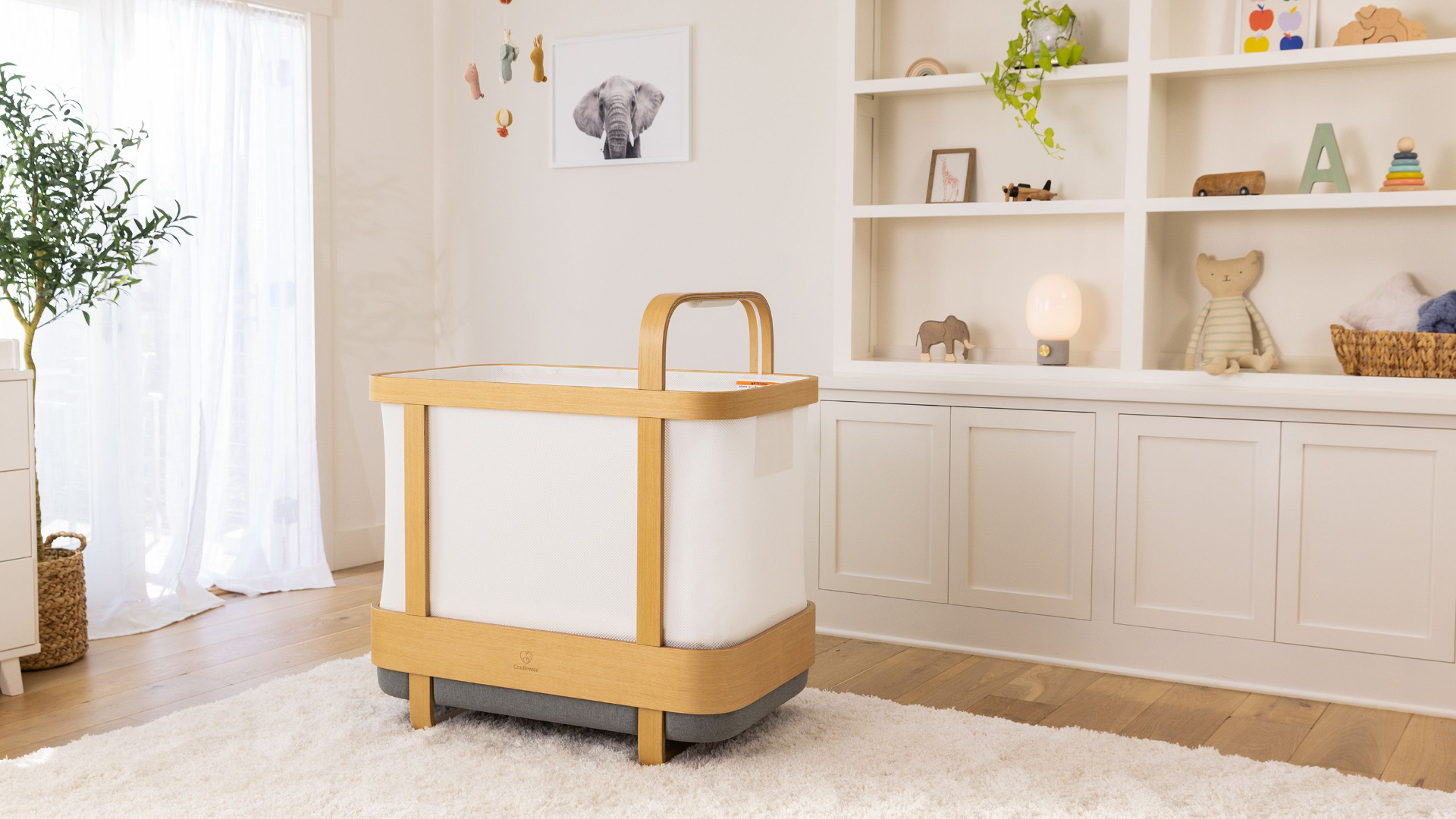
In early 2025, Sam Altman - the CEO of OpenAI, the most discussed company in technology - posted on X that among the many baby products he had purchased after the birth of his son, one stood above the rest: a Cradlewise crib. The post went viral, landing on the front pages of tech and parenting publications worldwide. For Radhika Patil, Cradlewise's co-founder and CEO, the endorsement arrived as a kind of validation she had been building toward for nearly a decade - a moment that confirmed that an idea born from sleepless nights in Bengaluru had, at last, found its place at the center of global culture.
The Engineer-Parents Behind the Crib
Radhika Patil and her husband Bharath Patil are both engineers by training, alumni of the Indian Institute of Science in Bangalore, where they met while studying at the Center for Electronics Design and Technology. Radhika went on to work as a senior engineer at Qualcomm; Bharath built his expertise at Texas Instruments, where he worked with advanced sensor technology. Neither was planning to enter the baby products market. Then their daughter arrived.
Like most first-time parents, the Patils found themselves running to the crib every time their daughter stirred, bouncing her on a yoga ball at 3 a.m., operating on intuition and exhaustion. Radhika noticed something that struck her as a design gap: most commercially available baby products only began to soothe a baby once the crying had already started. By then, in her view, it was too late. She had spoken with pediatric sleep specialists and over 200 parents and confirmed the hypothesis - the window to intervene was earlier, in what she would later articulate as the quiet phase, before active waking and long before crying.
The first version of Cradlewise was built for their own daughter. It was a sensor-monitored, motorized cradle that learned the baby's patterns and responded to the earliest movements. Cradlewise and their second child, Radhika has said, were born at roughly the same time. The company was founded in 2018, piloted with 30 units across Bengaluru, Hyderabad, and Pune, and then - in the middle of the COVID-19 pandemic - the couple packed their two children and their prototype and boarded an Air Bubble flight to San Francisco. They launched in the Bay Area in late 2020. TIME magazine named Cradlewise a Best Invention that November.
How the Technology Works
The Cradlewise smart crib is a convertible all-in-one device - it functions as a bassinet from birth and transitions to a standard crib usable until 24 months, the only product on the market with this full-span capability. At its core is a contactless sensor system, integrated into the crib itself, that monitors the baby's subtle movements and, more recently, breath rate. The AI software learns the infant's individual sleep patterns over time, building a behavioral model that enables the crib to distinguish between normal sleep movement and the first signs of waking.
When the system detects those early signals - what Cradlewise calls the quiet phase of waking - it initiates a gentle up-and-down bouncing motion and, if configured to do so, a layer of white noise or lullaby audio. The intervention is designed to occur before the baby transitions into the active waking phase, and well before the cry phase, at which point the window for easy re-settling has passed. This predictive model - acting before the alert rather than in response to it - is the company's central differentiator from competitors that rely on cry detection alone.
Bharath's background at Texas Instruments proved directly relevant: the sensor technology Cradlewise uses for the motion and breath-rate monitoring draws on advanced non-contact sensing principles that allow the system to track movement through the crib surface without wearables or physical contact sensors. The resulting product is GREENGUARD Gold certified, tested against more than 10,000 chemical emissions and VOCs, built from white oak veneer and birch ply with breathable mesh sides, and fitted with a mattress made of coconut coir and natural rubber latex.
The Competitive Landscape
In the premium smart crib segment, Cradlewise's most direct competitor is the SNOO from Happiest Baby - the bassinet designed by Dr. Harvey Karp, the pediatrician and author of "The Happiest Baby on the Block." The SNOO has been on the market since 2016, has logged more than 100 million hours of tracked sleep, and in 2024 received FDA De Novo authorization - a meaningful medical device clearance - for its ability to keep sleeping babies safely on their backs via its integrated swaddle system. On safety grounds, particularly rollover prevention, the SNOO maintains a significant regulatory advantage.
Where Cradlewise competes favorably is on longevity and value. The SNOO is a bassinet only, usable until six months, at which point parents must purchase a separate crib. Cradlewise extends through 24 months, effectively consolidating two purchases into one. At roughly $1,999, compared to the SNOO's $1,695 plus a transition crib, the total cost of ownership runs considerably lower for Cradlewise families. The crib also includes a built-in baby monitor with night-vision camera - a feature the SNOO lacks entirely - which reviewers frequently cite as a meaningful differentiator worth $200 to $300 in standalone monitor savings.
The directness of the competitive positioning has not gone unnoticed. CRV general partner Kristin Baker Spohn, whose firm participated in Cradlewise's $7 million seed round in 2021 alongside Footwork, SOSV, and Better Capital, described the product plainly: "Cradlewise isn't just a smart crib, it is a mental health solution for parents."
The FSA/HSA Play
The most strategically sophisticated move in Cradlewise's recent development has been its navigation of the FSA/HSA eligibility landscape. In July 2024, the company successfully secured listing on the SIGIS Eligible Product List, the industry standard that governs which items can be purchased with pre-tax health benefit dollars. That listing was brief - a reclassification letter from SIGIS arrived in October 2024, noting that the approval had been issued in error, and the crib was removed. Cradlewise described the reversal as a shock, arriving without warning.
The company did not retreat. Instead, by June 2025, Cradlewise had partnered with Flex - a fintech platform that enables health and wellness brands to accept HSA/FSA payments through telehealth-facilitated Letters of Medical Necessity. The mechanics are straightforward: at checkout, a buyer completes a brief asynchronous consultation with a licensed clinician who reviews their eligibility based on qualifying conditions such as infant sleep disorders or parental sleep deprivation. If approved, a Letter of Medical Necessity is issued within hours, enabling the purchase to be substantiated against the buyer's HSA or FSA account.
The effect is to route a $1,999 nursery item through the healthcare system by establishing its medical context on a case-by-case basis. Americans hold more than $150 billion in HSA and FSA accounts annually, and Flex's own data suggests that customers spend roughly 30% more when they can apply those funds at checkout. For Cradlewise, the Flex partnership does not restore the blanket SIGIS listing it briefly held, but it provides a durable, compliant pathway to pre-tax purchasing for a meaningful segment of its customer base.
Manufacturing, Scale, and the India Chapter
While Cradlewise operates from the Bay Area and markets primarily to American families, its manufacturing roots have returned to India. After an initial supply chain established in China - and a pivot through Vietnam in 2022 to address pandemic-era disruptions - the company opened a 20,000-square-foot production facility in Pune in 2024. For Radhika, a native of Pune, the moment was significant: she has described standing on the factory floor of a global hardware company in her hometown as one of the defining milestones of her career.
In April 2025, the same month Altman's post went viral in the US, Cradlewise formally launched in India at a price of INR 159,900 - approximately $1,999 USD. The timing was, as Radhika later described on LinkedIn, a full-circle moment: an idea hatched and prototyped in Bengaluru over a decade earlier was now returning to India as a commercially manufactured, globally recognized product. She tagged Prime Minister Narendra Modi and Union Minister Piyush Goyal in the post, writing: "Designed in India, Made in India and built for the World."
The company holds a valuation approaching $40 million, was listed as the second fastest-growing startup of 2024 by Exploding Topics with 5,200% five-year search growth, and has received coverage from Forbes, USA Today, TechCrunch, Fast Company, and TIME. Its go-to-market remains direct-to-consumer, a deliberate choice Radhika frames in Apple-adjacent terms: "We take pride in calling ourselves the Apple of baby cribs." The company has received requests from big-box retailers but has moved cautiously toward multi-channel distribution, citing the importance of high-contact, trust-based selling for a product at this price point.
The Regulatory Undercurrent
Not everyone views the medical framing of the Cradlewise crib without skepticism. The FDA issued a notice in September 2025 warning consumers against relying on unauthorized infant monitors for measuring and monitoring vital signs, citing concerns about false readings, unnecessary medical interventions, and in some cases physical risks to infants. Cradlewise's own terms and conditions for its breath rate monitoring feature are explicit: the feature is designed for general wellness and comfort monitoring purposes only, is not a medical device, and should not be used to diagnose, monitor, treat, or prevent any disease, including SIDS.
The tension between the product's wellness positioning and the medical-necessity framing required for HSA/FSA access is the central regulatory ambiguity Cradlewise must manage as it scales. SNOO navigated a version of this same challenge on its path to FDA De Novo authorization for rollover prevention - a medical safety claim validated through a formal regulatory process. Consumer Reports pediatric advisors have noted that no data currently demonstrate that smart infant monitors reduce SIDS risk, and that the category operates largely outside formal safety oversight.
For now, the market appears comfortable with the ambiguity. The smart crib segment is projected to grow from $462 million in 2025 to $812 million by 2035, and the baby cribs and cots market overall is expected to reach $3.12 billion over that same horizon. Within that landscape, Cradlewise has positioned itself at the intersection of premium nursery furniture, connected health devices, and - through the Flex partnership - healthcare-adjacent spending.
That positioning carries real strategic value. Parents who justify a $2,000 crib as a medical expense think about the purchase differently than parents who buy it as a piece of furniture. It elevates the product category, extends the customer relationship, and places Cradlewise firmly in the company of devices its founders believe it was always meant to join - not alongside traditional cribs, but alongside Nest, Peloton, and Tesla. Whether the regulatory framework catches up with that ambition, or constrains it, is a story still unfolding. What is already clear is that two engineers from Bengaluru, carrying a prototype across seven continents during a pandemic, have built something the market did not know it needed - and taught a generation of exhausted parents to call it healthcare.