The $500M Luxury Pivot: How Jeff Wyler Quietly Built a Midwestern Empire of Ferrari and Lamborghini Franchises
A Cincinnati dealership family acquires 14 ultra-luxury franchises in Ohio's largest-ever automotive transaction.
By Carry and Conquer Publications
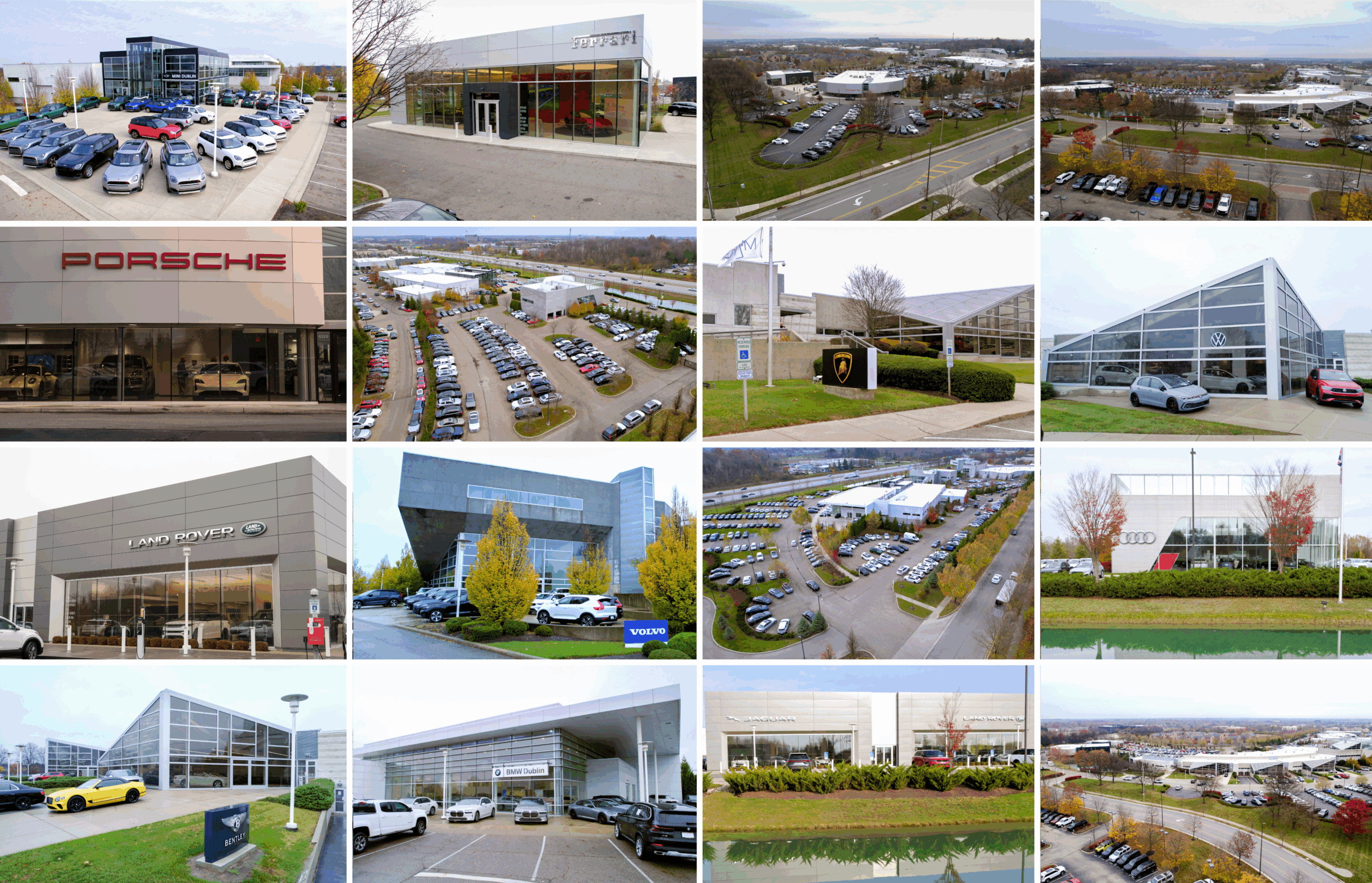
For more than five decades, the Jeff Wyler Automotive Family built a formidable business the quiet, unglamorous way - volume brands, suburban auto malls, middle-market customers. That model worked. By early 2026, Wyler operated 23 dealerships and roughly 50 franchises spanning Greater Cincinnati, Louisville, and Columbus, with a workforce of 2,500 employees. Then, on January 14, 2026, CEO David Wyler signed a $500 million acquisition of Midwestern Auto Group - a move that instantly placed the family among only eight dealership networks in the entire country to own both Ferrari and Lamborghini franchises, and transformed the group from a regional volume player into a destination for Ohio's ultra-wealthy.
The Unicorn Campus
The asset at the center of this transaction is genuinely unusual. Midwestern Auto Group, headquartered in Dublin, Ohio, just north of Columbus, was built over nearly four decades by owner Mark Brentlinger into a single-campus operation housing 14 premium and ultra-luxury brands under one roof - or more precisely, on one 40-acre site with a single entrance and exit. The campus contains Ferrari, Lamborghini, Rolls-Royce, Bentley, Maserati, Porsche, BMW, Land Rover, Jaguar, Audi, Volvo, Lotus, MINI, and Volkswagen dealerships operating as a coordinated luxury retail destination, a configuration that automotive M&A veteran Dave Cantin described as something that surfaces "every few decades" at best.
Dave Cantin Group, the New York-based dealership M&A advisory firm that represented Brentlinger in the sale, characterized the deal as one of the most significant private-to-private acquisitions in U.S. retail automotive history. It is confirmed as the largest luxury automotive acquisition in Ohio history and, at the time of closing, the largest auto retail transaction of 2026. It also ranks among the top three largest Midwest dealership transactions of all time by total enterprise value. Finding a buyer was not straightforward - securing OEM approval from 14 separate manufacturers simultaneously, while meeting Brentlinger's condition that the campus remain intact and Ohio-based, reduced the viable buyer pool to a very small number of operators. Wyler was, by Cantin's account, "the ideal fit in every regard."
A Succession Story, Not Just a Sale
Brentlinger did not come to market looking for the highest bidder. The man who spent nearly four decades building Midwestern Auto Group from scratch was executing a succession plan, and the terms of that plan were explicit: find an Ohio-based, privately held operator who would preserve the campus, protect the employees, and maintain the culture that made the business what it was. He retained Dave Cantin Group nearly two years before the deal closed to conduct that search, with Holland & Knight managing legal work and Goldman Sachs handling private wealth management for the transition.
"It has been the privilege of a lifetime to lead this organization," Brentlinger said at closing. "My priority was finding a successor who would protect the culture, the people and the brand relationships that have made MAG special." That framework mattered not just emotionally but structurally. Keeping the business private and Ohio-rooted was a stated preference, and it narrowed the competitive field further. Publicly traded consolidators that might have paid a premium were essentially disqualified.
The Wyler family's minority ownership stake in the Cincinnati Reds baseball team and its deep roots in the regional business community likely helped close the cultural fit question. When Goldman Sachs CEO David Solomon commented publicly that his firm's relationship with Dave Cantin Group was "important to Goldman Sachs," it signaled just how seriously the advisory infrastructure around this deal was assembled.
The 100-Mile Rule and the Logic of Regional Dominance
Jeff Wyler, the founder, launched the business in 1973 with a single Chevy dealership in Batavia, Ohio, during the Arab oil embargo - when Chevrolet vehicles were getting nine miles per gallon and gas prices were strangling demand. His early survival instinct was innovation: he became one of the first automotive dealers in the country to advertise on television, with a slogan - "Cars, like eggs, are cheaper in the Country" - that made him a household name in the Cincinnati area for decades.
What followed over the next fifty years was disciplined geographic expansion. Every location the Wyler group operates sits within 100 miles of its Cincinnati headquarters - a rule the current CEO David Wyler applies rigidly and credits to a lesson absorbed from dealership legend Herb Chambers. The logic, as David Wyler has explained it publicly, is about operational density rather than geographic spread. People, inventory, and brand equity compound when concentrated in markets you genuinely own. The Midwestern Auto Group campus in Dublin fits within that radius.
Before the acquisition, the Wyler group sold everything from Hyundai and Stellantis brands to Mercedes-Benz, but had no ultra-luxury exposure. David Wyler is, by his own account, a serious Ferrari enthusiast - he named his dog Enzo, after Enzo Ferrari - and acknowledged that when an opportunity to acquire Ferrari arrived, "the answer was an easy yes." But the broader strategic case went beyond personal enthusiasm. The group had been receiving persistent requests from its existing customer base to sell ultra-luxury brands. Adding Midwestern's campus did not require building a new audience; it served existing Wyler clients who were already asking to move upmarket.
The Ultra-Luxury Bet in the American Heartland
The decision to enter the ultra-luxury segment in central Ohio - rather than a coastal market where Ferrari and Lamborghini traditionally cluster - rests on a thesis about Midwestern wealth that is well-supported by the data. Dave Cantin articulated it directly: "You have a lot of family wealth, of old money, in the Midwest. Those families by and large want to remain in the Midwest to do business." The ultra-luxury segment has also historically shown resilience against economic cycles in a way that volume brands do not. Buyers of $300,000 Bentleys and $500,000 Ferraris do not respond to interest rate fluctuations the way mass-market buyers do, and their service and parts spending over a vehicle's lifetime is proportionally enormous.
For Wyler, the segment was also chronically underserved on the service side. Ohio's ultra-luxury buyers existed in significant numbers, but their nearest high-end service options were often distant. A purpose-built, 40-acre luxury campus in Dublin - positioned between Cincinnati and Columbus, accessible to both markets - addresses a genuine supply gap in what Cantin called "a growing market for ultra-luxury brands" in the Midwest.
The rebranding of the Midwestern campus as "The Wyler Collection" creates a distinct identity designed to signal the upgrade in customer experience Wyler intends to deliver. The integration is also framed explicitly as a beginning, not an endpoint. David Wyler said at closing that the ultra-luxury brands acquired in Dublin "won't be the last," signaling that the Collection brand may become a platform for additional acquisitions in the ultra-premium segment.
What Comes Next
The acquisition expands Wyler's franchise count from roughly 50 to 64 and raises its dealership presence to what is effectively a two-tier structure: the core Wyler dealerships handling mainstream and premium brands, and The Wyler Collection serving ultra-luxury buyers. The organizational challenge ahead is integration without disruption - preserving what made the Dublin campus valuable to Brentlinger's customers while folding in Wyler's operational culture, systems, and coaching-based management model.
David Wyler has been candid that the company emerged from the post-pandemic period with lessons about execution. Easy market conditions during the supply-constrained years following 2020 allowed standards to slip. "We took our eye off the ball. We didn't execute what the playbook said. We didn't block. We didn't tackle," he acknowledged. The Wyler Way, an internally developed operational playbook built by coaches drawn from across the company's best locations, is the tool leadership intends to use for the Dublin integration.
The broader dealership M&A market is watching this transaction closely. Dealership acquisitions in 2026 are forecast to accelerate as confidence in valuations strengthens, and the Wyler-Midwestern deal sets a reference point for what privately held luxury transactions can look like at scale. For a family business that started with a single Chevy lot during an oil crisis, a $500 million luxury pivot fifty years later is not a departure from the original story - it is, arguably, its natural conclusion.