The 40-Point Tariff Swing That Set Off "Diwali-Like" Celebrations
A 50 percent US tariff nearly broke India's carpet capital in months, and an 18 percent cut brought it roaring back just as fast.
By Carry and Conquer Publications
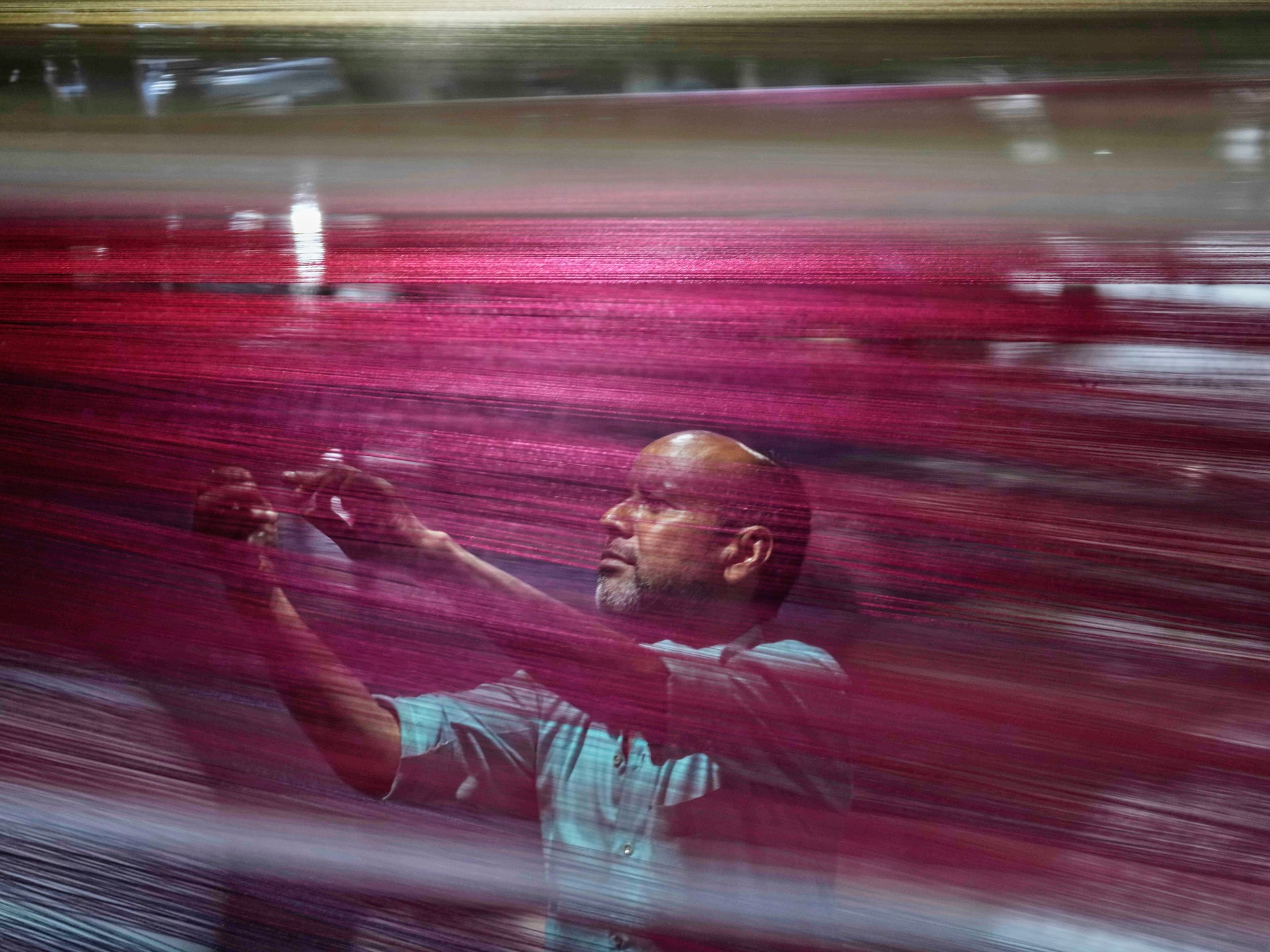
For half a century, Surya Mani Tiwari had never lost sleep over a single line item in a US customs schedule. Then, in August 2025, a 50 percent tariff on Indian goods arrived, and the 78-year-old Bhadohi exporter watched a business built over decades grind to a halt inside weeks. Five months later, in Bhadohi's carpet lanes, exporters were describing a tariff cut from Washington as "Diwali-like." The distance between those two moments is the story of how thin the margin is between a hand-craft export economy's worst downturn in fifty years and its most euphoric recovery, and how little it took to swing it either way.
A Tariff Built From Two Punishments
The 50 percent rate that hit Indian goods in the second half of 2025 was not a single policy but two stacked on top of each other. A 25 percent "reciprocal" tariff took effect on August 7, tied to the Trump administration's broader trade rebalancing push. Three weeks later, on August 27, an additional 25 percent penalty landed, explicitly linked to India's continued purchases of Russian crude oil, which the administration argued was helping finance the war in Ukraine. Kashmiri carpets, which had faced a duty of just 2.9 percent before the shock, suddenly carried a 52.9 percent tariff into their largest market.
Few sectors were positioned to absorb that kind of hit less gracefully than hand-knotted carpets. The industry, centered in the Bhadohi-Mirzapur belt of Uttar Pradesh and known as India's "Carpet City," runs on razor-thin wholesaler margins of 8 to 10 percent, according to Piyush Baranwal, director of the Carpet Export Promotion Council (CEPC). It is a nearly pure export business with negligible domestic demand, meaning there was no fallback market to absorb the shock. Bhadohi alone accounts for roughly 60 to 80 percent of India's total carpet exports, depending on how the count is drawn, out of an industry with an annual turnover of about 160 billion rupees ($1.83 billion) that employs more than 2.5 million people nationally, the majority of them home-based weavers, per CEPC figures.
The Collapse, Measured in Idle Looms
The math of the shock was blunt. Before the tariff hike, the US absorbed 60 to 65 percent of India's carpet exports. Within weeks of the 50 percent rate taking hold, roughly 85 to 90 percent of US-bound orders were reported on hold, according to industry association figures cited by multiple exporters. Raza Khan, president of the All India Carpet Manufacturers Association (AICMA), estimated in September 2025 that about 100,000 people had already lost work, with the toll potentially reaching 700,000, or half of Bhadohi's weaver population, within two months if the situation didn't change.
The numbers translated directly into disrupted households. Sanjay Gupta, a partner at Global Overseas and a Bhadohi exporter, said he had lost around 40 percent of his business since April 2025, when the initial reciprocal tariff was first floated, forcing him to cut commissions to weavers. Fatima Samir, a 30-year-old mother of three who binds carpet edges for 60 rupees an hour, saw even that rate cut, pulling her youngest daughter out of school. Her husband, a weaver, migrated to another city to find factory work as Bhadohi's order book thinned. Imtiaz Ansari, another Bhadohi manufacturer, cut his employees down to three working days a week and watched more than 4,000 weavers who depended on his operation stop getting work entirely. Layoffs and slowdowns rippled outward from Bhadohi to Panipat, Jaipur, and Bikaner, other major hand-craft carpet hubs, and even to ancillary suppliers: yarn merchant Md Zamir Ahmed described the tariffs finishing off a business already squeezed by manufacturers cutting out middlemen.
Exporters watched market share bleed toward lower-tariff rivals in the same breath. Turkey and Pakistan faced US carpet duties of roughly 15 and 19 percent, respectively, a gap wide enough that exporters like Md Zakir Hussain warned American buyers, once lost to a competitor, would be extremely difficult to win back.
Five Months, One Phone Call
The reversal came from diplomacy, not from the industry's own leverage. Through late 2025, Indian officials pursued sustained trade talks with Washington, with state refiners signing a first long-term US liquefied petroleum gas import deal and private Indian refiners reportedly cutting back Russian oil purchases in January 2026 as goodwill gestures. On February 2, 2026, President Trump and Prime Minister Narendra Modi announced a trade framework by phone: the US would cut its reciprocal tariff on Indian goods from 25 to 18 percent, and, days later, rescind the additional 25 percent Russian-oil penalty entirely, effective February 7. In exchange, Modi committed India to sharply reducing Russian crude purchases, buying over $500 billion in US goods and energy over five years, and cutting Indian tariffs on US products toward zero.
For Bhadohi, the practical result was a combined tariff falling from 50 percent to 18 percent, with US officials signaling the possibility of further cuts in select sectors. Aslam Mehboob, CEPC vice chairman and a senior Bhadohi exporter, called it "a very big opportunity and a historic move." Exporters credited Modi's diplomatic approach and singled out commerce minister Piyush Goyal and textiles minister Giriraj Singh for the breakthrough, with industry voices projecting up to a 20 percent boost in business and describing the mood in Bhadohi's carpet lanes as "Diwali-like." Halted orders, exporters said, began resuming almost immediately.
The Fine Print Still Being Written
Not every observer treated the framework as settled. US Customs and Border Protection's own messaging to importers initially kept the 25 percent reciprocal rate technically "in effect" even after the joint announcement, a gap only closed with a formal executive order days later. Analysts including Basant Sanghera of The Asia Group cautioned that the tariff cut represents only the first phase of a still-unwritten, legally binding text, while others, including analyst Evan Feigenbaum, called India's $500 billion purchase pledge "kind of a stretch." India's own government has confirmed the 18 percent rate publicly while staying notably quiet on the Russian oil and zero-tariff commitments Trump described, a silence that trade watchers read as deliberate rather than accidental.
For Bhadohi, none of that ambiguity changed the arithmetic that mattered most: a rate that had made Indian carpets nearly unsellable in their largest market was now competitive again, sitting below the tariffs facing Vietnam and Bangladesh and only slightly above Pakistan's. Whether the deeper structure of the deal holds is a question for trade lawyers. Whether Fatima Samir's husband comes home from the bottling factory in another city is a question that will be answered by whether the order book that just reopened stays open. The carpet trade has now seen, twice in five months, how completely its fate rests on a single number set eight thousand miles away.