The $250M Edge: How Dutch Startup Axelera AI Just Closed Europe's Largest Chip Round to Challenge Nvidia's Dominance
A $250 million Series C makes Axelera AI Europe's best-funded AI chip company and positions the Dutch startup's in-memory architecture as the leading alternative to Nvidia's GPU dominance in edge AI inference.
By Carry and Conquer Publications
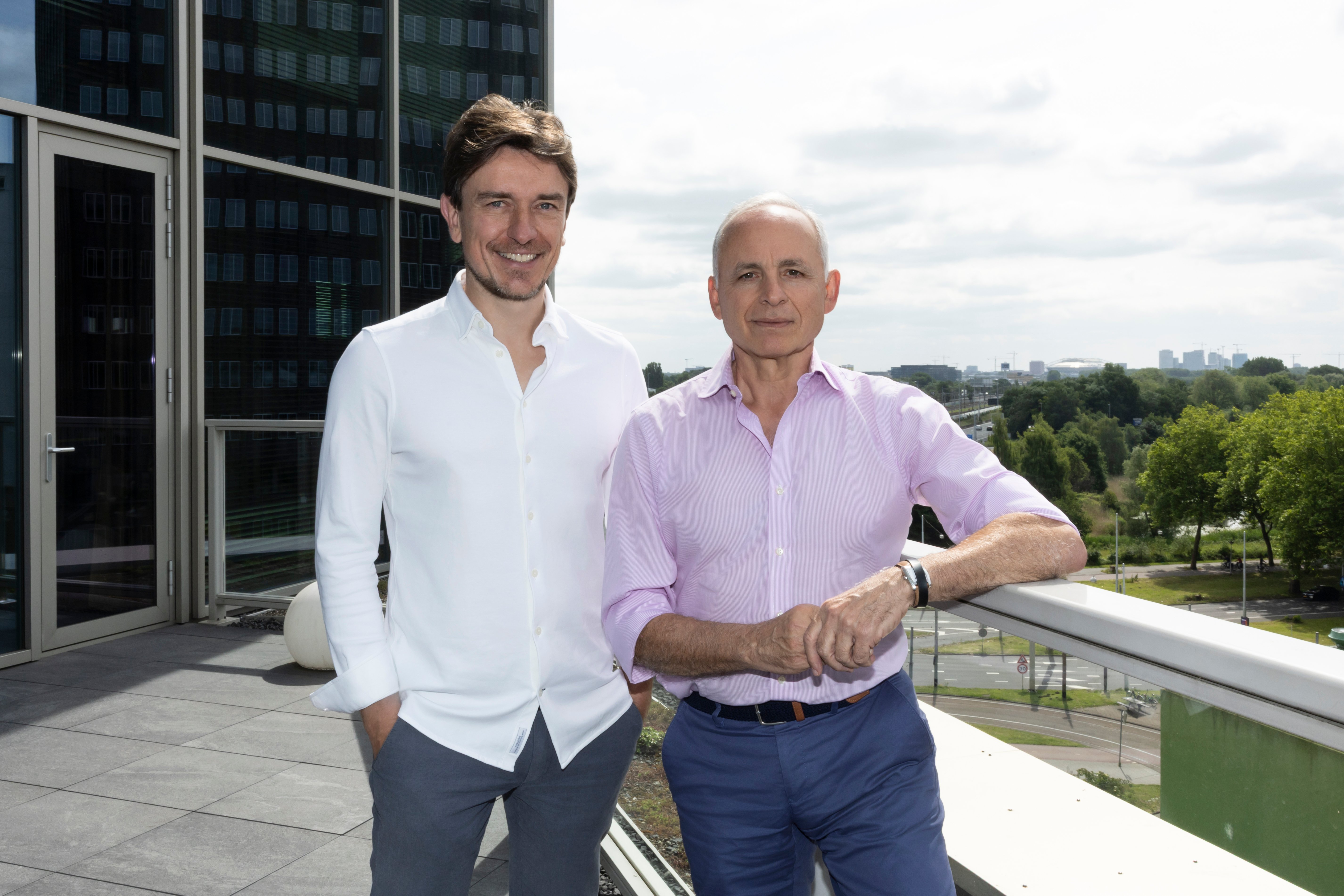
Europe's most consequential bet on AI semiconductors just got a lot bigger.
On February 24, 2026, Eindhoven-based Axelera AI announced a funding round exceeding $250 million, the single largest investment ever made in a European AI semiconductor company. Led by Innovation Industries and joined by BlackRock, SiteGround Capital, and a coalition of existing institutional backers including Bitfury, CDP Venture Capital, the European Innovation Council Fund, Samsung Catalyst Fund, and Belgium's Federal Holding and Investment Company, the round pushes Axelera's total capital raised to over $450 million since its founding in July 2021. The announcement landed not as a speculative bet on a pre-revenue startup, but as a vote of confidence in a company that has now shipped product to its 500th global customer - a milestone that sets Axelera apart from most European deep-tech ventures at this stage.
From IBM Zurich to Eindhoven: A Bet on In-Memory Computing
The story of Axelera begins with an unusual merger of talent and ambition. Fabrizio Del Maffeo had spent years building an AI unit inside Bitfury, the blockchain technology company, after earlier stints as Vice President and Managing Director of AAEON Technology Europe, the AI and IoT computing arm of the ASUS Group. Evangelos Eleftheriou arrived from a different world entirely: over 35 years at IBM Research in Zurich, named an IBM Fellow - the company's highest technical distinction - and inducted as a Foreign Member of the US National Academy of Engineering in 2018. The two were introduced through Professor Luca Benini at ETH Zurich. Their shared conviction was that mainstream AI chips were built for the wrong problem.
In July 2021, the pair co-founded Axelera AI as a spin-off from imec, the Belgium-based nanotechnology research center, bringing with them sixteen founding team members drawn from IBM, ETH Zurich, imec itself, Qualcomm, and Google. The founding thesis was direct: as AI moved from cloud training to real-world deployment, the dominant GPU architecture - optimized for the data center - would be too power-hungry, too expensive, and too slow for edge environments. Axelera would build differently.
The company's core innovation is its Digital In-Memory Computing, or D-IMC, architecture. Traditional AI processors shuttle data back and forth between separate compute and memory circuits, burning energy with every transfer. D-IMC eliminates that bottleneck by performing matrix-vector multiplications directly inside SRAM memory cells, cutting the need to move data across the chip. The result is a chip that delivers up to 214 TOPS - trillion operations per second - at an energy efficiency of 15 TOPS per watt, in a device that typically consumes around 10 watts. That efficiency gap matters enormously in automotive cabins, factory floors, and outdoor surveillance systems where thermal headroom is limited and power is finite.
Metis, Europa, and the Road to Titania
Axelera's flagship product is the Metis AI Processing Unit, a quad-core chip fabricated on 12nm CMOS. Each of the four cores can independently execute a complete neural network without external interaction, allowing the chip to run multiple models in parallel - a capability critical for applications like autonomous vehicles or smart cameras that must simultaneously manage object detection, pose estimation, and activity classification on a single stream. A single Metis M.2 card handles up to 214 TOPS; a PCIe variant carrying four chips reaches 856 TOPS. The hardware ships alongside Axelera's Voyager SDK, which uses an Apache TVM-based compiler to translate customer AI models to the Metis architecture without requiring network retraining.
In 2025, Axelera unveiled Europa, a second-generation processor delivering 629 TOPS within a 45-watt power envelope - more than twice Metis's throughput. Europa targets edge servers, enterprise deployments, and compute-intensive workloads like large language models and high-resolution video analytics, and is positioned directly against Nvidia's L40 GPU on a performance-per-watt basis. PCIe accelerator cards based on Europa are expected to begin shipping in the first half of 2026. Further out, the company is developing Titania, a data-center-class AI chiplet backed by a EUR 61.6 million grant from the EuroHPC Joint Undertaking's DARE project in March 2025, with deployment targeted for 2028.
The funding timeline tells the story of a company that has validated its technology at each successive stage. A $12 million seed round in 2021. A $27 million Series A led by Innovation Industries in October 2022, the same month Axelera taped out its commercial Metis chip. A $68 million Series B in June 2024 - described at the time as Europe's largest oversubscribed Series B in fabless semiconductors. And now the $250 million Series C, with BlackRock's institutional participation signaling that the financial mainstream has begun treating AI chip infrastructure as a legitimate asset class.
The Inference Market and the Nvidia Problem
The investment rationale is rooted in a specific inflection point in the AI industry. Training large AI models is an activity performed by a small number of hyperscalers. Inference - applying those models to make predictions in the real world - is the activity that scales to billions of deployments. Axelera's CEO Del Maffeo has long argued that inference economics will ultimately force a reckoning with Nvidia's GPU dominance. Inference costs 15 times more than training over the life of a model, and utilization is growing at 31 times per year. The global inference market is projected to exceed $250 billion by 2030, up from $106 billion in 2025.
The challenge for Nvidia is architectural. GPUs were designed as flexible, high-throughput processors capable of handling both training and inference across diverse workloads. That flexibility comes at a cost in watts, thermal output, and dollars. For inference at the edge - in a warehouse robot, an autonomous vehicle, a retail security camera - a GPU is often a sledgehammer where a scalpel is needed. Axelera's D-IMC architecture is purpose-built for that scalpel role, trading flexibility for efficiency in the specific matrix-multiplication operations that constitute 70 to 90 percent of deep learning computation.
The competitive field is crowding. Etched AI is reportedly raising $500 million at a $5 billion valuation. UK startup Fractile has committed GBP 100 million to expand its inference hardware and software operations. Israel's Hailo offers compact edge inference accelerators targeting automotive and security markets. What distinguishes Axelera in this landscape is its combination of proven customer traction - 500 live deployments across defense, manufacturing, retail, agritech, robotics, and security - with manufacturing at scale through partnerships with both TSMC and Samsung, the two largest chip foundries in the world. Most edge AI chip startups have one or the other; Axelera has both.
Automotive at the Edge: Why This Round Has a Strategic Dimension
The timing of this raise has particular significance for the automotive sector. Software-defined vehicles require persistent AI inference - for ADAS processing, driver monitoring, in-cabin experience, and predictive maintenance - across hardware that must operate within strict thermal and power budgets. Automotive-grade AI chips must function across extended temperature ranges, meet functional safety requirements, and survive vibration and electromagnetic interference that would disrupt standard consumer electronics. Axelera already offers Metis M.2 Max variants rated for extended operating temperatures from -40 degrees Celsius to +85 degrees Celsius, positioning the platform for embedded vehicle applications.
The automotive dimension extends to the investor coalition. CDP Venture Capital, Italy's largest venture fund, specifically cited space and defense as growth sectors for Axelera, while SFPIM - Belgium's federal investment company - highlighted the company's research and development presence in Leuven, home to imec and the broader European semiconductor research ecosystem. Invest-NL's Johan Stins framed the investment explicitly in terms of Dutch industrial heritage: the Netherlands, home to ASML and NXP, has built its economic identity on semiconductor precision, and Axelera fits that lineage.
Innovation Industries investment manager Rogier Ketelaars summarized the strategic logic plainly: the company has cracked the core constraint of edge AI - cost and energy efficiency of inference at scale - and is positioned to become foundational infrastructure for the next generation of AI deployment, not just another chip vendor competing on benchmark scores.
What Comes Next
The fresh capital is allocated across three priorities: scaling manufacturing to meet growing demand, expanding the Partner Accelerator Network that brings together software vendors, model makers, system integrators, and distribution partners, and continuing software development on the Voyager SDK. That last item is not incidental. Nvidia's enduring advantage over every hardware challenger is not its silicon - it is CUDA, the parallel computing platform that has made Nvidia's architecture the default environment for AI development. Every developer trained on CUDA, every deployment pipeline built for it, is a switching cost that works in Nvidia's favor. Axelera knows this, and has invested heavily in ensuring that Voyager SDK can consume models trained in standard frameworks without requiring customers to redesign their pipelines.
By the end of 2025, Axelera had grown to more than 250 employees across the Netherlands, Belgium, Switzerland, Italy, and the UK. The company demonstrated its edge inference capabilities at CES 2026 in January, showing a 4-chip PCIe card running up to 16 concurrent AI models - including pose detection, face recognition, and segmentation - processing 8K video on a single edge device without thermal throttling. That demonstration was not a roadmap promise. It was a shipping product.
Del Maffeo has been characteristically measured about what the raise means. "We're in the process of making it," he said in a recent interview. "But we definitely haven't made it yet." That sentence captures the position Axelera now occupies: a company with genuine traction, institutional backing from BlackRock, manufacturing partnerships with the world's two largest foundries, and a technology architecture that addresses a real constraint in the AI deployment stack - but still running hard in a race that has no finish line. Europe has produced many semiconductor ambitions. Axelera AI, with $250 million in fresh capital and 500 customers across six continents, is making the case that this time the ambition has been earned.