Ship the Code, Not the Cargo: The New Grammar of the Next Industrial Revolution
A new industrial age built on shipping code instead of cargo is already operating across biology, chemistry, semiconductors, textiles, and physical assembly, most of the market just hasn't named it yet.
By Carry and Conquer Publications
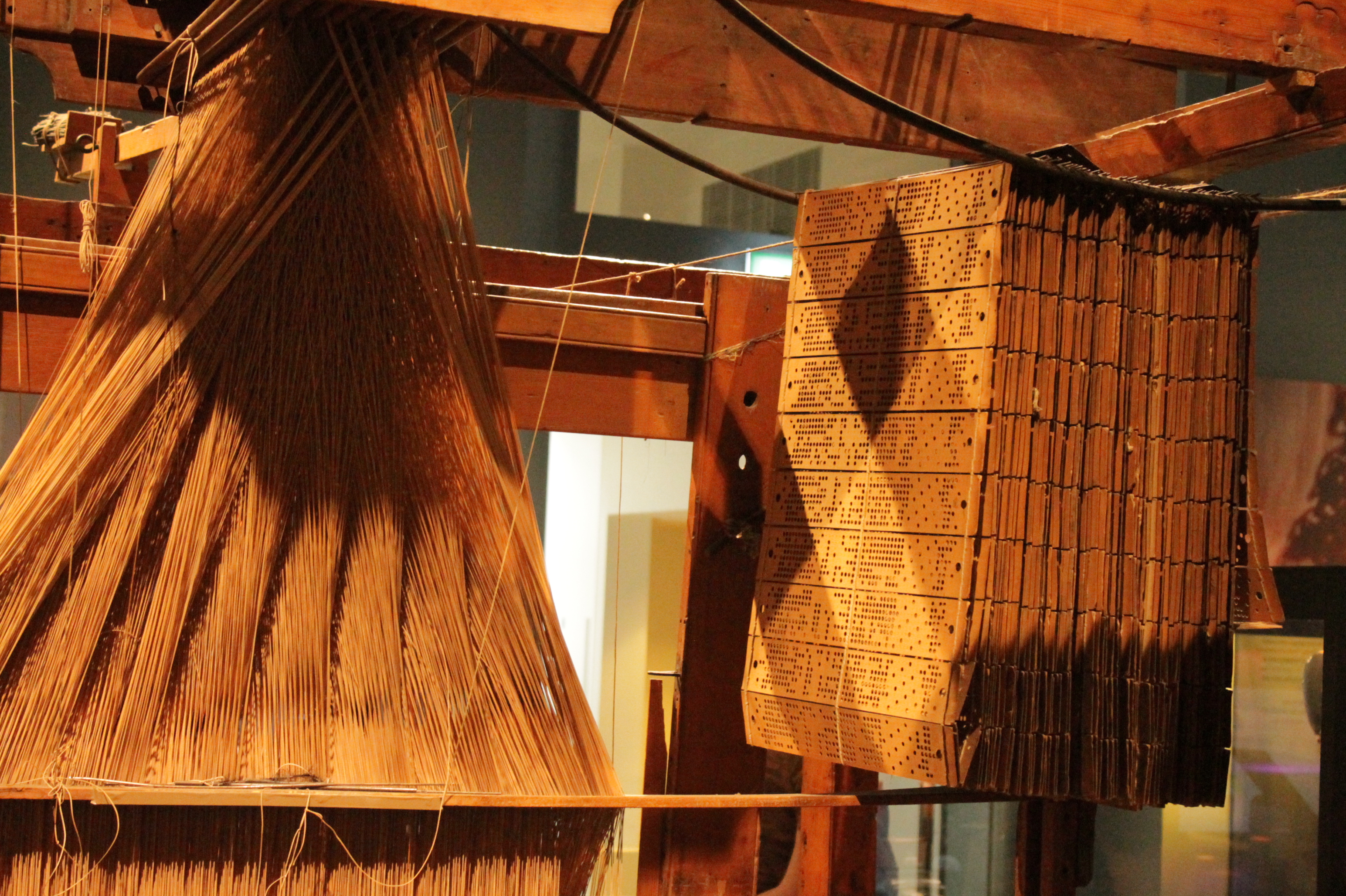
In 1804, Joseph-Marie Jacquard attached a mechanism to a silk loom in Lyon that read a chain of punched cards, one card per row of the pattern, and used the presence or absence of a hole to decide which threads a mechanical hook would raise. An unskilled worker could now weave complex patterned brocade that had previously required a master weaver's years of training. Charles Babbage studied Jacquard's punch cards while designing his Analytical Engine, and Ada Lovelace, describing what that engine could do, wrote that it "weaves algebraic patterns, just as the Jacquard loom weaves flowers and leaves." That sentence is usually cited as the founding metaphor of computer programming itself. It is also, without anyone intending it that way, the first clear statement of the thesis this piece is about: instead of moving the finished, differentiated good, move the instructions, and let a generic, reconfigurable machine compile them locally.
The Framework
Every instance of this pattern decomposes into the same four parts. The feedstock is an undifferentiated raw input that sits in local inventory, cheap and generic, until it is needed. The code is the only thing that actually travels across distance, whether that is a CAD file, a genetic sequence, a chemical reaction graph, a circuit layout, a bitstream, or a knit pattern. The compiler is a reconfigurable local machine that executes the code against the feedstock. The end product is the specific, differentiated good that exists only after compilation is complete.
Each genus below is tagged with its Operation, the physical or chemical transformation the compiler performs, making clear at a glance what the machine is actually doing to the feedstock.
| Genus | Operation | Feedstock | Code | Compiler | End Product |
|---|---|---|---|---|---|
| Geometric | Shape | Powders, resins, filaments, metals, concrete, bar and sheet stock | CAD/STL/G-code, CAM toolpaths | 3D printers; CNC mills, lasers, waterjets; incremental forming rigs | Parts, tools, structures |
| Biological | Grow | Chassis organism plus sugar or media | Genetic sequence (DNA/RNA) | Bioreactor, fermenter, DNA synthesizer | Proteins, enzymes, biologics, bio-materials, food |
| Molecular | React | Reagent and chemical building-block libraries | Reaction graph, synthesis route | Chemputer, flow-chemistry reactor, robotic lab | Small molecules, APIs, fine chemicals, fragrances |
| Lithographic | Pattern | Wafers, dopants, photoresist, deposition materials | Circuit layout, photomask design (GDSII) | Fab, lithography scanner | Chips, photonic devices |
| Reconfigurable Electronics | Reconfigure | Generic pre-fabricated silicon, nothing consumed per compile | Bitstream compiled from HDL | FPGA | A specific circuit function, fully reversible |
| Fiber/Textile | Interlace | Continuous yarn or fiber | Knit or weave pattern file | Programmable knitting or weaving machine | Garments, technical textiles |
| Discrete Assembly | Assemble | Standardized modular units (voxels) | Assembly sequence | Swarm of small assembler robots | Lattices, structures |
What follows takes each genus in turn: a reference table, then a narrative assessment, history first, then current state in named companies and products, then what the regime looks like once it matures, then an image.
Genus One: Geometric
| Column | Detail |
|---|---|
| Operation | Shape, add, remove, or reform bulk matter without new chemistry |
| Feedstock | Titanium, nickel superalloy, and specialty steel powders (Carpenter Additive, AP&C/GE Additive, Sandvik Osprey, ATI, Hoganas, Praxair Surface Technologies); upstream raw materials (Rio Tinto titanium slag, Clean TeQ scandium); photopolymer resins (Formlabs, Carbon); engineering thermoplastics (Stratasys PEEK/ULTEM); construction-grade cementitious material (ICON's Lavacrete); generic bar, block, and sheet stock for subtractive work |
| Code | STL and G-code as base formats, the same lineage traces back to the original numerical-control punch tape; generative design and topology optimization software (nTopology/nTop, Autodesk Fusion 360 Generative Design, Altair Inspire, Siemens NX, PTC Creo GDX/GTO); CAM toolpath software for subtractive work |
| Compiler | FDM (Stratasys, Bambu Lab, Prusa); SLA/DLP (Formlabs, Carbon); SLS powder-bed fusion (EOS, 3D Systems); DED wire and powder deposition (Optomec, Relativity Space's Stargate); binder jetting (Desktop Metal/ExOne, HP Metal Jet); CNC mills, lathes, and laser or waterjet cutters; incremental sheet-forming rigs |
| End product | Certified aerospace parts (GE Aviation LEAP fuel nozzles); orthodontic manufacturing tooling (Align Technology/Invisalign); printed housing and military structures (ICON); fully printed reusable rockets (Relativity Space Terran R); chairside-milled dental crowns; laser-cut faceted diamonds; robotically 3D-printed steel bridges |
Additive manufacturing gets the credit for this genus, but the genus is older and larger than that credit suggests, and separating its two histories from each other explains why. Numerical control, the code-driven ancestor of every modern machine tool, was developed at MIT in 1952 under United States Air Force funding, specifically to solve helicopter blade manufacturing, punched tape encoding a toolpath fed into a modified Cincinnati Hydrotel mill, cutting generic metal stock into a precise part with no human hand-guiding the cutter. That is Shape by subtraction, and it predates stereolithography, the first commercial 3D printing process, by more than three decades. The two histories converged conceptually once 3D printing's own G-code format was built directly on the earlier NC standard, so a modern printer and a modern CNC mill are, underneath their very different physical actions, running dialects of the same language.
The current state spans a genuinely wide range of maturity. At the frontier, GE Aviation flies FAA-certified 3D-printed fuel nozzles on its LEAP engines, consolidating twenty separate components into one, and Relativity Space has staked its entire business on the bet that a rocket itself should be printed rather than assembled from tens of thousands of machined and cast parts, its fourth-generation Stargate printer feeding proprietary scandium-aluminum alloy wire, sourced through an offtake agreement with Clean TeQ's Sunrise project in Australia, into a print head inside a converted former Boeing C-17 plant the company calls The Wormhole, with a stated goal of four Terran R rockets per printer per year at full run rate. At the entirely unremarkable end, the same underlying logic already runs quiet, everyday businesses, dental crowns milled chairside from a scan in under an hour, hearing aid shells shaped from an ear scan, custom eyeglass lenses ground from a generic blank, keys cut at an automated kiosk, and Sarine's AI-driven diamond-planning software, which scans a rough stone's internal inclusions and computes the laser-cutting plan that maximizes value before a laser physically executes it. That range, from a certified aerospace part to a shopping-mall key kiosk, is the strongest evidence in the whole piece that this pattern is not a frontier curiosity but something already fully embedded in ordinary commerce.
A fully mature version of this genus looks like a factory that prints and machines its own tooling, and increasingly the equipment other genera depend on, 3D-printed sand molds are already standard at Ford and GM for engine prototyping, and 3D-printed bioreactors are starting to appear in fermentation labs, with machine learning closing the loop on print and cut reliability closely enough that a first-run part is trusted the same way a cast or forged one already is.
Genus Two: Biological
| Column | Detail |
|---|---|
| Operation | Grow, self-replicating biological synthesis |
| Feedstock | Chassis organisms: Saccharomyces cerevisiae, Escherichia coli, Pichia pastoris/Komagataella phaffii, CHO cells; carbon sources (dextrose, sucrose, methanol); licensed industrial strains (Novonesis, formed from the 2023 merger of Novozymes and Chr. Hansen) |
| Code | DNA/RNA sequence; synthetic DNA manufacturing (Twist Bioscience); enzymatic DNA synthesis (DNA Script, Molecular Assemblies, funded through DARPA's NOW program); Ginkgo's Codebase, more than two billion characterized protein sequences; Synthetic Biology Open Language as an interchange standard |
| Compiler | Industrial bioreactors (Sartorius, Cytiva, Eppendorf, Ambr benchtop systems); DNA synthesizers (Twist's silicon-chip platform, DNA Script's SYNTAX, Synthetic Genomics' Digital-to-Biological Converter); Ginkgo's Reconfigurable Automation Carts and Cloud Lab |
| End product | Recombinant insulin and monoclonal antibodies; industrial enzymes (Novonesis); precision-fermentation dairy and egg proteins (Perfect Day, The EVERY Company); structural textile proteins (Spiber, Bolt Threads) |
This genus has the oldest biological pedigree in the taxonomy even though its vocabulary is recent. Recombinant human insulin, approved in 1982, was the first genetically engineered protein manufactured at industrial scale in a fermenter, proving the basic thesis, a microbe can be reprogrammed into a factory, decades before anyone described it in those terms. What has changed is the scale of what can be programmed and how fast the programming happens. Novozymes, now merged into Novonesis, built a multi-billion-dollar business over decades supplying industrial enzymes from engineered strains, essentially treating fermentation as a mature, if slow-moving, manufacturing platform.
The current state has expanded from single well-characterized proteins into whole product categories and, more recently, into a fully automated design layer. Perfect Day and The EVERY Company sell precision-fermentation dairy and egg proteins into major food brands. Spiber and Bolt Threads have commercialized fermentation-derived structural proteins for textiles, a direct hybrid with the Fiber/Textile genus described below. Ginkgo Bioworks, publicly traded on the New York Stock Exchange under the ticker DNA, has built the most complete horizontal platform in the genus, a Foundry containing 144 Ambr 250 bioreactors among its equipment, and a Codebase of more than two billion characterized protein sequences. A five-year partnership with Google Cloud gives Ginkgo access to Vertex AI and custom tensor processing hardware, and a collaboration with OpenAI has produced an autonomous lab, internally named Nebula, driven by GPT-5, that the company reports achieved a 40 percent improvement over the prior state-of-the-art scientific benchmark, running on Reconfigurable Automation Carts that pair standardized lab equipment with six-axis robotic arms on a maglev sample-transport track. Ginkgo has since opened that infrastructure to outside researchers as Ginkgo Cloud Lab, a literal ship-the-code interface, submit a protocol through a browser, the carts execute it. The company's 2024 acquisition of Zymergen, one of the two commercial partners DARPA's Living Foundries program used to produce bio-derived materials for Army vehicle armor and 3D-printing polymers, folded a second major synthetic biology platform directly into Ginkgo's own.
A fully mature version of this genus looks like uploading a target molecule, a protein, an enzyme, a flavor compound, a structural fiber, and having an AI system select or design the genetic sequence, select the chassis organism, and run the fermentation autonomously end to end, a human specifying the goal rather than the method, which is already the direction Ginkgo's own internal automation stack is visibly heading.
Genus Three: Molecular
| Column | Detail |
|---|---|
| Operation | React, chemical bond formation via reagent combination |
| Feedstock | Curated reagent and chemical building-block libraries; validated reaction data, Chemify describes its own library as the world's largest curated, continuously growing collection of validated chemical reactions; commodity reagent supply (Sigma-Aldrich/Merck KGaA) |
| Code | Chemify's proprietary chi-DL programming language; retrosynthesis planning tools (IBM RXN for Chemistry, Merck's Chematica, now commercialized as Synthia); reaction graphs generated upstream of physical synthesis |
| Compiler | Chemify's Chemputer and Chemifarm facility; IBM's RoboRXN (Switzerland); flow-chemistry reactors (Vapourtec, Corning Advanced-Flow); remote robotic labs spanning chemistry and biology (Emerald Cloud Lab, Strateos) |
| End product | FDA-approved small molecules, most publicly, remdesivir, synthesized by Chemputer directly from a digital blueprint; tuberculosis and malaria drug candidates; fine chemicals, catalysts, fragrance and flavor molecules |
This genus carries the youngest name in the taxonomy but sits on top of a decades-long push to automate chemistry that predates the term, from early robotic peptide synthesizers to the flow-chemistry systems pharmaceutical companies adopted through the 2000s specifically to escape the batch-by-batch limits of a chemist manually running reactions in a flask. What is new is treating an entire synthesis route, not one reaction step, as a single program a machine executes end to end. Lee Cronin's Chemputer, developed for more than a decade at the University of Glasgow, proved that concept publicly by synthesizing remdesivir directly from a digital blueprint. Chemify, spun out in 2022, has since moved from a single academic robot to industrial infrastructure, a $43 million Series A in August 2023, a $12 million, 21,500-square-foot Chemifarm facility that opened in Glasgow's Maryhill district in June 2025 and created 60 jobs, and a $50 million Series B co-led by Insight Partners in October 2025, followed by a grant supporting tuberculosis and malaria drug discovery. Cronin has described his ambition for chi-DL as building the equivalent of cloud infrastructure for chemistry itself, a shared programming layer every synthesized molecule eventually passes through. IBM's RoboRXN offers a narrower but philosophically identical service out of Switzerland, letting a chemist submit a synthesis request over the internet and receive a robotically made molecule back.
The clearest evidence of where this genus is heading sits just outside chemputation proper, at Emerald Cloud Lab in Austin, a laboratory customers never physically enter, where a scientist designs an experiment in software, ships any needed samples, and receives fully annotated data back while robotic infrastructure executes dozens of techniques, including historically hands-on ones like rotovaping and lyophilization, that ECL has built into the same scriptable framework as its liquid handlers. Coscientist, a multi-large-language-model agent published in the scientific literature, has already autonomously designed, planned, and physically executed real palladium-catalyzed cross-coupling reactions by composing search, documentation retrieval, and code generation, then calling ECL's robotic infrastructure directly, with no chemist writing the underlying protocol by hand.
A fully mature version of this genus looks like Cronin's own stated ambition realized at scale: every molecule designed anywhere passing through a shared chemical programming language before it is physically synthesized, collapsing the current global divide between where a drug is invented and where it is cheaply manufactured into a single, local, on-demand step.
Genus Four: Lithographic
| Column | Detail |
|---|---|
| Operation | Pattern, masked deposition and etch at micro and nanoscale |
| Feedstock | Silicon wafers (Shin-Etsu Handotai, SUMCO, Siltronic, SK Siltron, GlobalWafers); photoresist (Shin-Etsu Chemical, Tokyo Ohka Kogyo, JSR); photomask blanks (Hoya); process gases (Air Liquide, Linde) |
| Code | Hardware description languages (Verilog, VHDL) compiled to GDSII; EDA tools (Synopsys, Cadence, Siemens EDA control the large majority of the market between them); AI floorplanning and layout tools (Synopsys DSO.ai, Cadence Cerebrus, Google DeepMind's AlphaChip) |
| Compiler | EUV and DUV lithography scanners (ASML, the sole global EUV supplier); deposition and etch equipment (Applied Materials, Lam Research, Tokyo Electron); foundries (TSMC, Samsung Foundry, GlobalFoundries); open shuttle fabrication (Efabless with SkyWater Technology) |
| End product | Logic chips and memory; Google's Tensor Processing Units, AlphaChip-assisted; open-source ASICs fabricated through the SkyWater and Efabless shuttle program |
This is the genus with the longest and most direct institutional history in the whole taxonomy, and, unexpectedly, its origin is tangled up with the genus this piece treats as separate, Reconfigurable Electronics. Xilinx, founded in 1984 by Ross Freeman, Bernard Vonderschmitt, and James Barnett to commercialize Freeman's field-programmable gate array, is widely credited not only with inventing the FPGA but with creating the first fabless manufacturing model, the practice of a company designing a chip and shipping the layout to a foundry it does not own, rather than fabricating in-house. Both ideas came out of the same company at the same moment. What later genuinely separated Lithographic from Reconfigurable Electronics as distinct genera is that fabless design consumes a new wafer to create permanent, application-specific silicon, while an FPGA is bought once and reprogrammed indefinitely.
The current state of this genus is defined by who authors the layout, not who fabricates it. Chip floorplanning, deciding where major circuit blocks physically sit, was hand-tuned by engineering teams for up to twenty-four months per generation until Google DeepMind's AlphaChip, published in Nature in 2021 and later open-sourced, applied reinforcement learning to generate a comparable layout in hours, a tool Google has used across the last several generations of its own Tensor Processing Units, with Synopsys' DSO.ai and Cadence's Cerebrus offering the same reinforcement-learning approach commercially to the rest of the industry. At the opposite end of the cost spectrum, Efabless, Google, and SkyWater Technology run the Open Multi-Project Wafer Shuttle Program, submit a GDSII design built on an open process design kit and receive fabricated silicon back, with Google covering the historically prohibitive mask tooling cost, and Efabless has reported that a majority of participants in its shuttles are not credentialed chip engineers at all, evidence that lowering the cost of shipping code rather than cargo genuinely expands who can manufacture, not merely who can afford to.
A fully mature version of this genus looks like AI closing the loop on both ends simultaneously, an AI system authoring the full circuit the way AlphaChip already authors the floorplan, submitted to a shuttle-style service the way Efabless already operates today, collapsing the current multi-year, multi-million-dollar cycle of professional chip design toward something closer to a software deploy cycle.
Genus Five: Reconfigurable Electronics
| Column | Detail |
|---|---|
| Operation | Reconfigure, change a device's logical state with no matter transformed at all |
| Feedstock | Generic, already-fabricated FPGA silicon (AMD/Xilinx, Intel/Altera), sitting in inventory or already deployed in a data center, consumed once at the point of manufacture and never again |
| Code | Verilog/VHDL compiled through a toolchain (Xilinx's Vivado, Intel's Quartus) into a bitstream; Rapid Silicon's RapidGPT, which generates FPGA design code conversationally rather than requiring hand-written HDL |
| Compiler | The FPGA itself; Amazon's EC2 F1 and newer F2 cloud instances, which expose banks of AMD FPGAs that a developer configures remotely by submitting a design checkpoint that AWS compiles into a bitstream and loads via partial reconfiguration |
| End product | A specific circuit function loaded onto shared cloud hardware, fully reversible and reconfigurable on demand; genomics acceleration (Illumina's DRAGEN platform runs on F2 instances), video processing, network security, financial-data acceleration |
This is the genus a reader would be forgiven for not immediately recognizing as manufacturing at all, and that is precisely why it belongs in the taxonomy: it is the cleanest limiting case of the entire thesis, because almost nothing is consumed each time the compile happens. Ross Freeman's 1984 insight, control a chip's logic with embedded programmable memory rather than fixing it permanently during fabrication, was a deliberate bet that transistors would keep getting cheap enough that "wasting" some of them on reconfigurability would stop being a disadvantage. History proved him right quickly enough that Xilinx, the company he co-founded to sell the idea, still holds a large share of the programmable logic device market decades later.
The current state of this genus has moved the entire compiler off a customer's desk and into the cloud. Amazon's EC2 F1 instances, generally available since 2017, expose Xilinx FPGAs that a developer configures by submitting a Vivado design checkpoint, which AWS itself compiles into an Amazon FPGA Image and loads onto the hardware using partial reconfiguration, the developer never touches a physical chip. The newer F2 instances, powered by up to eight AMD Virtex UltraScale+ FPGAs, are explicitly marketed for genomics, and Illumina's DRAGEN platform, a genome-sequencing accelerator, runs on exactly this infrastructure, a direct, load-bearing link between the Reconfigurable Electronics genus and the Biological genus this piece opened with, a genetic sequence and a chip's own logical structure both compiled on demand, in the same data center, from submitted code. On the design-authorship side, Rapid Silicon's RapidGPT generates FPGA logic conversationally, extending the same AI-as-author shift visible in every other genus to a domain that has historically required specialist hardware description language expertise.
A fully mature version of this genus looks like reconfigurable compute becoming the default assumption rather than the exception, a cloud provider holding a shared pool of generic silicon that reshapes itself continuously to match whatever workload is submitted, with no fixed-function chip ever needing to be fabricated for a task that will only run occasionally.
Genus Six: Fiber/Textile
| Column | Detail |
|---|---|
| Operation | Interlace, loop or weave continuous fiber, the only fully reversible physical-transformation genus in the taxonomy alongside Reconfigure and Assemble |
| Feedstock | Continuous yarn and technical fiber |
| Code | Digital knit and weave pattern files, developed in-house by machine makers and by brands' own knit-engineering teams |
| Compiler | Programmable flat-knitting machines, principally from Shima Seiki, which introduced the first computerized flat knitting machine in 1978 and WholeGarment seamless knitting in 1995, and its main competitor Stoll, which achieved comparable milestones shortly after |
| End product | Nike Flyknit, which debuted at the 2012 London Olympics after roughly 195 design iterations and is knitted on Stoll machines; Adidas Primeknit; Spiber and Bolt Threads' fermentation-derived structural proteins, increasingly knitted directly, a hybrid with the Biological genus |
This genus has, by a wide margin, the oldest documented origin of anything in this piece, older even than the framing device this article opened with suggests, because Jacquard's 1804 punch-card loom is not merely an apt metaphor for the thesis, it is very plausibly its literal first instance. A punched card is code; a loom reconfigured by that card is a compiler; raw silk thread is feedstock; a specific woven pattern is the end product that exists only after the cards have been read. Every other genus in this taxonomy is, in the strictest historical sense, a later reinvention of something a French weaver's workshop was already doing in the early nineteenth century.
The current state of the genus is dominated by two Japanese and German machine makers, Shima Seiki and Stoll, whose computerized flat-knitting technology, refined since the late 1970s, became suddenly visible to a mainstream audience through Nike Flyknit. Nike spent roughly four years and 195 design iterations reworking knitting machines originally built for socks and sweaters before Flyknit launched at the 2012 London Olympics, and the technology is understood in the trade to run on Stoll machines fitted with a patented inlay device that lays in Nike's Flywire yarn for structural support, a level of engineering specificity that puts a whole-garment knitting machine much closer to a 3D printer than to a traditional loom, the shoe upper comes off the machine as a single completed piece, built bottom-up like a tube, with no cutting or sewing. Spiber and Bolt Threads represent the genus's most direct convergence with Biological, fermentation-derived structural proteins engineered specifically to be spun and knitted rather than woven from conventional fiber.
A fully mature version of this genus looks like what industry insiders have already begun describing: body scanning feeding directly into a knit-engineering program, adjusted per-customer and printed out, in the words of one knitting-technology executive, the same day, collapsing garment retail's entire sizing and inventory logic the way point-of-care manufacturing is already collapsing pharmaceutical logistics.
Genus Seven: Discrete Assembly
| Column | Detail |
|---|---|
| Operation | Assemble, combine discrete, complete, standardized units without altering any of them, fully reversible |
| Feedstock | Standardized lattice building blocks, called voxels, built from materials including glass-fiber-reinforced nylon and steel, based on an octet lattice geometry chosen for high rigidity with reduced material use |
| Code | Assembly sequence and structural design tools developed in-house at MIT's Center for Bits and Atoms, still a research-stage rather than commercially standardized format |
| Compiler | Swarms of small assembler robots, including MILAbots, which use the geometry of the lattice itself to walk across a structure and self-correct as they build |
| End product | Lightweight, high-strength aerospace structures developed with NASA, Airbus, and Boeing, and, as of a 2026 paper in Automation in Construction, building-scale structures, with a pilot planned in Bhutan through MIT's distributed "super fab lab" network |
This is the genus with the shortest commercial history and the clearest claim to being the philosophically purest version of the whole thesis, because Neil Gershenfeld's Center for Bits and Atoms at MIT has spent more than a decade explicitly trying to make matter behave the way bits do, discrete, standardized, reversible units that can be assembled into essentially any macro-structure and, just as importantly, disassembled and reused. Early voxel work focused on aerospace, lattice structures for airplane wings, wind turbine blades, and space structures, developed in partnership with NASA, Airbus, and Boeing.
The current state has moved from purely mechanical lattice pieces to what the CBA team calls complex voxels, units that carry both power and data from one to the next, so an assembled structure can not only bear load but actively do work, lifting, moving, and manipulating materials, including other voxels. A 2026 study in Automation in Construction extends the approach to buildings for the first time, with three new voxel geometries designed specifically to be easier for robots to assemble automatically, and a pilot planned in Bhutan using MIT's "super fab lab" network to test the approach for a planned sustainable city. Architect Thomas Heatherwick, unaffiliated with the research, called it a way to let buildings "build themselves." Gershenfeld's own framing of the ambition is direct: transferring principles already proven in aerospace, where nobody would dream of hand-fabricating an airplane wing from scratch, to buildings, where that is still the default.
A fully mature version of this genus looks like construction losing its distinction from manufacturing entirely, standardized voxels shipped as inventory to any site, assembled and reconfigured by autonomous robot swarms according to a design file, and, when a structure's purpose changes or its materials are needed elsewhere, disassembled back into the same generic units rather than demolished.
Where the Genera Collide
The sharpest recent developments are not any single genus advancing in isolation, but two merging into one machine. Generative diffusion models, most notably RFdiffusion, now design entirely novel protein backbones that no chemist conceived of by hand, and researchers are engineering microbes to secrete those AI-designed proteins directly as three-dimensional printable inks, tuned specifically to improve extrusion through a print head, a fusion of Biological and Geometric. Point-of-care 3D printers can now produce roughly 80 percent of oral active pharmaceutical ingredients at up to 1,000 doses per hour, a fusion of Geometric and Molecular that collapses the distinction between a compounding pharmacy and a small manufacturing plant. Cell-free protein synthesis strips out the living cell entirely, using only its transcription and translation machinery in a system that behaves functionally like a chemputer running biological code, a fusion of Biological and Molecular. And Spiber and Bolt Threads' fermentation-derived structural proteins, engineered specifically to be spun into yarn and fed through the same computerized knitting machines that make Nike Flyknit, are a fusion of Biological and Fiber/Textile that barely existed as a stated category five years ago.
The Breakthroughs This Enables
Stacking these seven genera against each other surfaces things that would sound like science fiction if they weren't already documented, real, and running. The most convincing evidence isn't a lab paper, it's the growing list of specific objects that have already been sold, worn, driven, eaten, or implanted.
A cancer patient in Spain went home twelve days after surgeons replaced his entire sternum and part of his rib cage with a custom titanium implant, electron-beam-melted from his own CT scans by CSIRO and Anatomics, a geometry no flat off-the-shelf plate could have replicated, and the same team has since repeated the surgery for patients in the UK and the US. A twelve-meter stainless steel pedestrian bridge, robotically welded into existence in mid-air with no mold or scaffold by the Dutch company MX3D, has carried foot and bicycle traffic across an Amsterdam canal every day since 2021, reporting its own strain, vibration, and corrosion in real time through an embedded sensor network. A hypercar with an AI-designed, mostly 3D-printed titanium chassis, built by Divergent 3D's spinout Czinger, has beaten a McLaren P1's production-car lap record at Circuit of the Americas, and roughly eighty of them, at close to two million dollars each, have actually been delivered to owners. And in San Francisco and Washington, D.C., diners have been served chicken, real chicken, grown from cells rather than a bird, at restaurants run by Dominique Crenn and Jose Andres, after Upside Foods and Good Meat became the first companies in American history to clear both FDA and USDA approval for cultivated meat.
The capabilities behind the next generation of these products are, if anything, stranger. Researchers at the University of Vermont, Tufts, and Harvard's Wyss Institute used an AI system to design a body shape, assembled by hand from unmodified frog stem cells with no genetic engineering at all, that turned out to reproduce in a way no organism had ever been observed doing before, sweeping up loose cells and shaping them into working copies of itself, again and again. Berkeley Lab's A-Lab, pairing Google DeepMind's materials predictions with a fully autonomous robotic synthesis line, discovered and produced 41 entirely new inorganic materials in a single seventeen-day run with no human touching an instrument. MIT's Fibers@MIT lab has packed a real computer, sensors, memory, a battery, and Bluetooth into a single polymer strand thin enough to thread a needle and knit directly into a shirt, the resulting garments are headed for a live US Army and Navy Arctic health-monitoring deployment. Coscientist, a multi-large-language-model agent, independently searched for information, read instrument documentation, wrote code, and called Emerald Cloud Lab's own robotic interface to physically execute a real chemical reaction with no chemist writing the underlying protocol. AlphaChip took a task that consumed engineering teams for up to twenty-four months per chip generation and compressed it to hours, and Google has used it across the last several generations of the chips that likely helped train the AI systems writing about it. A voxel-assembler swarm at MIT can build a load-bearing lattice structure with embedded power and data routing without a human hand touching an individual part, the same robots are being tested this year on a real building pilot in Bhutan. And Ginkgo's Nebula lab, run largely by GPT-5 inside a Boston facility, reported a 40 percent improvement over the prior best benchmark for autonomous scientific experimentation.
It is worth naming directly, and only in the general terms that responsible reporting on the field already uses, that this same capability, the ability to transmit genetic information and have a machine autonomously produce the corresponding biological material with minimal human involvement, is a recognized dual-use consideration in synthetic biology, valuable precisely because it can manufacture a vaccine or therapeutic on demand in an emergency, and requiring exactly the kind of institutional safeguards DARPA and its partners have built the underlying programs around from the start. That tension, extraordinary defensive capability and a capability that demands careful stewardship, is inseparable from the breakthrough itself, and any honest account of this genus has to hold both at once rather than airbrushing the second half out.
Looking forward, the more interesting question is not what any one genus can now do alone but what happens when a single facility runs several at once. A hospital, a forward operating base, or a disaster-relief site equipped with one bioreactor, one chemputer, one metal printer, and one reconfigurable compute rack, all fed from the same shipped library of code, could in principle produce a drug, a surgical implant, a repaired mechanical part, and the custom control electronics for a piece of field equipment, without a single physical resupply. Discrete Assembly's own research trajectory points toward the same convergence at a larger physical scale, standardized structural units that a robot swarm can assemble into a building today and, per Gershenfeld's own stated ambition, might eventually assemble on another world, following the same aerospace-to-construction logic already proven with NASA, Airbus, and Boeing. The most speculative, and most consequential, endpoint is a fully closed loop with no human in the specification step at all, a system that receives a functional request, a stronger bracket, a faster-clearing infection, a lighter airframe, and independently decides which genus, or which combination of genera, best produces it, then executes across whichever compilers that decision requires.
Why This Is a 2026 Story, Not a 2015 One
Fabless semiconductor design has shipped a circuit layout to a foundry instead of moving a finished chip for four decades, DARPA's original biomanufacturing program is fifteen years old, and Jacquard's loom is over two centuries old. What changed recently is not the existence of the pattern but who authors the code. Ginkgo's Codebase, Chemify's chi-DL, Google's AlphaChip, and Rapid Silicon's RapidGPT are four genus-specific answers to the identical question: can a system trained on enough prior examples generate a better design faster than the human specialist who used to hand-author it. Across every genus, the code used to be the slow part, hand-authored by a specialist over months or years. It is now the fastest-moving part of the system, generated and iterated by AI faster than the physical compiler can execute it, whether that compiler is a bioreactor, a robotic synthesis rig, a lithography scanner, a knitting machine, or a swarm of assembler robots.
What It Means for Capital Allocators
The clearest signal that this pattern has moved from laboratory curiosity to strategic priority is a contradiction inside the United States government's own supply chain policy. Executive Order 14336 directs federal agencies to fill a six-month strategic reserve of active pharmaceutical ingredients, a physical stockpile built explicitly to hedge against a supply chain where an estimated 80 percent of the American generic drug supply traces back through Chinese-made starting materials at some point in its manufacturing. At the same time, the Department of Defense has launched a Distributed Bioindustrial Manufacturing Program and funded battlefield platforms explicitly designed to make that same physical stockpiling unnecessary, by manufacturing therapeutics on demand from digital sequence data wherever troops are deployed. The federal government is, in effect, funding both the twentieth century solution and the technology that could obsolete it, in the same budget cycle.
The same geographic fragility shows up in genera this piece added later. Advanced semiconductor fabrication remains concentrated overwhelmingly in Taiwan, a concentration reconfigurable cloud compute does nothing to fix directly but that AI-authored chip design, lowering the cost and time of designing around supply constraints, meaningfully softens at the margin. Garment manufacturing carries the same labor-cost-arbitrage logic as generic pharmaceutical APIs, just relocated to Bangladesh and Vietnam instead of India and China, and a Flyknit-style knitting machine that eliminates cut-and-sew labor entirely is a direct structural challenge to that arbitrage, not merely a product innovation. For investors, the throughline across all seven genera is the same: the compilers that still depend on cheap, concentrated, geographically fragile labor and material supply are precisely the ones where a reconfigurable, code-driven compiler captures the most value as the physical alternative grows more fragile, and the genera least far along that path today, Reconfigurable Electronics and Discrete Assembly among them, are the ones where that value has not yet been priced in anywhere.