Seven Men, Three Hundred Miles, Twenty-Seven Minutes: The Largest Jewelry Heist in U.S. History
A single unguarded window at a California truck stop turned a routine trade show shipment into a multi-year legal war between an armored-car giant and the small jewelers who trusted it.
By Carry and Conquer Publications
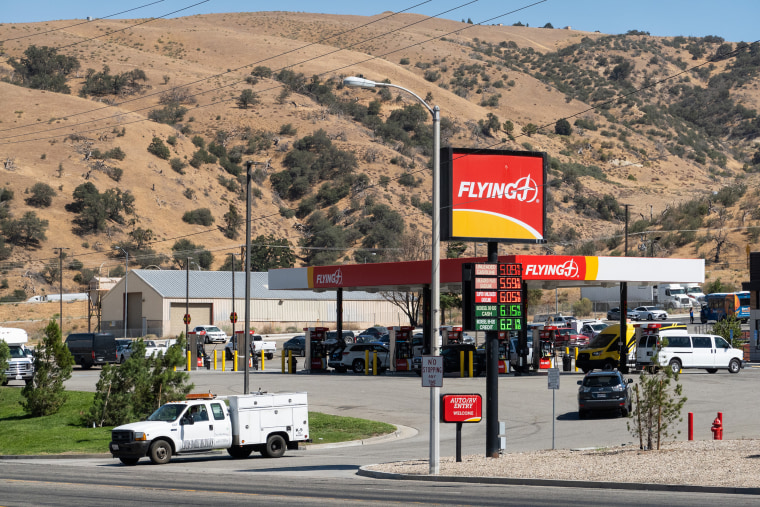
At 2 a.m. on July 11, 2022, a Brink's tractor-trailer sat parked at the Flying J Travel Center in Lebec, California, roughly 75 miles north of Los Angeles. One driver had gone inside for food. The other was asleep in the cab's sleeping berth. In the 27 minutes it took the first driver to return, thieves sawed through an exterior padlock and made off with 24 of the truck's 73 bags of jewelry. Federal prosecutors now call it the largest jewelry heist in U.S. history, and the fallout has outgrown the crime itself: three years of dueling lawsuits, a federal indictment of seven men, and, this January, one defendant's abrupt disappearance from the United States altogether.
The Setup
The truck had left the International Gem and Jewelry Show in San Mateo the evening before, loaded with jewelry from 14 exhibitors bound for a second show at the Pasadena Convention Center roughly 300 miles south. According to the federal indictment unsealed in June 2025, the eventual defendants had spent days scouting the San Mateo show before the truck ever pulled out. When it departed on the evening of July 10, three of them began tailing it, tracking its route through rest stops in Buttonwillow and then Lebec.
The bags they eventually grabbed held cushion-cut pink sapphires, deep-blue star sapphires showing rare six-pointed asterism, sizable emeralds, and jade pendants ringed in diamonds, along with gold, diamonds, rubies, and luxury watches including Rolexes. Jean Malki, a jeweler with Forty-Seventh & Fifth who lost more than 650 pieces in the theft, later told investigators he had noticed someone watching him load his cases at the San Mateo venue. "There was somebody kind of looking at me weird, kind of dogged me, staring right in the eyes, just sitting there, doors were open, as we were getting loaded," a Brink's employee separately recalled. "It just felt weird."
The theft itself left almost no evidence. Prosecutors say the crew had honed the method on smaller jobs beforehand, including a March 2022 theft of roughly $240,000 in Samsung electronics from an interstate shipment and a May 2022 robbery, using a crowbar, of another truck at a Fontana rest stop. Weeks before the jewelry heist, several of the same men allegedly stole nearly $57,000 worth of Apple AirTags from a box truck, a robbery that turned violent when the driver caught them mid-theft and one of the men brandished a knife.
That detail carried an ironic twist into the main event: investigators say the crew also grabbed the Apple AirTags and Samsung electronics packed alongside the gems in the Brink's truck, seemingly undermining any post-theft effort to track the stolen jewelry by satellite.
A Valuation Nobody Agrees On
What the thieves actually got away with remains formally contested. The jewelers' pickup manifests, filed with Brink's before the show, declared the 24 missing bags at a combined $8.7 million. The jewelers themselves put the wholesale-to-retail value at closer to $100 million, and the show's organizer, Arnold Duke, has suggested current gold prices push that figure higher still.
The gap is not a rounding error. It is the entire lawsuit.
Brink's sued 13 of the affected jewelers in federal court in Manhattan within weeks of the theft, arguing its liability is capped by the declared manifest value, not the jewelers' after-the-fact claims. The jewelers countersued in Los Angeles County Superior Court, alleging negligence, breach of contract, and fraud, seeking roughly $200 million combined. Fourteen jewelry businesses joined that suit, several of them family operations that had exhibited at trade shows for decades.
Central to the jewelers' case is an allegation that undercuts their own manifest numbers: they claim a Brink's sales representative at the San Mateo show advised them to understate the declared value of their goods to reduce shipping costs, without warning that doing so would cap what they could later recover. In depositions, several jewelers admitted they routinely understated shipment values across the industry, not just for this trip, specifically to keep insurance costs manageable. Brink's, for its part, has pointed to exactly those admissions as proof its liability should track the paperwork the jewelers themselves signed.
The Memo Problem
Underneath the liability fight sits a financing arrangement that has quietly run the jewelry trade for more than a century: memo, short for memorandum. Under a memo arrangement, a supplier or dealer hands over inventory to another dealer or retailer without requiring payment upfront. The recipient displays and tries to sell the goods, paying the supplier only once a sale closes, or returning what does not sell. Ownership stays with the original supplier the entire time the merchandise is out on memo.
The system exists because most independent jewelers cannot afford to buy trade-show inventory outright. Carrying a showcase of loose diamonds or fine colored stones on memo lets a small operator display far more value than their own balance sheet could support. It is also, structurally, a bet that nothing goes wrong while the goods are out of the owner's hands.
Something went wrong. At least four of the fourteen victimized jewelry businesses had memo goods among what was stolen in Lebec, according to jewelers who spoke with reporters afterward. That means those businesses owe their memo suppliers for merchandise they no longer possess and, in some cases, never sold. The theft did not just erase inventory. It created a debt obligation layered on top of the loss itself, one owed to a supplier who has no contractual relationship with Brink's or the truck stop and no direct path to recovery through either lawsuit.
Eight of the fourteen victimized jewelers were based in Los Angeles County's close-knit trade-show circuit, a community where memo deals are typically sealed on trust and a handshake rather than heavy documentation. Malki described the aftermath as devastating not just financially but reputationally, worrying aloud about how the loss would affect his standing with the suppliers who had trusted him with their goods.
An Inside Job Theory
The precision of the robbery has fueled a persistent theory that someone with inside knowledge of the shipment helped set it up. Los Angeles County Sheriff's Sergeant Michael Mileski confirmed to New York Magazine that his department's Major Crimes Bureau and the FBI had examined whether the theft involved an inside participant, and that investigators had served search warrants on residences and businesses seeking records.
The circumstantial case is built on specificity. The thieves reportedly targeted bags positioned toward the back of the trailer, not a random or convenient selection, and some accounts suggest the bags carried tags that could have signaled which contained the highest-value merchandise. Malki, whose jewelry was among the stolen goods, put it bluntly: "Reading the police report that we had, it's just kind of hard to believe it's just a coincidence that some people decided to steal the Brink's truck. And they knew when they were going to leave. They knew where they're going to stop. They knew how long they're going to stop."
The federal indictment, built around cell phone records and physical surveillance rather than an inside-source theory, does not name an inside participant. Whether one exists remains unresolved.
The Indictment, Three Years Later
It took nearly three years for the criminal case to catch up to the civil litigation. In June 2025, federal prosecutors in the Central District of California unsealed a grand jury indictment against seven Southern California men, ranging in age from 31 to 60 and living in Boyle Heights, Westlake, Rampart Village, and neighboring communities: Carlos Victor Mestanza Cercado, Jazael Padilla Resto, Pablo Raul Lugo Larroig, Jorge Enrique Alban, Eduardo Macias Ibarra, Victor Hugo Valencia Solarzano, and Jeson Nelon Presilla Flores. All seven face two counts each of conspiracy to commit theft from interstate and foreign shipment and theft from interstate and foreign shipment, charges that carry up to 15 years in federal prison. Investigators recovered some of the stolen jewelry while executing search warrants around the time of the indictment.
Then, in December 2025, the case took a turn none of the parties saw coming.
Presilla Flores, a lawful permanent resident who had lived in the Los Angeles area for roughly 25 years and had been released on a $65,000 bond, was taken into ICE custody in September 2025, apparently without the knowledge of the federal prosecutors handling his criminal case. At a December 16 immigration hearing, Flores requested voluntary departure to Chile. An immigration judge denied that specific request but issued a final order of removal, and ICE deported him to Ecuador on December 29, ahead of his criminal trial.
Federal prosecutors said they were caught off guard. Flores's defense attorney has since moved to permanently dismiss the criminal case against his client, arguing the government's own conduct undermined his right to prepare a defense. Prosecutors are fighting to keep the charges alive without prejudice, preserving the option to prosecute Flores if he ever returns to the United States, though they have acknowledged the immigration and criminal justice processes ran on separate tracks without coordination between them. "When a defendant in a major federal theft case leaves the country before trial, victims are left without answers, without a verdict, and without closure," Jerry Kroll, the attorney representing several of the jewelers, told the Los Angeles Times.
What the Truck Left Behind
Three years on, the underlying dispute between Brink's, its insurers, and the jewelers has not fully resolved. Several jewelers have settled with Brink's individually, according to their attorney, while others continue to press claims. Brink's has reportedly declined to transport goods for the plaintiffs while their lawsuit remains active, which has pushed some of the affected businesses to seek other carriers or renegotiate terms with suppliers who now want cash upfront rather than memo credit.
That shift may be the heist's most durable legacy. A single 27-minute gap in coverage at a highway rest stop did not just cost 14 jewelry businesses their inventory. It exposed how much of the American jewelry trade runs on paperwork nobody reads closely, valuations nobody wants to state honestly, and trust extended between suppliers and retailers who have never needed a truck-stop robbery to remind them what memo actually means: somebody else's goods, on somebody else's risk, until the sale closes. For the jewelers still waiting on Brink's, on their insurers, and now on a criminal case missing one of its seven defendants, that risk has not gone away. It has just moved further from the truck stop and deeper into the courts.