One Japanese Company's Monopoly on Glass Fiber Is Quietly Throttling the Entire AI Chip Supply Chain
Nitto Boseki controls roughly 90% of the world's supply of T-glass, and Nvidia, Apple, AMD, and Qualcomm are all fighting over what little capacity it has left.
By Carry and Conquer Publications
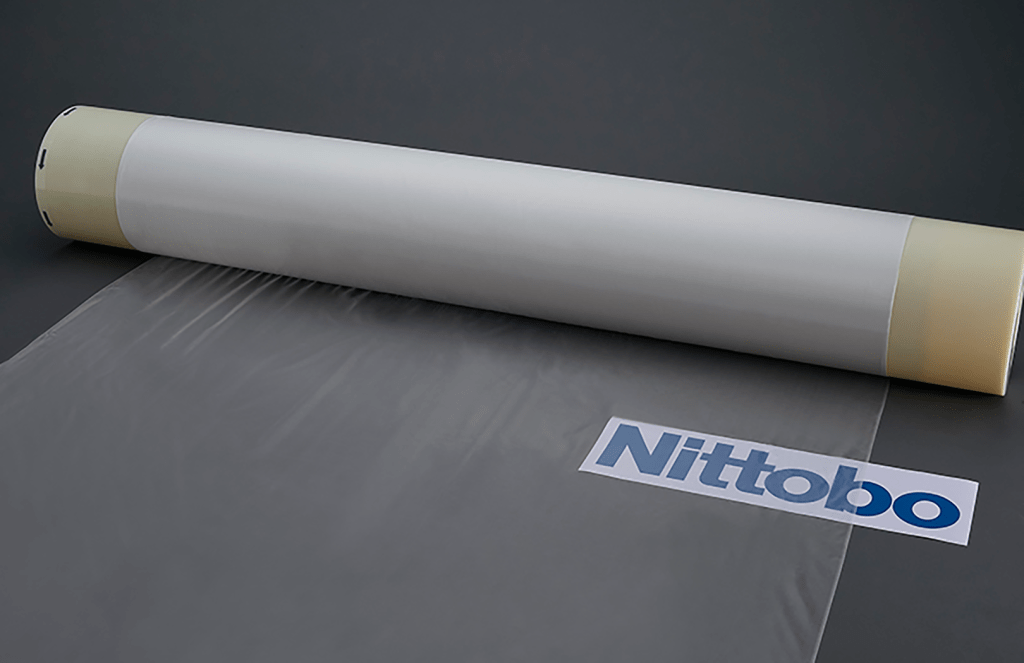
In the autumn of 2025, Apple sent its own employees to Japan and stationed them inside Mitsubishi Gas Chemical, a substrate maker that depends on a single supplier for the glass fiber inside its products. Nvidia and AMD dispatched staff directly to that supplier's headquarters in Tokyo. Qualcomm went hunting for backup capacity at a smaller Japanese rival. None of it has worked particularly well. The company at the center of this scramble, Nitto Boseki, known as Nittobo, posted a net income last year of just over 37 million dollars, a rounding error next to the trillion-dollar market caps of the firms now begging for its product. Its glass fiber cloth, called T-glass, sits inside the chip substrates of nearly every advanced AI accelerator built today, and Nittobo controls somewhere around 90% of the global supply of the highest grade. The AI industry's most visible shortage is GPUs. One layer beneath that is a 128-year-old Tokyo textile company that nobody outside specialty materials science had heard of until eighteen months ago.
A textile mill becomes a chokepoint
Nittobo did not set out to become indispensable to artificial intelligence. The company traces its roots to 1898, formed from the merger of two Japanese spinning operations, and took its name from "Nitto," an old word for Japan, reflecting a founder's pledge to be renewed daily as a spinner in the land of the rising sun. In 1938, Nittobo became the first company in the world to produce glass fiber on an industrial scale. It spent the following decades as an unglamorous supplier of insulation, rock wool, and reinforced plastics. The pivot toward chips came in 1984, when Nittobo introduced T-glass, a specialty fiber engineered for low coefficient of thermal expansion, originally aimed at composite materials rather than semiconductors.
T-glass works by solving a problem that becomes more severe as chips get bigger and hotter: warping. The material sits inside the organic core of an IC substrate, the interconnect layer between a chip and its printed circuit board, and keeps that layer dimensionally stable as it heats and cools. Producing it requires electric melting furnaces running at 1,600 to 1,700 degrees Celsius, melting raw silica-rich glass before spinning it into yarn and weaving it into an ultrathin cloth. Nittobo has spent four decades refining a proprietary direct-melting process that rivals have struggled to copy, even after watching the company do it for years. By the time AI accelerators began needing chip packages an order of magnitude larger than anything that came before, Nittobo was the only company on Earth that had mastered the material at scale.
Every major chipmaker, one Tokyo address
The numbers behind why everyone needs this specific company are stark. Nvidia's interposer size, the layer that sits between chip and substrate, grew 109% from 814 square millimeters in its Hopper architecture to 1,700 square millimeters in Blackwell, with the Rubin and Feynman generations slated to push it further still. Every increase in package size means more T-glass per chip. Bank of America estimates Nittobo's electronic materials segment will nearly double in sales, from 40.9 billion yen in 2025 to 87.7 billion yen by March 2028, with operating margins approaching 48%.
So the queue at Nittobo's door has grown accordingly. Apple sent representatives to Japan to meet with government officials, hoping a larger allocation might follow from political pressure rather than commercial leverage alone. Nvidia and AMD sent staff to Nittobo's headquarters directly. Bilal Hachemi, an analyst at Yole Group who tracks the IC substrate supply chain, told Tom's Hardware Premium that Nvidia reaching out to an upstream material supplier this way was unprecedented in his coverage of the industry: it was the first time, he said, that he had seen an end customer go around its own substrate makers to lock down raw material at the source. Jensen Huang has framed the entire shortage as a feature rather than a bug, telling a recent press conference that scarcity forces buyers to choose only the best: "I've got all the packaging, I've got all the systems, I've got all the connectors, I got all the cables. Everything from copper to multilayer ceramic capacitors, everything is secured."
Apple, meanwhile, has reportedly gone furthest afield in search of alternatives, sending employees to a small glass fiber maker called Grace Fabric Technology to try to coax its quality up to a usable standard. Qualcomm visited Unitika, a Japanese rival whose production volumes are too small to move the needle on the broader shortage. Together, Nittobo, Asahi Kasei, and Asahi Glass are estimated to control more than 70% of the global glass fiber market and the overwhelming majority of advanced glass cloth production specifically, according to figures reported by 36Kr. None of the would-be alternatives, in China, Taiwan, or elsewhere in Japan, have managed to replicate T-glass's specific dielectric and CTE values at meaningful yield. As Hachemi put it, the material has properties that work better for AI chips, especially in the organic core, and substituting something else means re-qualifying an entire substrate design from scratch.
What it costs to wait
Nittobo is racing to expand. It is tripling capacity at its Fukushima plant, the company's historic home, but that new supply will not reach the market until mid-2027 at the earliest. It is also doubling raw yarn capacity at its Taiwan plant and, in a sign of how tight things have become, has struck a weaving partnership with Nan Ya Plastics, one of its own competitors, under the Taiwanese Formosa Plastics Group. By 2027, roughly 20% of Nittobo's glass cloth is expected to be woven under that arrangement. None of it changes the math for the next eighteen months. Bill Ho, an analyst at Yuanta, said suppliers have stopped quoting lead times altogether because the constraint has become too unpredictable to forecast. Prices for T-glass have risen 20 to 30%, and lead times for downstream copper-clad laminates, the next material in the substrate stack, have stretched from a normal 8 to 10 weeks to more than 20.
The market has rewarded Nittobo handsomely for sitting at the center of all this. Its profit attributable to owners surged 272.7% year over year in the nine months through December 2025, its full-year operating profit guidance jumped to 20 billion yen, and the company executed a five-for-one stock split in June 2026 after its shares hit an all-time high of 32,900 yen, pushing its market capitalization above 789 billion yen. A company that most of its own customers had never heard of two years ago is now valued by some analysts at a 17,000 yen price target with a standing buy rating from J.P. Morgan.
The glass fiber shortage is the small bottleneck. Memory is the big one
T-glass is a precise, almost surgical bottleneck inside a much larger crisis that tech media has taken to calling RAMmageddon. As Samsung, SK Hynix, and Micron divert wafer capacity toward high-bandwidth memory for AI accelerators, ordinary DRAM and NAND for consumer devices has been squeezed nearly out of existence. Up to 70% of all memory chips produced globally in 2026 are projected to go to AI data centers, according to TrendForce, a sharp reversal from the 20 to 30% data centers consumed as recently as 2022. Kearney's PERLab, the consultancy's product excellence and renewal lab, projects in a 2026 analysis that the shortage will not resolve before 2030, a timeline SK Group chairman Chey Tae-won has publicly endorsed.
The damage is no longer confined to the gigantic players who can absorb a price shock. Phison CEO Khein-Seng Pua told Era News host Ning Guan in February 2026 that he expects the second half of the year to produce "a lot of victims" among smaller consumer electronics firms, describing meetings in China where mobile and automotive companies were openly pleading with suppliers for any flash memory at all. Pua said one of the three major NAND foundries is now demanding three years of cash prepayment upfront, a request so unusual that Ning Guan noted not even TSMC asked that much of Nvidia. Pua, who runs a company holding roughly 20% of the global SSD controller market, said his own customers' fulfillment rate has fallen below 30%, and that 8GB eMMC modules used widely in consumer and automotive electronics rose from $1.50 to $20 in a single year, a thirteenfold increase. He put it bluntly: smaller firms that cannot pay upfront are being told, in effect, that they no longer have a seat at the table.
A pattern, not an exception
What makes the T-glass story instructive is how closely it mirrors the memory crisis playing out one level up the stack, and how likely it is to repeat again one level down. Hachemi's warning to Tom's Hardware was not that T-glass is uniquely scarce, but that the same dynamic, thin historical margins meeting a sudden demand surge from a buyer willing to pay anything, can recur with the next material in the chain: copper foil layers, solder mask, copper-clad laminates. The IC substrate industry has operated for decades on margins thin enough that even modest demand surges trigger shortages, which is precisely why a company with a 37 million dollar net income two years ago is now fielding personal visits from the world's most valuable corporations.
The AI buildout has made its peace with GPU scarcity; it is well understood, well covered, and priced into every earnings call. What the glass fiber bottleneck reveals is that the constraint sitting underneath the constraint is often a company whose name nobody bothered to learn, sized for a world that no longer exists, and now deciding, plant by plant and contract by contract, how fast the rest of the industry is allowed to grow.