KKR Pays 10.8x EBITDA for 80 European Festivals, Beating Out BlackRock and Conde Nast's Parent
A private equity firm now owns Wacken, Sziget, and Defqon.1, and the bidding war to get there included a magazine publisher.
By Carry and Conquer Publications
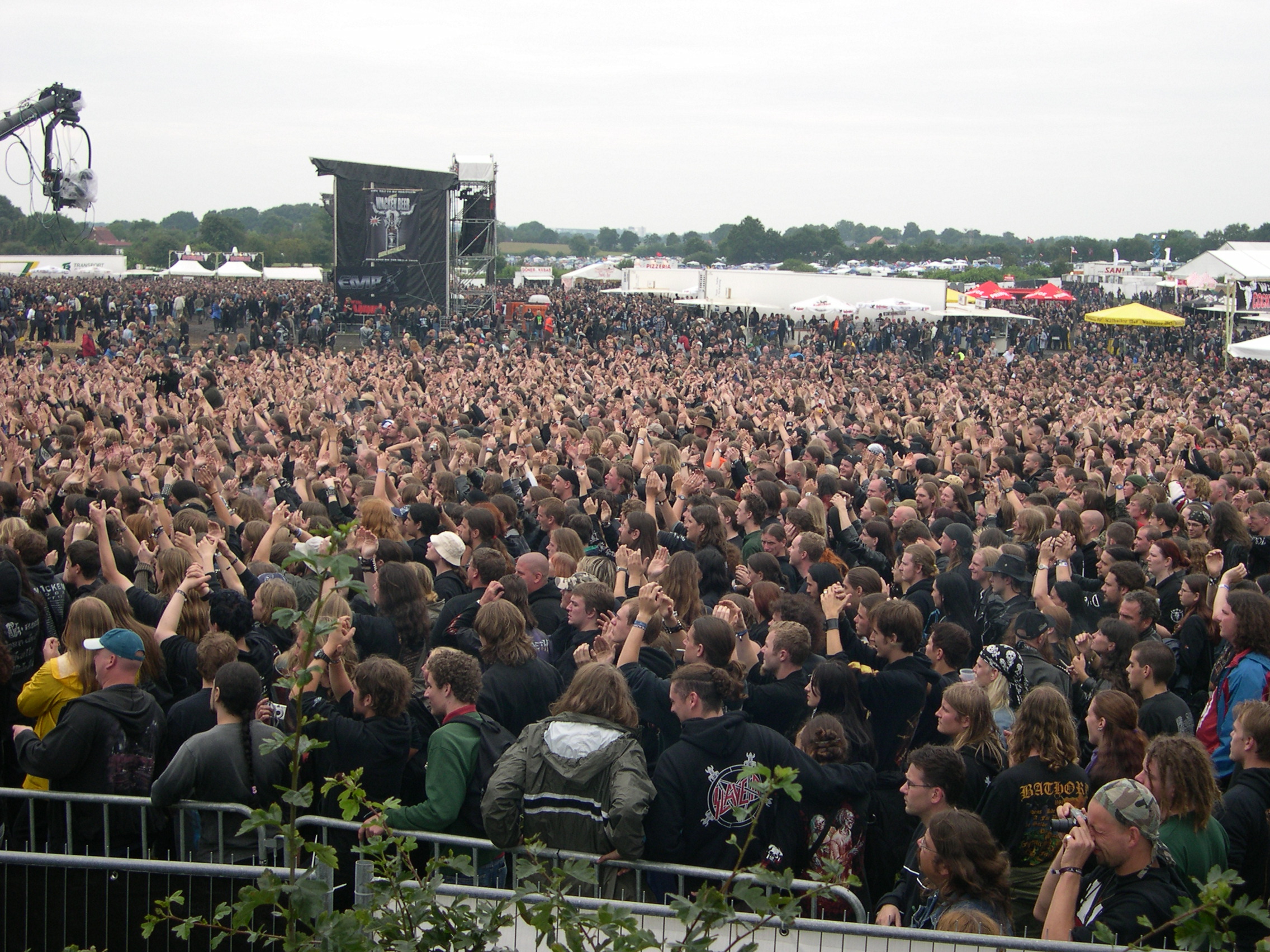
In June 2024, KKR agreed to acquire Superstruct Entertainment, the operator of more than 80 music festivals across ten countries, for a reported 1.3 billion euros. The price worked out to roughly 10.8 times Superstruct's 2023 EBITDA of approximately 120 million euros, a multiple that would be unremarkable for a software company and startling for a portfolio built almost entirely out of muddy fields, temporary staging, and bands. The seller was Providence Equity Partners, which had built Superstruct from nothing in just seven years. The buyers who lost the auction included Blackstone, EQT, and, improbably, Advance Publications, the parent company of Conde Nast. By October 2024, CVC Capital Partners had joined KKR as a co-investor, and the roll-up that began with a single Hungarian festival had become one of the largest live entertainment platforms in the world.
The Eight-Year Roll-Up
Superstruct did not exist before 2017. It was created that year by James Barton, founder of the UK's Creamfields festival and former "president of electronic music" at Live Nation, together with Roderik Schlosser, then an investor at Providence Equity. Providence supplied the seed capital and the acquisition mandate was explicit from day one: buy up Europe's independently run festival circuit before its owners realized what was happening.
The first move set the pattern for everything that followed. In January 2017, Superstruct bought a 70 percent stake in Hungary's Sziget Festival, a 95,000-capacity event on an island in the Danube. A month later it picked up a stake in the Spanish electronic music promoter Elrow. Within eighteen months it held majority stakes in Barcelona's Sonar and Norway's Oyafestivalen. By 2019 it had absorbed a block of British festivals including Boardmasters, Victorious, Kendal Calling, and Tramlines, followed by Germany's Wacken Open Air, the world's largest heavy metal festival, and Parookaville, one of Germany's largest electronic events. The acquisitions continued through the pandemic, when Superstruct picked up the Dutch dance festival Zwarte Cross and ticketing-adjacent company ID&T, and again in 2023 with Mighty Hoopla, Cross the Tracks, and the Austrian ski festival Snowbombing.
Barton later described the strategy with unusual candor for a private equity-backed executive. "We knew that we needed to move in such a way to try and generate enough scale before people really woke up to the fact that an organization out there had a really strong vision and a mission," he said at the International Live Music Conference in February 2025. The press coverage bears this out: Superstruct's rise from zero to the second-largest festival promoter in the world, behind only Live Nation, went almost entirely unremarked upon for six years. By the time journalists started paying attention, the company had also quietly acquired travel agencies, advertising firms, artist management companies, and a stage construction workshop in the Netherlands, vertically integrating the supply chain behind the festivals themselves.
The Auction
By 2024, Superstruct's scale and its post-pandemic recovery made it an obvious target. Live entertainment had become one of private equity's favored plays on the broader shift from spending on goods to spending on experiences, a thesis that also explains recent capital flows into Formula One, casinos, and river cruises. Providence, which had held Superstruct for seven years, put the company up for sale, and interest came from nearly every major buyout shop with a media or leisure mandate: KKR, Blackstone, CVC, and EQT.
The presence of Advance Publications, the privately held owner of Conde Nast, in that same field of bidders is the detail that turns a routine buyout into something odder. A magazine and media holding company built on Vogue, The New Yorker, and Wired was reportedly circling a European festival roll-up whose assets include a heavy metal gathering in rural Germany and an underground techno event in Barcelona. Advance did not win. KKR did, agreeing in June 2024 to acquire Superstruct from Providence for the reported 1.3 billion euros, a figure that some reporting instead framed as 13 times gross annual earnings rather than 10.8 times EBITDA, reflecting the ambiguity that surrounds most disclosed-but-not-official private equity pricing. Providence retained an option to reinvest up to 250 million euros alongside KKR. Goldman Sachs advised KKR; HSBC and LionTree advised Providence. Four months later, CVC joined as a co-investor, bringing its own experience running Formula One and Stage Entertainment to a business it had never previously touched: music festivals.
What Tens of Percent Annual Growth Requires
KKR made the investment through its European Fund VI, an 8 billion dollar vehicle that has also backed FGS Global and the German satellite manufacturer OHB. The firm's public rationale leaned on its experience in "digital entertainment and ticketing," citing prior investments in BMG, ProSiebenSat.1, GetYourGuide, and Trainline. The private math is less comfortable. According to a Reuters analysis of the deal, KKR's return targets require Superstruct's gross profit to grow by tens of percent annually for five to six years. For a fund that promises its limited partners roughly 20 percent annual returns, that is not a rounding error; it is the entire thesis.
Insiders quoted by the Dutch investigative outlet Follow the Money were skeptical that the arithmetic works. "There are a few gems, such as Wacken, Zwarte Cross, Defqon.1 and Parookaville, but for most of those eighty festivals, the margins are thin," one former festival executive said, noting that thin margins were precisely why so many of Superstruct's targets needed private equity money to survive COVID in the first place. The likeliest levers, according to that same reporting, are centralized ticketing and catering operations that cut costs across the portfolio, and audience-lineup curation pulled from Spotify and TikTok listening data that lets promoters price and program more aggressively. Superstruct's own website has shifted accordingly: rather than showcasing music, it now features case studies of brand activations with corporate sponsors, a B2B pitch layered underneath a B2C product.
The Authenticity Problem
The industry Superstruct rolled up has spent decades marketing itself as the opposite of what it has become. Wacken brands its flat, no-VIP ticket structure as "metal socialism." DGTL in Amsterdam ties its programming to the queer and underground roots of house music. Boiler Room, which Superstruct acquired from the ticketing platform DICE in January 2025, has built its entire identity on unfiltered access to underground DJ culture. None of that branding anticipated ending up several ownership layers beneath a New York buyout shop.
The gap surfaced publicly in early 2025, when reporting on KKR's broader portfolio, including stakes in Israeli-linked companies such as Axel Springer and defense and security-adjacent holdings, triggered artist cancellations at Boiler Room and, by April, an open letter signed by more than 230 artists, including Brian Eno, demanding that London's Field Day festival distance itself from KKR. Fifteen artists ultimately pulled out of the 2025 edition. Sonar in Barcelona faced similar pressure, and Spain's culture minister eventually declared KKR "not welcome" in the country. Superstruct's response, distributed internally and reported by UK trade press, insisted the company was "independently run" and that its shareholders were "fully aligned with our values," a claim that sits uneasily next to a five-to-six-year plan built on centralized cost extraction. James Barton resigned from the Superstruct board in December 2025, eighteen months after the sale closed, telling staff in a note that "you can own a business, but you can't own a culture." Whether that distinction survives the fund's return targets is the question the next few festival seasons will answer.