J&T Express: The Logistics Unicorn That Finally Turned Profitable After Years of Losses
Southeast Asia's largest delivery company overcame years of losses to post record profits.
By Carry and Conquer Publications
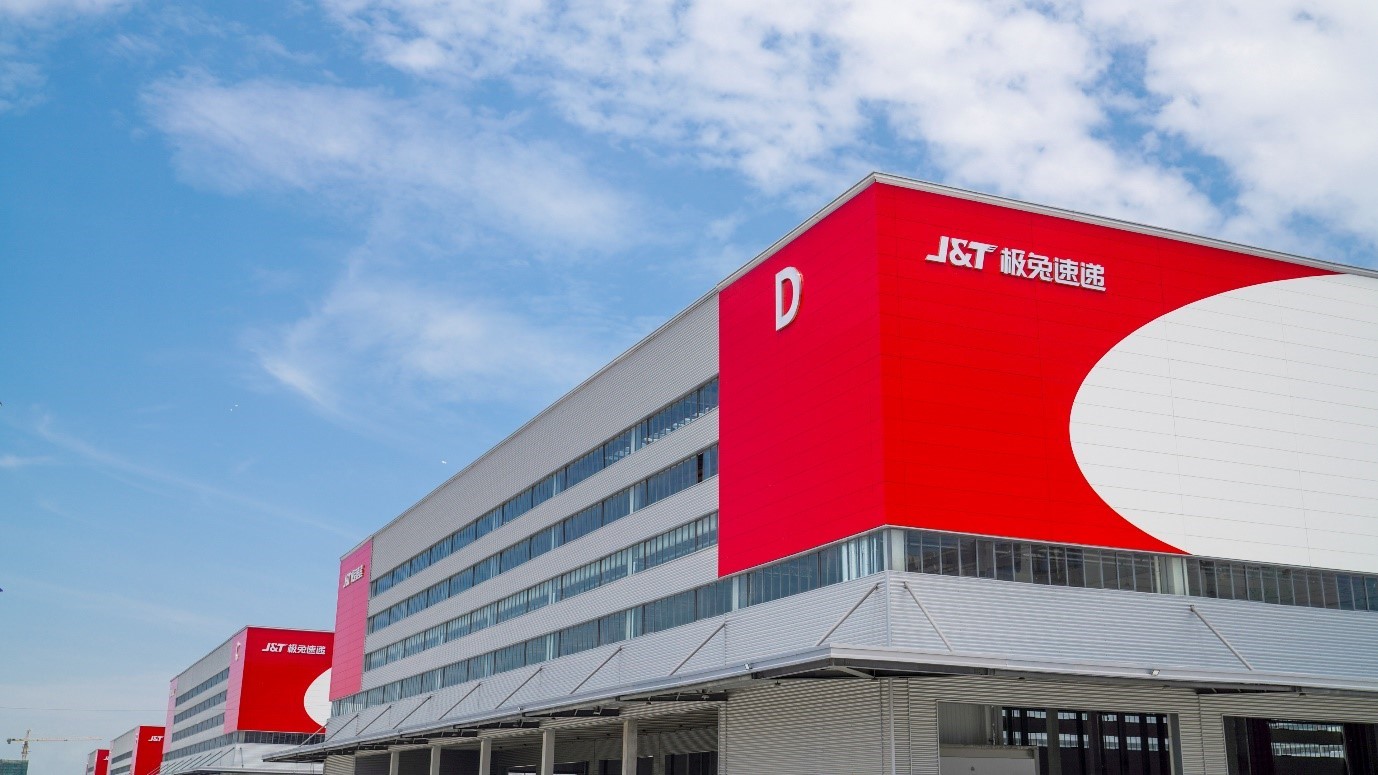
In 2015, Jet Jie Li stepped down as CEO of Oppo Indonesia with an unusual conviction: that Southeast Asia's broken roads, chaotic traffic, and fragmented island geography were not obstacles to a logistics business but its founding rationale. Nobody had built a reliable last-mile delivery network for the region's exploding e-commerce market, and Li believed that was precisely the opening he needed. Ten years later, J&T Express - named for its two founders, Li and Oppo co-founder Tony Chen - handles roughly 25 billion parcels a year across 13 countries, turned its first annual profit in 2024, and has accelerated into 2025 with its strongest financial results to date.
From Oppo's Network to the "Speedy Rabbit"
The company's Chinese name, meaning "speedy rabbit," was chosen to signal the ambition: deliver faster than anyone else in markets where delivery had historically been unreliable. But the real competitive advantage Li brought from Oppo was not speed - it was a distribution model. At Oppo, Li had helped build one of China's most effective franchise networks, built on local agents who understood their markets better than any centralized operation could. He transplanted that model directly into logistics.
J&T's "regional sponsor" structure gives local partners equity stakes in regional operations, making them co-owners rather than contractors. Simon Shao, J&T's head of investment and financing, described these partners as people who are "closer to the market" - local operators who make decisions faster and navigate conditions that outside managers would miss. In Indonesia, where J&T first launched, the model spread through the existing Oppo distributor network. Many of J&T's early franchisees had already built their first businesses selling Oppo and Vivo phones through the BBK Electronics ecosystem, the Chinese conglomerate that spawned both smartphone brands and, in turn, the logistics company.
The company entered Malaysia and Vietnam in 2018, the Philippines, Thailand, and Cambodia in 2019, and Singapore and China in 2020. Each expansion followed the same formula: build infrastructure ahead of demand, absorb initial losses, and then allow the e-commerce wave to fill the network. By the time J&T listed on the Hong Kong Stock Exchange in October 2023 - raising $500 million at a $13 billion market valuation - the formula had produced the region's largest independent courier, but had also generated cumulative losses running into the billions.
The $1.16 Billion Loss That Preceded the Turnaround
The scale of J&T's early losses was not incidental to the strategy - it was the strategy. Li had told his early franchisees to prepare to lose money for the first two years. The company spent years subsidizing delivery fees to capture market share, investing aggressively in automated sorting infrastructure, and absorbing the costs of entering China's brutally competitive market in 2020. The result was a net loss of $1.16 billion in 2023 alone.
The China entry was particularly punishing. J&T launched there under the brand name Jitu, targeting the low-cost parcel segment dominated by Pinduoduo and its associated merchants. Within a year it was handling over 20 million packages daily, but the margins were essentially zero. By 2023, China accounted for the bulk of J&T's volume but was still generating losses at the EBIT level, which reached negative $240 million that year.
The turning point came through scale and cost compression. As parcel volumes grew, fixed infrastructure costs were distributed across more deliveries. J&T invested in automated sorting machines, intelligent routing systems, and eventually unmanned delivery vehicles. In China, the cost per parcel fell approximately 11.8% in 2024, to $0.30, as the network achieved the density needed to cover its overhead. China's adjusted EBIT turned positive for the first time in 2024, reaching $150 million - a $390 million swing from the prior year.
The 2024 Numbers and What They Mean
The full 2024 results, announced in March 2025, confirmed the turnaround was structural rather than temporary. Revenue reached $10.26 billion, up 15.9% year on year. Total parcel volume climbed 31% to 24.65 billion. Net profit came in at $110 million - the first positive annual figure in company history - while adjusted net profit hit $200 million, exceeding market expectations. Adjusted EBITDA soared 430.5% to $780 million.
CFO Dylan Tey attributed the improvement to "deepening cooperation with e-commerce platforms" and "active expansion of diversified brand partners." The Southeast Asia segment - J&T's most mature market - grew parcel volume 40.8% to 4.56 billion, pushed market share from 25.4% to 28.6%, and cut cost per parcel by 14.9% through economies of scale. The SEA segment's adjusted EBIT rose 48.9% to $300 million.
In August 2025, the first-half 2025 results showed no sign of slowdown. Revenue reached $5.50 billion, up 13.1%. Net profit surged 186.6% to $89 million. Adjusted net profit jumped 147% to $156 million. Southeast Asia parcel volume increased 57.9% to 3.23 billion, and SEA market share climbed to 32.8%.
The Shopee Problem and the Next Phase
The same e-commerce platforms that created J&T's growth are now its most consequential strategic threat. In 2025, Shopee - whose in-house logistics arm SPX has expanded rapidly - dropped J&T for most everyday Indonesian orders. The decision followed a pattern that DBS Bank and research firm Cube Asia had flagged: platforms building their own courier networks to capture delivery margin rather than passing it to third-party providers.
J&T's response has been to diversify aggressively away from platform dependence. The company has signed direct logistics contracts with Sephora, Clarks, and Zalora in Singapore; struck a strategic partnership with Globe Telecom in the Philippines; and secured e-commerce logistics agreements with Middle Eastern platforms Noon and Salla. In China, with the country's "anti-involution" policy pushing logistics pricing toward rationality, J&T is investing in 900 unmanned delivery vehicles and DeepSeek AI-assisted routing systems.
The underlying tension is structural. J&T built its business on platform e-commerce - Shopee, TikTok Shop, Temu, Shein, Pinduoduo - because those relationships brought volume at scale. But platform volume comes with thin margins and platform control. Direct brand relationships, by contrast, offer better economics and stickier contracts. The shift is a common one in logistics: the companies that survive long-term are those that move from commodity carrier to logistics partner for specific industries and customers.
By the first half of 2025, J&T operated 19,200 outlets and 239 sorting centers globally, with 337 sets of automated sorting machines. It had also been added to the MSCI China Index in February 2025, a recognition of its growing institutional investor following.
The Road Ahead
Profitability does not resolve J&T's fundamental challenge, which is that the delivery market it dominates - low-cost e-commerce parcels for price-sensitive consumers - is both high-volume and structurally thin-margined. Jeff Tan of Frost and Sullivan noted that delivery fees in Southeast Asia have hit a floor: companies cannot lower prices further without destroying margin, but raising them risks customer defection.
J&T's answer is density and automation. The more parcels it handles per route, the lower the unit cost - and with 25 billion annual parcels already, the company has more volume than any competitor in the region. The question is whether it can generate enough of those parcels from higher-margin clients to move the overall business toward more durable profitability. The new market expansion into Saudi Arabia, the UAE, Mexico, Brazil, and Egypt remains loss-making, though the EBIT loss in those markets narrowed from $110 million in 2023 to $76 million in 2024, and the segment achieved positive adjusted EBITDA in the first half of 2025 for the first time.
What Jet Li built from an Oppo distribution list in 2015 is now a $10 billion-revenue global logistics operation with 300,000 service personnel. The profitable decade took nine years. Whether the next phase - moving from commodity carrier to indispensable infrastructure - takes longer or shorter is the open bet.