Humanoid Robots Are Already Hitting 85% Human Efficiency in Real Chinese Warehouses
A Beijing startup's parcel-sorting robots just produced the productivity number the rest of the humanoid industry has only promised.
By Carry and Conquer Publications
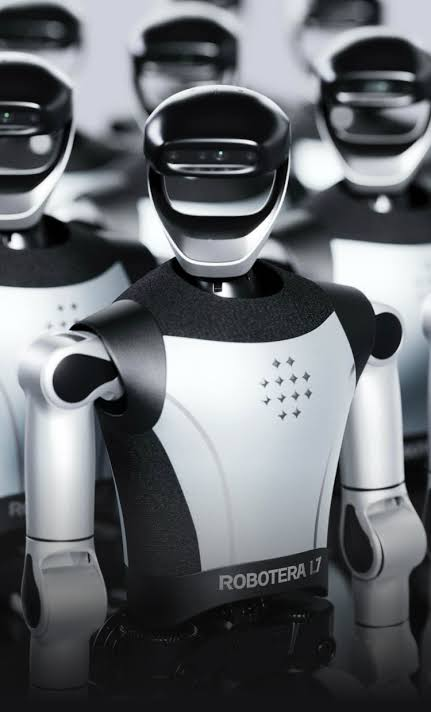
Every other headline in China's humanoid-robot funding wave leads with a dollar figure. Robot Era's does not need to. In April 2026, the Beijing startup raised more than $200 million in a round led by logistics giant SF Express, with HongShan Capital Group, IDG Capital, and CICC Capital among the backers, on top of a $146 million round it had closed weeks earlier at a valuation above $1.4 billion. What makes this raise different is not the size of the check. It is the number attached to it: Robot Era says its L7 humanoid robots are already operating inside more than 10 logistics centers run by SF Express and China Post, hitting 85 percent of human worker efficiency on live parcel-sorting lines, operating stably around the clock. Not a lab demo. Not a trade-show routine. A disclosed productivity figure from paid commercial work.
The Number Nobody Else Has Published
Humanoid-robotics coverage in 2025 and 2026 has overwhelmingly been a story about capital: how much AgiBot, Unitree, and Zhiyuan have raised, what their IPO timelines look like, how many units they claim to have shipped. Unitree's founder Wang Xingxing has said the company shipped roughly 5,500 humanoid robots in 2025; AgiBot has claimed comparable production figures and has since overtaken Unitree in global shipment share. Those numbers describe manufacturing capacity. They say nothing about whether the robots that leave the factory floor are doing useful work once they arrive somewhere else.
That is the gap Robot Era's 85 percent figure closes, and it is a meaningfully large gap. A July 2026 industry analysis found that most humanoids deployed for general factory and warehouse tasks, such as stacking and carrying boxes, are still operating at somewhere between 30 percent and 50 percent of human efficiency. Only a small share of the robots Unitree has sold go directly into industrial applications, with far more ending up in commercial venues such as tourist attractions, exhibitions, and retail floors, roles that do not require sustained productivity comparisons against a human worker at all. Against that backdrop, a figure in the mid-80s from robots working stable multi-shift schedules inside two of the country's largest parcel networks is not an incremental improvement. It is close to double the efficiency ceiling most of the industry has been quietly operating under.
Built on an Unusual Academic Pedigree
Robot Era was founded in August 2023 by Chen Jianyu, an assistant professor and doctoral supervisor at Tsinghua University's Institute for Interdisciplinary Information Sciences, where he works alongside Academician Yao Qizhi. Tsinghua holds equity in the company, making Robot Era the only humanoid-robotics firm in which the university has taken a direct stake. Chen's own background sits at the intersection of the two disciplines that matter most for a warehouse robot: he studied in Tsinghua's Department of Precision Instruments, one of the earliest centers of bipedal robotics research in China, before earning a PhD at UC Berkeley under Masayoshi Tomizuka, a pioneer of model predictive control. That combination, hardware built for locomotion and control theory built for decision-making, shows up directly in the L7 platform: a 171-centimeter, 65-kilogram bipedal frame with 55 degrees of freedom, a top speed near 4 meters per second, and 12-degree-of-freedom hands capable of both delicate sorting and 20-kilogram payloads, all run by Robot Era's in-house ERA-42 model.
The AI layer behind that hardware has an equally specific pedigree. In October 2025, Chen's team at Tsinghua co-published Ctrl-World, a controllable world-model simulator, with a Stanford group led by Chelsea Finn, the co-founder of Physical Intelligence and one of the most closely watched researchers in robot learning. Ctrl-World lets a robot policy rehearse and correct itself entirely inside a generated simulation rather than requiring costly real-world rollouts, and Robot Era's own reporting credits it with a 45 percent performance improvement over Physical Intelligence's own Pi0.5 model. The two teams followed up in January 2026 with VLAW, a vision-language-action model built for iterative self-improvement. That is the software lineage sitting behind the 85 percent efficiency figure: not a single flashy demo, but two years of published, peer-reviewed collaboration between one of China's top robotics labs and one of the most credible names in American robot learning.
Inside the Warehouse
The commercial arrangement itself is notable for how little theater is involved. SF Express, China's largest courier with roughly 400,000 employees and its own cargo airline, is not just an investor in the April round, it is the customer running the pilot. China Post is the other. The two companies are not deploying identical hardware, and the distinction matters. At China Post's Jianggao hub in Guangzhou, one of the busiest sorting facilities in southern China, the units on the floor are Robot Era's M7, a fixed-base upper-body platform bolted to a stand along the conveyor line rather than a walking robot. The fully bipedal L7 is being piloted at other facilities in the network. Robot Era has said it will begin shipping robots at the thousand-unit scale in the second quarter of 2026, a jump from the roughly 200 units the company says it shipped across all of 2025. That scale-up matters because it is the step every humanoid company in this cycle has struggled with: going from a handful of validated pilot units to a production run large enough to matter to a logistics network's bottom line.
It also lands at a moment when China's humanoid sector overall is shifting fast. Global humanoid robot shipments nearly quadrupled in the first half of 2026 to roughly 19,100 units, with Chinese vendors supplying more than 97 percent of that volume and Chinese buyers absorbing the vast majority of demand. AgiBot and Unitree between them account for roughly three-quarters of global shipments, and industry researchers now report that more than 70 percent of humanoids shipped are going into industrial and commercial deployments rather than research labs or demonstrations, a marked shift from a year earlier. Robot Era is a smaller player by unit volume than either of those two companies. Its bet is that a smaller number of robots doing measurably real work is worth more, to investors and to customers, than a larger number doing none.
The Harder Question Still Unanswered
Even Robot Era's own backers are not pretending the humanoid business is simple. Unitree's IPO prospectus, filed ahead of its August 2026 Hong Kong listing, told investors directly that large-scale commercial adoption may be slower than expected because robotic hands are still not precise or durable enough for sustained industrial use. That caution from the market's most recognizable humanoid brand is a useful check on how far to extrapolate a single, undisclosed-methodology efficiency figure from one company's pilot sites. Robot Era has not published how the 85 percent number was measured, over what task mix, or at which of its more than 10 pilot sites it was recorded, and multi-site logistics deployments notoriously vary in difficulty depending on parcel size, volume, and seasonal peaks. State media coverage of the Guangzhou facility, for comparison, reported a combined throughput of 1,200 parcels an hour across an unspecified number of M7 units, a number that cannot be converted into a per-robot efficiency figure at all. Nine of the world's ten largest tech firms are listed among Robot Era's customers for its dexterous-hand and robot products, according to the company, which is itself a claim worth independent verification rather than acceptance at face value.
What is harder to dismiss is the pattern underneath the number. Robot Era did not lead with a valuation or a shipment target. It led with a productivity comparison against a human worker, disclosed from inside two of the country's largest delivery networks, backed by a research partnership with one of the most credible labs in American robotics. Every other humanoid company in this cycle is still promising that its robots will eventually be worth what a human costs to employ. Robot Era is the first to put a number on how close it already is.