Fungi Over Foam: How Ecovative Design Is Growing Its Way Into the Global Insulation Market
How a mycelium startup from upstate New York is deploying biofabrication to outmaneuver the petrochemical giants that built the modern insulation industry.
By Carry and Conquer Publications
In the beginning, there was a palm-sized puck of mushroom material grown under a college dormitory bed. That was 2007, and Eben Bayer - then a mechanical engineering student at Rensselaer Polytechnic Institute in Green Island, New York - had stumbled onto something that looked less like a business plan and more like a science experiment. Nearly two decades later, Bayer's company Ecovative Design has accumulated over $184 million in funding, filed 40 patents in mycelium manufacturing, and launched a product that in October 2025 entered the residential construction market as a fire-retardant, carbon-sequestering wall panel called the Foria Hearth. The question that private equity and institutional investors are now actively asking is whether Ecovative's biofabrication model - growing insulation rather than synthesizing it - can scale fast enough to actually bite into a petrochemical insulation industry valued at nearly $23 billion globally in 2025.
The Material That Grows Itself
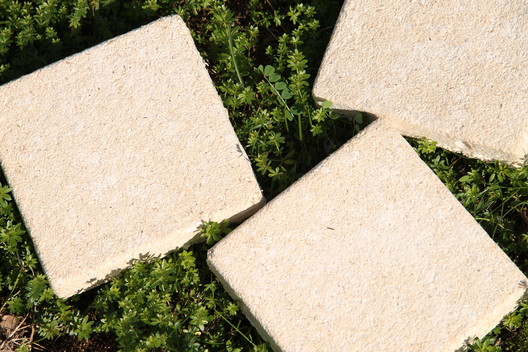
Ecovative's core technology, MycoComposite, is deceptively simple in concept. Agricultural waste - corn husks, hemp hurd, soybean hulls - is inoculated with fungal mycelium spores. Over seven days in a dark room at ambient temperature, the mycelial network binds the substrate into a rigid, foam-like composite. The result is then kiln-dried to halt growth and render the material inert for use. No petroleum inputs. No blowing agents. No toxic flame retardants.
The performance profile is striking. Ecovative's Greensulate insulation - the original product built from this process - achieves R-3 per inch of thermal resistance, comparable to expanded polystyrene (EPS). It chars rather than melts under heat, a critical fire-safety distinction that polystyrene cannot match without chemical additives. The embodied carbon figure is more provocative still: mycelium-agricultural waste composites register approximately -39.5 kg CO2 equivalent per cubic meter, meaning they sequester more carbon than they emit in production. EPS, by contrast, requires approximately 83.5 megajoules per kilogram to manufacture - more than ten times the energy input of mycelium composites at 7.7 MJ/kg. These are not marginal improvements. They are structural advantages in a regulatory environment increasingly demanding decarbonization from the built environment.
The incumbent industry Ecovative is targeting is not complacent. The expanded polystyrene insulation market was valued at roughly $17.8 billion in 2024 and is expected to grow toward $29 billion by 2033. Extruded polystyrene adds another $6.8 billion. The sector is dominated by BASF SE, Owens Corning, Kingspan, Knauf Insulation, and Saint-Gobain - each with deep manufacturing infrastructure, established distribution channels, and decades of regulatory certification. These companies have not been standing still: in 2024, BASF announced a 50,000 metric ton expansion of its Neopor graphite-modified EPS at Ludwigshafen specifically to meet rising demand for energy-efficient building standards. The polystyrene market, despite growing sustainability headwinds, still controls over 54 percent of global building insulation in developed economies.
The wedge Ecovative is driving into that system runs through a different competitive logic: not price parity on day one, but product differentiation in markets where environmental performance is becoming a procurement requirement, not a preference.
Open Access as Market Strategy
One of the more counterintuitive strategic moves Ecovative has made is the deliberate opening of its IP. In 2023, the company launched a European Open Patent Programme for MycoComposite, making the technology freely available to any individual or business in Europe that wishes to build products with it. The stated rationale from Bayer was precise: Ecovative wants to be the "picks and shovels" provider for a new generation of mycelium businesses, not the sole manufacturer of every finished product.
This is a classic platform play. By catalyzing an ecosystem of licensees and derivative companies - Loop Biotech in the Netherlands built a successful mycelium coffin and urn business on Ecovative's technology - the company widens market adoption while keeping the underlying manufacturing expertise and the most valuable proprietary strains and production methods under its own roof. In the construction sector specifically, this creates a network of smaller mycelium builders and product developers who collectively normalize the material in regional markets, reducing Ecovative's direct customer acquisition burden in new geographies.
The licensing model has already traveled well. Magical Mushroom Company handles MycoComposite packaging across the UK and EU. But the construction application - where regulatory certification, building codes, and contractor familiarity matter far more than in consumer packaging - requires a more deliberate market entry approach. This is where the strategic geography of 2025 and 2026 becomes significant.
Emerging Markets as the Beachhead
The conventional assumption in materials disruption is that new bio-based products will find their fastest adoption in Europe, given the EU Green Deal's aggressive carbon reduction mandates, or in North America, where venture capital has funded the R&D pipeline. What the mycelium building materials market data reveals is more interesting: Asia Pacific dominated the global mycelium building materials market with 44.6 percent revenue share in 2024, driven primarily by China's government-mandated Green Building Action Plan and rapid urbanization requiring new construction at extraordinary scale.
Latin America and Southeast Asia present a specific opportunity that Ecovative's technology is well-positioned to capture. The key is the local production model embedded in MycoComposite's design. Because the raw material inputs are agricultural byproducts - wheat straw, corn husks, cotton stalks - and the growth process requires no specialized industrial infrastructure beyond controlled humidity and temperature, production facilities can be established close to agricultural hubs in Brazil, Colombia, Indonesia, Vietnam, or the Philippines. This eliminates the transportation cost penalty that undermines many sustainable building materials when shipped from centralized manufacturing bases in developed markets.
In Southeast Asia, a region where conventional EPS manufacturing capacity is expanding but environmental pressure from governments is also intensifying, mycelium insulation's local-production story is commercially compelling. The Philippines, for instance, is a major agricultural waste producer with a rapidly urbanizing construction sector and increasing regulatory attention to green building standards. Indonesia, with over 270 million people and ambitious housing development targets, faces a similar structural opportunity for a building material that can be grown on-site from locally available feedstock. Brazil's construction sector, the largest in Latin America, has been a consistent adopter of green building certification programs that create pull-through demand for bio-based materials.
The roofing and insulation segment was the dominant application in the global mycelium building materials market in 2024, accounting for 33.7 percent of total revenue. Mycelium insulation panels alone held 38.4 percent of that market by product type - making thermal insulation the clear entry point for Ecovative's technology in new markets, before broader product diversification into acoustic panels, structural components, or decorative elements.
The Foria Hearth and the Move Upmarket in Construction
October 2025 marked a concrete step in Ecovative's construction strategy with the announced launch of the Foria Hearth - a mycelium-insulated wall panel specifically designed for interior residential construction. The panel is described as fire-retardant, carbon-sequestering, and formaldehyde-free, positioning it against not just expanded polystyrene but also against conventional fiberglass batts, which have faced increasing scrutiny for airborne particulate health concerns. Indoor air quality is emerging as a distinct marketing axis in premium residential construction, particularly in urban Southeast Asian markets where dense, multi-unit developments are the dominant housing typology.
This product launch follows Ecovative's collaboration with architect David Benjamin of The Living, in partnership with Autodesk, on a 300-unit affordable housing project in Oakland called The Phoenix - which used MycoComposite panels throughout its facade system. Environmental testing of the project confirmed that the mycelium composite panels produced a carbon-negative result, with the building functioning as a net carbon sink. The Oakland project is exactly the kind of flagship deployment that unlocks credibility in specifier markets: once a material is embedded in a notable institutional or municipal project, architects and developers in adjacent cities and countries begin requesting it. As Bayer noted in describing the Phoenix project, the key disruption was replacing the polystyrene filler in building facades - the hidden material that most construction procurement never scrutinizes - with a grown alternative.
The production economics underpinning this expansion have improved substantially. Ecovative's 180,000-square-foot headquarters facility in Green Island, New York, converted more than 10 million pounds of feedstock in 2025. The company's contract manufacturing model - which transfers technology to existing mushroom farm infrastructure, enabling capital-light expansion without building dedicated factories - is the operational mechanism that makes international scaling feasible. Partner farms at Swersey Silos and Pietro Mushroom Farm in Pennsylvania achieved consistent yields above 7 percent and 6 percent of target respectively in 2025, validating the technology transfer model before it is tested in more distant geographies.
The Competitive Moat and the Limits of It
Ecovative's 40 patents and two decades of accumulated mycelium cultivation knowhow constitute a genuine moat in terms of production consistency and strain optimization. The company has tested 800 strains, 250 recipes, and 200 substrate compositions in building its AI-assisted growth management system - 26,000 records training models that optimize temperature, humidity, CO2, and supplementation across the grow cycle. That depth of operational knowledge is not replicated quickly by competitors.
But the broader mycelium construction materials market is not Ecovative's alone. European competitors include Mogu Srl in Italy, Grown Bio in the Netherlands, Biohm in the UK, and Mykor operating across the UK and Portugal. Mycotech Lab in Indonesia is developing mycelium building panels specifically for Southeast Asian markets with locally sourced agricultural waste substrates. The competitive intensity will increase as the market scales toward its projected $2.5 billion valuation by 2033.
The structural challenge that mycelium insulation shares with most bio-based construction materials is performance at the extremes: current formulations do not perform well under sustained moisture exposure or in load-bearing structural applications. Ecovative's MycoComposite is non-structural by design, meaning it functions as infill, sheathing, or panel insulation within a conventional structural frame - not as a replacement for it. This limits the addressable market to the insulation and cladding segment, not the full building envelope. Mycelium's hydrophobic properties are real, but prolonged immersion compromises rigidity - a limitation that remains an active area of research across the sector.
There is also the certification question. Building code compliance varies dramatically between jurisdictions, and a material produced through a biological process requires a different regulatory pathway than a synthetic product manufactured to tight chemical specifications. In the US, LEED and WELL certification programs create a demand signal, but mandatory code compliance in residential construction is a slower, jurisdiction-by-jurisdiction process. In Latin America and Southeast Asia, where green building code development is still maturing, this can work in Ecovative's favor in the short term - early adoption before mandatory compliance requirements - but creates uncertainty about long-term market access in specific country markets.
What the Petrochemical Industry Is Not Doing
There is a telling absence in the EPS and XPS market competition data from 2025: not one of the major polystyrene insulation producers - BASF, Owens Corning, Kingspan, Saint-Gobain - has announced a mycelium or bio-based insulation product line. Their competitive response to sustainability pressure has been graphite-modified EPS (lower thermal conductivity, same petrochemical base), chemical recycling pilots, and marketing around recyclability improvements. This is a familiar pattern from legacy materials markets: incremental optimization within the existing chemical paradigm rather than platform substitution.
This creates a window. Ecovative and its growing ecosystem of mycelium construction companies have a window to establish supply chains, contractor familiarity, specification references, and green building credentials before the petrochemical incumbents decide to acquire, partner with, or build their own bio-based insulation capabilities. Given that BASF's venture arm, 3M, and DOEN Foundation have all already made investments in Ecovative - and Ecovative has accumulated $184 million in total funding - the company has explicitly attracted attention from adjacent industrial capital while remaining independent.
Bayer's own framing of the strategic mission - drawn from Buckminster Fuller's injunction to build a new model that makes the existing model obsolete - is a long-horizon ambition, not a short-cycle trade. Private equity investors assessing Ecovative's construction trajectory will be calibrating two things: how quickly the licensing and contract manufacturing model can place Ecovative-derived products in enough regional markets to create aggregate material volume that challenges EPS on cost, and whether the regulatory certification pathway in key emerging markets can be cleared fast enough to make the 2026-2030 window commercially decisive. The fungus, as it turns out, has time on its side.