From Kakheti to Kuala Lumpur: How a Georgian Brandy Went Viral and What It Means for Investors
A niche Caucasian distillery's overnight sensation in Asia rewrites the playbook for spirits brand-building.
By Carry and Conquer Publications
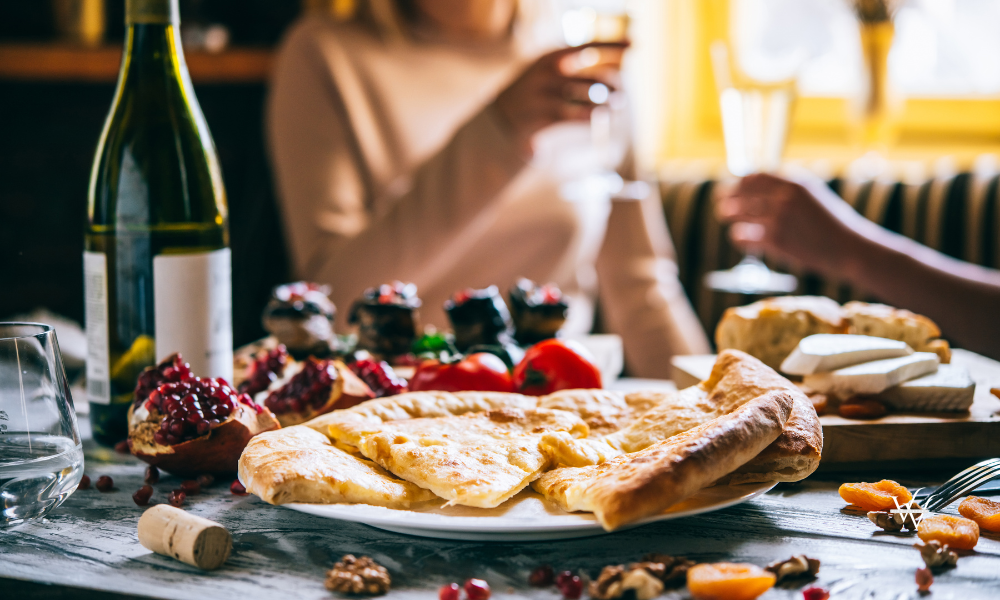
The story of Shavi Distillery's Black Sea Gold brandy exploding across Asian markets in early 2026 reads less like a conventional brand-building case study and more like a dispatch from the future of consumer goods investing. A small private distillery nestled in Georgia's Kakheti wine region - the ancient cradle of a winemaking tradition stretching back 8,000 years - found itself at the center of a viral TikTok moment that collapsed years of conventional market penetration work into a matter of weeks. The implications reach well beyond spirits. For private equity investors tracking brand creation, channel disruption, and emerging market opportunity, the Shavi phenomenon is a signal worth taking seriously.
The Kakheti Origin Story
Kakheti sits in eastern Georgia, a region of broad valleys and vine-draped foothills that account for roughly 75% of Georgia's total vineyard land. It is the birthplace not just of Georgian wine but of chacha - the pomace brandy distilled from grape residue left after pressing wine - a spirit whose roots trace back more than a thousand years. While chacha is traditionally associated with home distillation (distilling one's own chacha is entirely legal in Georgia and remains a countryside tradition passed down across generations), a new generation of commercial distillers has been working to bring this spirit to an international audience.
Shavi - whose name translates to "black" in Georgian - positioned its Black Sea Gold brandy as something more refined than the standard chacha archetype. Aged in oak, the spirit draws on Kakheti's signature grape varieties, including the deep-red Saperavi, and carries the amber warmth associated with premium brandy production in the region. Georgia's brandy tradition has long competed with more established cognac-country brands; Sarajishvili, the nation's most venerable distillery, has won over 250 international awards across its history, including gold medals at exhibitions in Paris, Brussels, and Chicago. Shavi entered this heritage-rich space as a smaller artisan player with a distinctly modern identity.
The Mechanics of a Viral Moment
What happened to Shavi in early 2026 was not the result of a planned marketing campaign. A cocktail featuring Black Sea Gold brandy - reportedly a citrus-forward, low-sugar build that played to the dominant swicy and sour flavor profiles trending across Asian markets - surfaced on TikTok and found immediate traction. The platform's recommendation algorithm, which TikTok has itself described as a system that groups users into micro-communities based on shared viewing behavior, did the rest. When three users engage similarly with content, the algorithm flags them as a distinct interest cluster and expands distribution accordingly - a dynamic that rewards authentic, aesthetically striking content over brand spend.
Asian TikTok users, particularly in markets like South Korea, Malaysia, and China's Douyin equivalent, have become increasingly adventurous in their spirits exploration. China's online alcohol market has surged as producers build flagship stores on platforms like JD.com, Tmall, and Douyin, with livestreaming sessions hosted by influencers emerging as a dominant promotional format. The appetite for international and culturally distinctive spirits is real and growing - whiskey's market value in China was estimated at $2.3 billion in 2022 and projected to triple by 2027, while cognac and brandy have long maintained a premium foothold in southern regions. Shavi's Black Sea Gold landed in this environment with a story - a small distillery from the ancient Caucasus, a spirit linked to an 8,000-year winemaking civilization, a cocktail that photographed beautifully - and the algorithm amplified it accordingly.
The speed of the shift underlines something analysts had been tracking for years: TikTok has compressed brand-building timelines to a degree that challenges traditional go-to-market models. A 2025 report from the Interactive Advertising Bureau estimated U.S. creator ad spend alone was approaching $37 billion, with TikTok capturing an outsized share. Micro-influencers on the platform deliver engagement rates averaging 8.2%, meaningfully above the 5.3% typical of macro-influencers. For an obscure artisan spirit, reaching a critical mass of engaged viewers requires not a media budget but a compelling 30-second visual.
What This Means for Private Equity
The Shavi case illuminates a structural shift in how consumer goods brands are valued and built, one with direct implications for private equity. For decades, the premium spirits sector rewarded heritage, distribution, and patient brand investment. The category was dominated by companies like Diageo and Pernod Ricard, with smaller brands typically growing slowly through on-premise placements, import partnerships, and controlled premium retail. That model required significant capital, long timelines, and access to established distributor networks in target markets.
What TikTok has introduced is a mechanism by which brand recognition and consumer demand can be created independently of distribution infrastructure - and often before the operational capacity to serve that demand is in place. For private equity investors, this creates a two-sided dynamic. On the acquisition side, the Shavi story suggests that small artisan producers with authentic origin narratives and distinctive products now carry a latent option value that was previously impossible to price: the possibility of algorithmic amplification turning a regional niche into a global brand overnight. Identifying and acquiring those producers before the viral moment arrives is the new arbitrage.
On the operational side, the challenge is scaling fast enough when the moment comes. Shavi's story also highlights the vulnerability of small distilleries to demand surges they cannot immediately service. Premium spirits production is constrained by aging time - Black Sea Gold's oak maturation schedule cannot simply be accelerated - which means that viral demand and actual available inventory can diverge sharply. Investors backing artisan spirits brands now need to model inventory build-ahead scenarios that account for non-linear demand shocks.
The broader Georgia story provides useful context. The country's wine and spirits export sector posted record growth in 2024, with the UAE seeing an 80% surge in Georgian wine imports, the U.S. up 32%, and the UK up 42%. Georgian spirits exports, including chacha and brandy, also rose across Central Asian and Caucasus markets. The pipeline of artisan distillers - working with indigenous grape varieties like Rkatsiteli and Mtsvane, and often experimenting with traditional qvevri clay-vessel aging techniques that are generating genuine international bartender interest - is deep. Several European cocktail industry forecasters named clay-aged spirits as a key 2026 trend, with Georgian wines and spirits explicitly cited as a reference point.
The Carry in Georgian Spirits
For investors who have been monitoring the international spirits opportunity, the Shavi moment fits into a longer pattern. TikTok has already demonstrated its capacity to turn artisan food and drink brands into overnight consumer phenomena - the platform's commerce integration in Southeast Asia alone had reached a point by 2025 where roughly 58% of global TikTok users engaged directly with in-app shopping content. The spirits category is the next frontier.
The contrarian read is also worth noting: viral moments are inherently fragile. A brand built on a single TikTok cocktail trend has no guarantee of durability, and algorithmic amplification can disappear as quickly as it arrives. The brands that survive their viral moment are those with authentic story depth, production quality that justifies repeat purchase, and organizational capacity to convert one-time curiosity into a loyal consumer relationship. On all three counts, Shavi and its Black Sea Gold brandy have the raw materials. Whether it can professionalize fast enough to hold the position it has stumbled into is the question that determines whether this is a trade or a franchise.
For investors watching Georgian spirits, the window to enter ahead of institutional attention is narrowing. Shavi may be the name everyone is discussing in early 2026, but in Kakheti alone there are dozens of artisan distillers sitting on the same raw inputs, the same ancient heritage, and the same potential for an algorithmic breakout. The carry, for those who move early, is still very much available.