Duckweed: The Pond Weed With a Better Protein Profile Than Soy
A plant smaller than a sesame seed, invisible to most Western consumers, may be among the most nutritionally important crops on earth, and it just opened its first commercial facility in the Texas desert.
By Carry and Conquer Publications
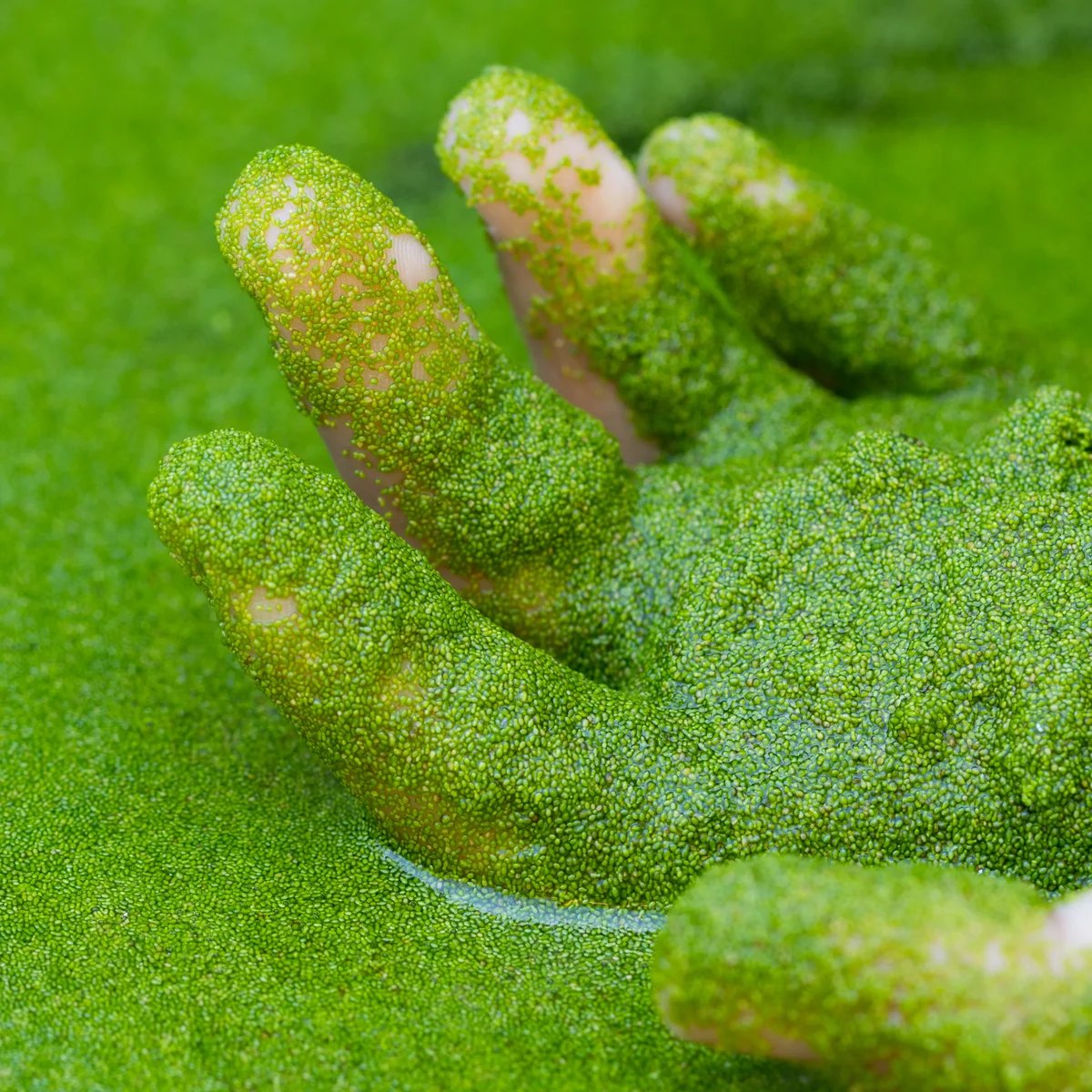
In August 2025, a ribbon cutting ceremony took place in Eldorado, Texas, a county seat of 1,900 people in the arid scrubland of Schleicher County, with no agricultural tradition to speak of. The occasion was the opening of a commercial food facility built around a plant most attendees had never tasted, grown in greenhouses that require no soil, drawing water from closed-loop systems that recycle 95 percent of what they use. The plant is Lemna, one of five genera of duckweed, and it doubles its mass every 48 to 72 hours. The facility is the Ranchito, Plantible Foods' first commercial-scale site. The protein it produces is already in commercial contracts worth more than $40 million. Most of the world has no idea any of this is happening.
The Plant Nobody Knows
Duckweed is everywhere. It coats the surface of ponds, irrigation ditches, and slow rivers on every continent except Antarctica, forming a dense green carpet that most people write off as pond scum. But it is not algae, and it is not scum. It is the fastest-growing flowering plant on earth, a member of the Lemnaceae family comprising five genera and roughly 36 species. Wolffia, one of those genera, holds a particular distinction: its species are the smallest flowering plants ever recorded. A single frond of Wolffia globosa measures less than one millimeter across, smaller than a grain of table salt, and its flower, when it blooms, is invisible to the naked eye.
Size aside, the nutritional profile of duckweed is difficult to overstate. Wolffia species contain 35 to 45 percent protein by dry weight, with a complete amino acid profile comparable to egg and soy proteins and a protein digestibility score equivalent to animal protein. Researchers at Ben-Gurion University and Harvard's T.H. Chan School of Public Health confirmed in human trials that Wolffia globosa, cultivated under the brand name Mankai, supplies bioactive vitamin B12, a nutrient almost never found in plant sources, alongside omega-3 fatty acids, iron, zinc, folate, and dietary fiber. The plant's fatty acid composition is particularly unusual: roughly 37 percent alpha-linolenic acid, the plant-based omega-3, in a ratio more favorable than soy oil. One cup of prepared Mankai shake provides approximately 18 percent of recommended daily protein intake, 75 percent of bioavailable iron, and 21 percent of vitamin B12. All from a plant that requires no arable land and doubles its mass every 48 to 72 hours in closed water systems using 95 percent recycled water.
The mechanism behind the doubling rate is elementary: duckweed reproduces asexually, each frond budding into two before detaching, and under optimal temperature and light conditions, it does this continuously. There are no seeds to germinate, no roots to establish, no seasons to wait on. The yield per acre, when measured by crude protein output, is roughly ten times that of soybeans.
Khai-Nam and Centuries of Precedent
While Western food systems are only beginning to understand duckweed, Southeast Asian cuisines have never needed an introduction. In Thailand, Wolffia globosa is called khai-nam, which translates roughly as "water eggs," a name that reflects the plant's nutritional standing in traditional cooking and, in particular, its omega-3 content. For centuries, khai-nam has appeared in spicy soups, fresh salads, egg omelets, and dumplings in Thailand, Myanmar, and Laos. Local farms cultivated it in open ponds through seasonal harvests, and the plant was generally considered affordable food. Surveys of consumption in Thailand's Loei Province confirm that traditional preparation methods remain active to this day.
In Israel, the trajectory is different. GreenOnyx, founded in Tel Aviv by oncologist-turned-entrepreneur Dr. Tsipi Shoham in 2013, built the first AI-controlled sterile indoor vertical farm for duckweed after Shoham encountered Wolffia arrhiza growing wild in Thailand. Her company rebranded the product as Wanna Greens, a ready-to-eat duckweed sold in 200-gram tubs with a six-week shelf life, requiring no washing or cutting. GreenOnyx's indoor modular farm can produce 38 to 40 tons of fresh duckweed per year, and the product has made its way onto the menus of Michelin-starred restaurants including 11 Madison Park in New York. The company has raised $47 million and is now in active US market expansion.
In Hokkaido, Japan, startup Floatmeal, founded by Kitamura Moana and Sajjad Kamal Shuvro who met while studying at Hokkaido University, is cultivating Wolffia with a proprietary microbial approach. The company's technology, originating from Hokkaido University's Morikawa Laboratory, uses microorganisms that co-exist with duckweed in its natural freshwater habitat to accelerate growth rates and enhance nutritional density. Representative Director Kitamura's original focus was marine ecology and climate change; Shuvro brought microbiology expertise. Their shared mission: use one product to address both the global protein shortage and climate change simultaneously.
Plantible and the Road to Eldorado
The commercial story with the most structural consequence is unfolding not in a Thai pond or a Tel Aviv warehouse but in Schleicher County, West Texas, in a county seat of 1,900 people called Eldorado.
Tony Martens and Maurits van de Ven, two Dutch entrepreneurs who had previously worked in European commodity trading, founded Plantible in San Diego in 2016. Their insight was specific: rather than market duckweed to consumers, which would require convincing millions of people to try an unfamiliar plant, they would sell directly to food manufacturers who needed better functional ingredients. The protein they target is not just any protein extracted from duckweed: it is RuBisCO, the enzyme responsible for carbon fixation in photosynthesis and the most abundant protein on earth by total mass. From Lemna, the duckweed genus also known as water lentils, Plantible extracts RuBisCO and sells it under the trademark Rubi Protein.
Rubi Protein is off-white, odorless, and neutral-tasting. It contains all nine essential amino acids, carries a PDCAAS score of 1.0 (the maximum possible, equivalent to animal protein), and is free from 20 known allergens. Those properties are commercially valuable in their own right. But the ingredient's real appeal to food manufacturers lies in its functional performance: Rubi Protein emulsifies, gels, binds, and foams in ways that allow companies to replace methylcellulose, egg whites, whey, and casein in products ranging from plant-based meats to baked goods to dairy alternatives. Plantible put its first commercial product on the market in 2023, an egg replacement for baked goods. It has since secured more than $40 million in commercial contracts with food manufacturers.
The early years were not glamorous. When California's pandemic lockdown began in 2020, Martens and van de Ven stayed put rather than returning to Amsterdam. They bought two trailers and lived on-site at their two-acre San Diego duckweed farm. The company has since raised $57 million total: an early round backed by Khosla Ventures, Social Capital, Mayfield, and Astanor Ventures, followed by a $30 million Series B in November 2024 co-led by Piva Capital and Siddhi Capital, with participation from Cultivate Next (Chipotle's venture arm), Nourish Ventures, and Betagro Ventures.
The Ranchito
On August 11, 2025, Plantible held a ribbon cutting ceremony in Eldorado marking the full commercial operation of its first facility at scale. The 100-acre site, formally called the Ranchito, houses a growing network of greenhouses, upgraded protein filtration systems, and a newly introduced proprietary strain of Lemna that was specifically bred for performance in the West Texas climate. Schleicher County has virtually no agricultural infrastructure for traditional row crops; the land is arid scrubland. The facility's logic is that duckweed does not care about arable soil, only water temperature and light, both of which can be controlled indoors year-round.
Dr. Chris Phillips, Plantible's VP of Research, explained the strain selection process at the ribbon cutting: with more than 35 species and over 1,000 known strains in the duckweed family, the company has invested heavily in identifying which genetic variants produce the highest RuBisCO yield under local conditions, then further optimizing growing conditions around those strains. The company has additional proprietary strains queued for rollout in 2026.
The Ranchito is projected to produce thousands of metric tons of biomass annually, yielding hundreds of metric tons of protein per year. The company's new filtration equipment, installed as part of the facility's expansion, has substantially reduced per-unit production costs and improved throughput, moving Plantible closer to cash flow positivity at the site. The environmental calculation is notable: by substituting animal protein and synthetic binders in food supply chains, the facility is expected to reduce roughly 8,000 metric tons of CO2-equivalent emissions annually. One of Plantible's current partners is ICL Group, the specialty minerals and food ingredients company, whose global alternative proteins leader Paul Peterson attended the ribbon cutting and described Rubi Protein as a solution food-tech formulators had been searching for years. The company is working to secure additional financing to scale the Ranchito to the Rancho, tripling current capacity at the same site.
Dr. Russell Jessup, Professor and Center Director at Texas A&M AgriLife Research and Extension Center, was among the community leaders at the ceremony, calling the facility a showcase of innovative, transformative food production.
The Regulatory Green Light
The Ranchito's opening followed closely on a regulatory milestone that most of the food industry missed. On January 29, 2025, the European Commission issued Implementing Regulation (EU) 2025/153, formally authorizing the sale of Lemna minor and Lemna gibba as novel foods within the EU. The path had not been simple. EFSA's original 2022 safety assessment concluded that duckweed's manganese concentration exceeded spinach-equivalent levels and could not be approved. The applicant returned with new cultivation data showing that by adjusting manganese levels in the growth medium, the concentration in the harvested plant could be held below 6 mg per kilogram fresh weight, consistent with other leafy vegetables. EFSA accepted the revised data in a July 2024 technical report, and the Commission approved in January 2025, adding both species to the Union list of authorized novel foods with conditions of use and labeling requirements.
A parallel approval had already come through in April 2024, when the EU authorized the sale of protein concentrate derived from Lemna gibba and Lemna minor under Implementing Regulation (EU) 2024/1048. Taken together, the two EU decisions opened the European market for both whole duckweed as a vegetable and extracted duckweed protein as a functional ingredient. In the United States, Lemna and Wolffia products are already self-GRAS (Generally Recognized As Safe), a regulatory status that lets Plantible sell commercially without waiting for explicit FDA authorization.
What the Weed Becomes
Duckweed's invisible status in Western food culture is partly a function of its habitat: it grows in stagnant ponds and irrigation ditches, not in fields or orchards that produce recognizable commodities. It is also partly a function of its history as a food of necessity in low-income agricultural communities. The khai-nam of northern Thailand was not positioned as a luxury ingredient; it was consumed because it was cheap and abundant. That history has made duckweed easy for Western food companies to overlook, even as its yield, nutritional density, and water efficiency credentials surpass nearly every crop in commercial production.
What companies like Plantible, GreenOnyx, and Floatmeal are demonstrating is that the same attributes that made duckweed a subsistence food in Southeast Asia, namely rapid growth, minimal inputs, and nutritional completeness, are exactly the attributes that industrial food systems most urgently need as protein demand increases and land and water constraints tighten. The difference is that these companies are extracting and delivering duckweed protein not through consumer education campaigns but through B2B ingredient supply, meaning that duckweed will reach Western consumers long before most of them know what it is.
It will arrive in baked goods that bind without eggs, in plant-based meats that hold together without methylcellulose, in dairy alternatives that foam and emulsify without whey. The Ranchito in Eldorado, West Texas will supply those manufacturers. A weed that blankets every pond in the world is, very quietly, on its way to the protein bar.