Disney Let a Lagos Studio Write Its First Original Animated Series
A Nigerian founder threatened to "kick Disney's ass in Africa." Six years later, Disney handed his studio creative authorship over its first original long-form series.
By Carry and Conquer Publications
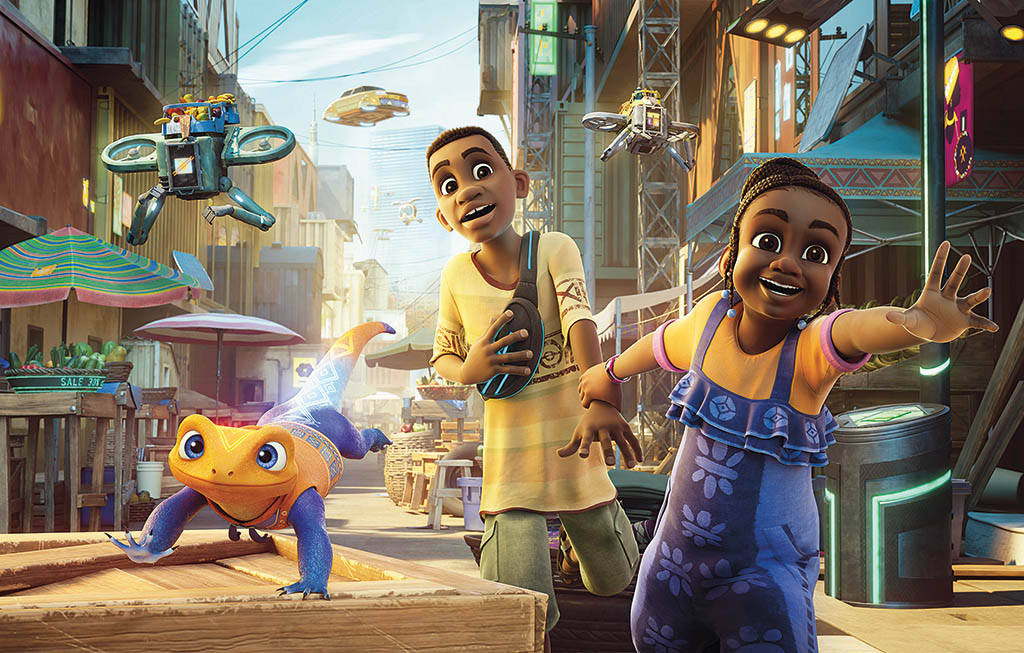
In 2018, Hamid Ibrahim sat in a London flat he shared with his co-founder and gave a BBC interview in which he predicted his three-year-old comic book startup would beat Disney at its own game on the African continent. He assumed the line would get cut. It became the headline. Jennifer Lee, Chief Creative Officer of Walt Disney Animation Studios, saw the BBC piece, was intrigued rather than offended, and had an executive reach out. Six years, several dozen Zoom calls, and one pandemic later, that studio, Kugali Media, holds co-authorship credit on Iwaju, a six-episode sci-fi series set in a futuristic Lagos that premiered on Disney+ in February 2024 as Disney Animation's first original series conceived outside its own walls. The deal is a template worth studying closely, not because Disney bought its way into Africa, but because it explicitly declined to.
From Kickstarter Anthology to Disney's Radar
Kugali was founded in 2017 by Tolu Olowofoyeku, Olufikayo "Ziki" Adeola, and Hamid Ibrahim, who met through a podcast reviewing African comics, animation, and games. When they ran out of existing material to cover, they started making their own. Using money raised on Kickstarter, the trio published the Kugali Anthology in 2017, a comics collection featuring artists from ten African countries, and followed it with Murenga, described as the continent's first queer African graphic novel, also successfully crowdfunded. The founding thesis was explicit and confrontational: outside studios had spent decades narrating African stories using flattened, generic renderings, and Kugali existed to replace that with African creators telling African stories on their own terms.
The BBC segment that reached Lee's desk was not a puff piece. It captured a small, self-funded outfit stating a genuine grievance about who gets to draw the continent's future. Christina Chen, the Disney Animation producer who would go on to produce Iwaju, later said the founders' ambition and authenticity were what convinced Disney to pursue them, not the provocation itself. Disney Animation reached out in early 2019. The Kugali team was skeptical, having fielded false Hollywood connections before, but a series of Zoom calls that spring confirmed Disney was serious: the studio was building original content for a new streaming service called Disney+ and wanted work that felt distinct from its in-house slate.
A Deal Structured Around Authorship, Not Acquisition
What Disney did next departed from its usual playbook. The company's historical model for outside talent, going back to Pixar, has been distribution deals or eventual absorption into the corporate structure. With Kugali, Disney instead built what both sides call a co-authorship arrangement: Adeola wrote and directed the series alongside co-writer Halima Hudson, Ibrahim served as production designer, and Olowofoyeku worked as cultural consultant, with Disney Animation's Christina Chen producing. Animation was split across three studios on three continents: Disney Animation in Burbank, Kugali's team in Lagos and London, and Cinesite in Montreal and Vancouver.
Jessica Julius, who heads development at Disney Animation, said the team understood early that Kugali would need the same hyper-collaborative, iterative process Disney uses internally, rather than a work-for-hire arrangement where a script gets handed off and returned. The founders describe the exchange as reciprocal rather than extractive: Disney offered a hundred years of production infrastructure and global reach that a young African studio could not build on its own, and Kugali offered authority over a story and setting Disney had no internal capacity to tell accurately. Njoka, a voice from within the wider African animation scene watching the deal unfold, put the asymmetry plainly: the power differential between the two companies was impossible to ignore, but the project's scale had never been attempted on the continent because the resources and capacity simply were not there yet.
Iwaju itself, meaning "the future" in Yoruba, follows Tola, a ten-year-old girl from Lagos's wealthy island district, and her friend Kole, a self-taught technologist from the mainland, as a kidnapping plot exposes the class divide running through a hyper-advanced version of the city. It was announced at Disney's 2020 Investor Day, more than three years before it aired, and premiered with a world debut in Lagos itself on February 27, 2024, before streaming globally the next day. A companion ABC News Studios documentary, "Iwaju: A Day Ahead," filmed across three continents to trace Kugali's origin story, debuted alongside it.
Why This Deal Structure, and Why Now
Disney's rationale lines up with numbers the company has been stating plainly to investors. CEO Bob Iger told analysts the company needed to invest more heavily in original local and regional content outside the United States to keep growing Disney+ subscribers globally, and Disney has since built out a dedicated International Content Group overseeing more than 340 local titles in development. At the same time, CFO Hugh Johnston has said Disney's overall entertainment content budget will keep growing but not at the pace of prior years, when the company acknowledges it was "overproducing" originals. Put together, the strategy favors fewer, more culturally specific bets over volume, and a co-authored deal with an existing studio is cheaper and faster than building African production capability in-house or acquiring a studio outright.
The African animation sector was simultaneously approaching a different kind of inflection point. The market, still small relative to Nollywood's roughly 2,500 films a year and $1.2 billion in annual revenue, is projected to grow from about $15.7 billion in 2025 to nearly $32 billion by 2034, according to industry market sizing. Cloud-based animation tools and AI-assisted pipelines have lowered the capital and headcount required to produce broadcast-quality work, while government programs, including South Africa's Creative Economy Fund, Rwanda's Kigali Animation Hub, and Ghana's animation tax incentives, have started underwriting the training pipeline. France's Creation Africa program has funded Nigerian animation capacity building for five consecutive years, and more than fifty Nigerian studios attended the Annecy animation festival in June 2026, a scale of international presence that would have been unthinkable when Kugali was crowdfunding its first anthology.
What the Deal Signals for Entry Strategy
Iwaju was not the only African animation project to reach a major platform in this window. Triggerfish Animation Studios, based in Cape Town, premiered the anthology series "Kizazi Moto: Generation Fire" on Disney+ in 2023, and Nigeria's Anthill Studios has since built a track record that industry trackers point to when arguing that Iwaju changed how international buyers assess Nigerian animation talent generally, not just Kugali's slice of it. The pattern across these deals is consistent: platforms are entering African production geography through co-production and licensing arrangements with existing independent studios, not through acquisition of those studios or through outsourcing arrangements that would keep creative control offshore.
That distinction matters for anyone evaluating entry into African media production. A studio like Kugali built its leverage before Disney ever called, through crowdfunded publishing, a distinct point of view, and a public willingness to state its ambitions loudly enough to be noticed. The Disney deal did not create that leverage; it recognized and paid for it. As more platforms chase culturally authentic IP against a tighter content budget, and as African production infrastructure matures faster than it has in any prior decade, the studios positioned to negotiate co-authorship rather than accept work-for-hire terms will be the ones that built an independent identity first. Kugali's founders spent years being told a small crowdfunded comic collective calling out the world's biggest animation studio was, in Ziki Adeola's own recollection, an ambition people took "with a pinch of salt." The deal exists because they didn't need Disney's permission to build the leverage that made Disney come to them.