Cencora's $3.6 Billion Oncology Power Grab and What It Means for the Drug Middlemen
When the company that ships chemotherapy also owns the clinics that administer it, the conflict of interest writes itself.
By Carry and Conquer Publications
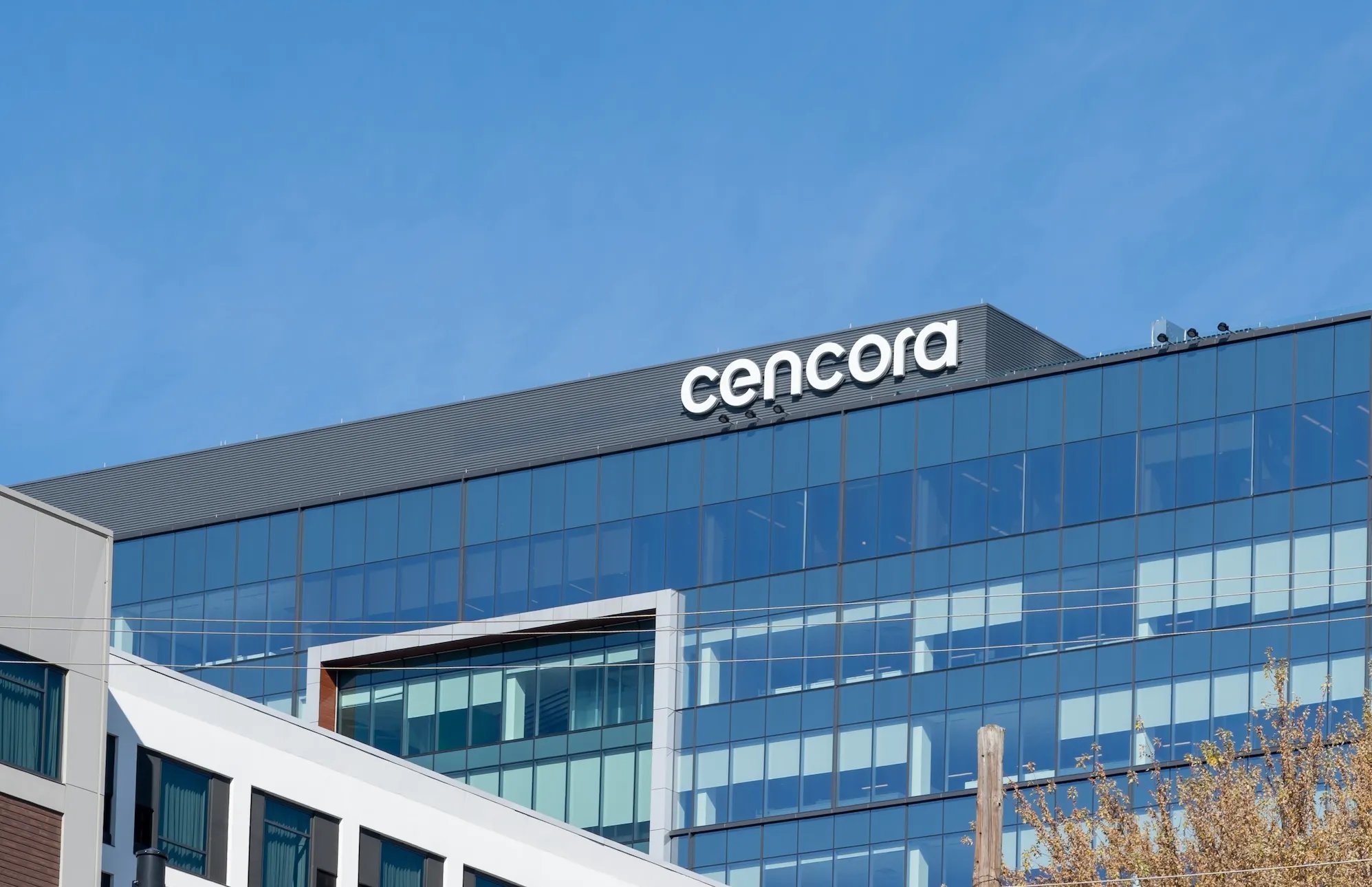
When a company that ships chemotherapy drugs to hospitals decides to buy the clinics that administer them, a fundamental question about the architecture of American cancer care comes into view. On December 15, 2025, Cencora, one of three companies that together control over 90% of U.S. pharmaceutical wholesale distribution, announced it would spend approximately $5 billion to acquire a majority stake in OneOncology, a physician-led community oncology network serving roughly 1.5 million patients across 645 sites in the United States. The deal, which closed February 4, 2026 without regulatory challenge, puts one of the country's largest drug middlemen in direct operational control of the clinics that decide which cancer drugs patients receive. The move has drawn relatively little public scrutiny. That silence is worth examining.
The Transaction in Detail
The deal structure is layered. Cencora, formerly AmerisourceBergen Corporation before a 2023 rebranding, had already held a minority stake in OneOncology following an April 2023 joint acquisition with private equity firm TPG, which valued the network at $2.1 billion. That earlier deal put TPG in the majority owner seat, with Cencora as a minority partner and OneOncology's affiliated practices retaining a slice of the equity. The December 2025 announcement accelerated a contractual pathway that had always existed: Cencora held a call option to purchase TPG's majority stake at a fixed multiple, specifically, 19 times OneOncology's trailing twelve-month adjusted EBITDA, between the third and fifth anniversaries of the 2023 deal.
What triggered the acceleration? Growth. In roughly two and a half years, the network's implied valuation had ballooned from $2.1 billion to $7.4 billion. Cencora exercised its call option early, paying TPG and other shareholders approximately $3.6 billion in cash and retiring $1.3 billion of OneOncology's existing corporate debt, for total cash consideration of approximately $5 billion. The enterprise was valued at $7.4 billion, with an equity value of roughly $6 billion. OneOncology's affiliated practices and management retained a minority interest. By the time the deal closed in early February 2026, Cencora had completed the transformation from distribution partner to controlling owner in under three years.
Bob Mauch, Cencora's President and CEO, framed the move as continuity rather than conquest. "Since our initial investment in OneOncology, the platform has grown substantially as its physician-led approach continues to attract leading practices and physicians," he said. Jeff Patton, M.D., CEO of OneOncology and a founding physician from Tennessee Oncology, echoed the sentiment: "As cancer care becomes increasingly complex, leveraging the significant expertise of Cencora across the healthcare landscape while still maintaining our independence will allow us to enhance the value we provide to practices." The phrase "maintaining our independence" was doing considerable work in that sentence. OneOncology's affiliated practices and management retain a minority interest; their independence now exists within a governance structure ultimately controlled by a drug distributor.
The Network Cencora Now Controls
Understanding why this matters requires a clear picture of what OneOncology actually is. Founded in 2018 by community oncologists with the explicit mission of keeping independent cancer practices from being absorbed by hospital systems, OneOncology has grown into a platform supporting 36 partner practices, approximately 2,300 providers, and roughly 1.5 million patients. Its 645-plus sites of care span the country and include not just oncology clinics but urology groups, including its 2024 acquisition of United Urology Group, and surgery practices. OneOncology has rebranded and led the financial turnaround of the former GenesisCare clinics in Florida, with more than 100 physicians now operating under its umbrella.
In practical terms, OneOncology manages group purchasing, operational administration, revenue cycle management, and clinical decision support for its affiliated practices. It controls which drugs its member practices order, through which distribution channels, and at what volumes. When Cencora distributes chemotherapy drugs and Cencora owns the MSO that manages procurement for 1.5 million patients' oncology care, the question of where distribution ends and care direction begins becomes genuinely difficult to answer.
The oncology drug market that this arrangement touches is enormous. U.S. oncology drug spending reached approximately $99 billion in 2023, representing roughly 14% of total pharmaceutical expenditures. By 2028, analysts project U.S. annual oncology spending will reach $180 billion. The growth is driven by an aging population, rising cancer incidence rates, and a wave of new immunotherapies and targeted treatments: bispecific antibodies, CAR-T therapies, radioligand therapies, that are extraordinarily expensive and that require exactly the kind of specialty distribution infrastructure Cencora commands.
A War Chest Built on Controversy
Before analyzing the conflict-of-interest question, it is worth noting what kind of company Cencora has been. The former AmerisourceBergen was one of three distributors, alongside McKesson and Cardinal Health, that agreed in 2022 to a combined national opioid settlement of approximately $6.4 billion to resolve thousands of lawsuits alleging the companies turned a blind eye to suspicious prescription volumes as the opioid epidemic ravaged American communities. In August 2025, Cencora's own directors agreed to a separate $111.25 million settlement to resolve claims by pension funds that they had ignored red flags about opioid shipments. A $214 million litigation accrual appeared on Cencora's books as recently as Q2 2025 for additional opioid-related claims.
The opioid story is relevant context for the OneOncology deal not as a simple condemnation but as a structural illustration. The core criticism in the opioid litigation, that financial incentives within the distribution chain can distort decisions about what drugs move and in what volumes, is precisely the same structural risk that critics now identify in Cencora's ownership of a cancer care management network. The incentive architecture is analogous; the therapeutic category has changed.
The "Cancer Care Arms Race" and Its Absent Referee
Cencora was not first. McKesson, the largest of the Big Three distributors with roughly 37% of U.S. pharmaceutical wholesale market share, purchased US Oncology, then the nation's largest independent oncology practice network, for $2.2 billion back in 2010. Over the subsequent decade and a half, McKesson built US Oncology into a network of over 2,550 oncologists at 600-plus sites treating more than 15% of all new U.S. cancer patients annually. In August 2024, McKesson doubled down with a $2.49 billion deal for a controlling stake in the management services organization of Florida Cancer Specialists and Research Institute, closing that transaction in June 2025. Cardinal Health has meanwhile acquired Integrated Oncology Network for $1.1 billion, GI Alliance, and a string of specialty networks under its Navista oncology practice alliance brand.
By early 2026, all three of the companies that control the overwhelming majority of U.S. drug distribution had acquired or were acquiring majority control over major community oncology practice networks. The American Economic Liberties Project, joined by five other advocacy organizations, formally petitioned the FTC in September 2024 to block the McKesson and Cardinal Health deals. Senator Elizabeth Warren wrote directly to then-FTC Chair Lina Khan urging close scrutiny, noting that oncology was already "the most vertically integrated specialty" in U.S. healthcare. The letter observed that wholesalers owning oncology networks created conditions where practices could be directed toward drugs that were most profitable to the distributor rather than most effective for the patient.
The FTC did not act. Neither the Biden administration nor the Trump administration moved to challenge any of these deals, despite them exceeding standard merger review thresholds by factors of nine or more according to the advocacy groups' letter. The Cencora-OneOncology escalation, by contrast, generated essentially no political or regulatory response at all, perhaps because the underlying minority investment had already been cleared in 2023, and the call option exercise was perceived as a continuation rather than a new transaction.
The Conflict That Is Now Structural
The conflict-of-interest concern is not speculative. It is baked into the business model. Cencora distributes drugs and earns fees and margins on those distributions. OneOncology manages procurement for its affiliated practices and controls formulary decisions, group purchasing agreements, and vendor relationships. When both entities share an owner, the owner's incentive is to maximize aggregate margin across both distribution and care management, which means channeling volume toward drugs that generate the highest spreads in the distribution chain, not necessarily toward the drugs that offer the best clinical outcomes per dollar spent.
Monique Whitney, executive director of Pharmacists United for Truth and Transparency, summarized the concern bluntly in 2024 testimony: a drug wholesaler owning a physician practice is the very definition of self-dealing. Emma Freer, a senior policy analyst at the American Economic Liberties Project, put it more precisely: "There will be conflicts of interest because the owners of the networks will have incentive to direct the networks to buy the most lucrative drugs with greater markups, even if these are not always best suited to individual patients."
McKesson's US Oncology history has already provided a real-world preview. Reports have alleged that McKesson's group purchasing subsidiary Unity leveraged the US Oncology network's prescription volume to negotiate steep manufacturer rebates, pocketed those rebates rather than passing them to practices, and steered US Oncology physicians toward drugs that were most profitable to Unity regardless of clinical appropriateness. Since the most profitable drugs are often the most expensive, this dynamic simultaneously raises patient and payer costs and may degrade care quality. Cencora's control of OneOncology creates the identical structural arrangement, with a 1.5-million patient base and a drug market projected to double in the next three years.
What Physicians Inside the Network Gain and Risk
The physician case for this arrangement is real and should not be dismissed. Independent community oncology practices have faced mounting pressure for years. Hospital systems have aggressively acquired independent practices, offering physicians employment stability at the cost of institutional bureaucracy. Drug costs, compliance burdens, and reimbursement volatility have squeezed small practices to the edge of viability. OneOncology's stated mission, to give independent oncologists the resources of a large network while preserving their clinical autonomy, filled a genuine gap. Access to capital, revenue cycle management support, group purchasing power, and clinical trial infrastructure are all legitimate value propositions.
What independent physicians inside OneOncology are now navigating is a subtler version of what they sought to avoid when they bypassed hospital employment. Their administrative layer is now controlled by a company whose primary business is drug distribution. The conflict is not that Cencora will instruct individual oncologists which drugs to prescribe; that would cross clear legal and ethical lines. The conflict operates at the level of formulary design, preferred vendor lists, group purchasing agreements, and the financial metrics by which practice performance is assessed. Those are the levers that shape prescribing patterns over time without ever issuing a direct clinical instruction.
Jeff Patton's comments in post-closing interviews reflect genuine conviction that the physician governance structure protects clinical independence. "We're not completely independent, but we're as independent as we can be," he told the American Journal of Managed Care. The OneOncology board retains a physician-led structure with an intervening governance layer between Cencora and the affiliated practices. Whether that structure proves durable under the long-term financial and strategic pressures of public-company ownership is the open question that neither the regulators nor the market has yet been required to answer.
The Broader Architecture Taking Shape
The Cencora-OneOncology deal does not exist in isolation. It is one piece of an emerging architecture in which the three companies that distribute almost every drug dispensed in the United States are simultaneously accumulating control over the clinical networks that administer those drugs. McKesson's US Oncology network treats more than one in seven new cancer patients in America. Cencora's OneOncology serves 1.5 million patients across 645 sites. Cardinal Health's Navista is still in earlier stages but accumulating affiliated practices aggressively.
The combined effect is a vertical integration of the oncology supply chain that is without precedent in U.S. healthcare history. Drug manufacturers sell to distributors. Distributors deliver to clinics. Clinics administer drugs to patients. In oncology, the most medically complex and financially significant treatment category in American medicine, the same three companies are now positioned to profit at every stage of that chain. The margin on distribution, the management fees from MSO services, the data generated from 1.5 million patient interactions, the clinical trial placements, the rebate structures with manufacturers: each layer compounds the others.
The regulatory infrastructure designed to oversee this architecture, built when distributors were distributors and care providers were care providers, has not kept pace. The FTC has declined to challenge any of these deals. Congress has not held hearings. The antitrust conversation that should accompany a fundamental restructuring of how cancer drugs flow from factory to patient has been almost entirely absent from public discourse.
What Cencora has done is not unusual in the context of recent healthcare consolidation. It followed a well-worn path: minority stake, call option, majority control, full integration. What makes it worth scrutiny is not the financial engineering but the specific domain. Cancer patients do not shop for chemotherapy across competing providers based on price. They rely on their oncologists' judgment, and their oncologists now increasingly work within administrative structures controlled by the companies that profit most from the drugs those oncologists prescribe. That is not inherently corrupt, but it is an arrangement that demands oversight, and the oversight so far has been largely absent.