American Industrial Partners Just Bought the Fiber Inside Every Diaper and Tissue Product in America for $1.5 Billion
A private equity firm most people have never heard of now controls the raw material inside most of the diapers, sanitary pads, and adult incontinence products sold on earth.
By Carry and Conquer Publications
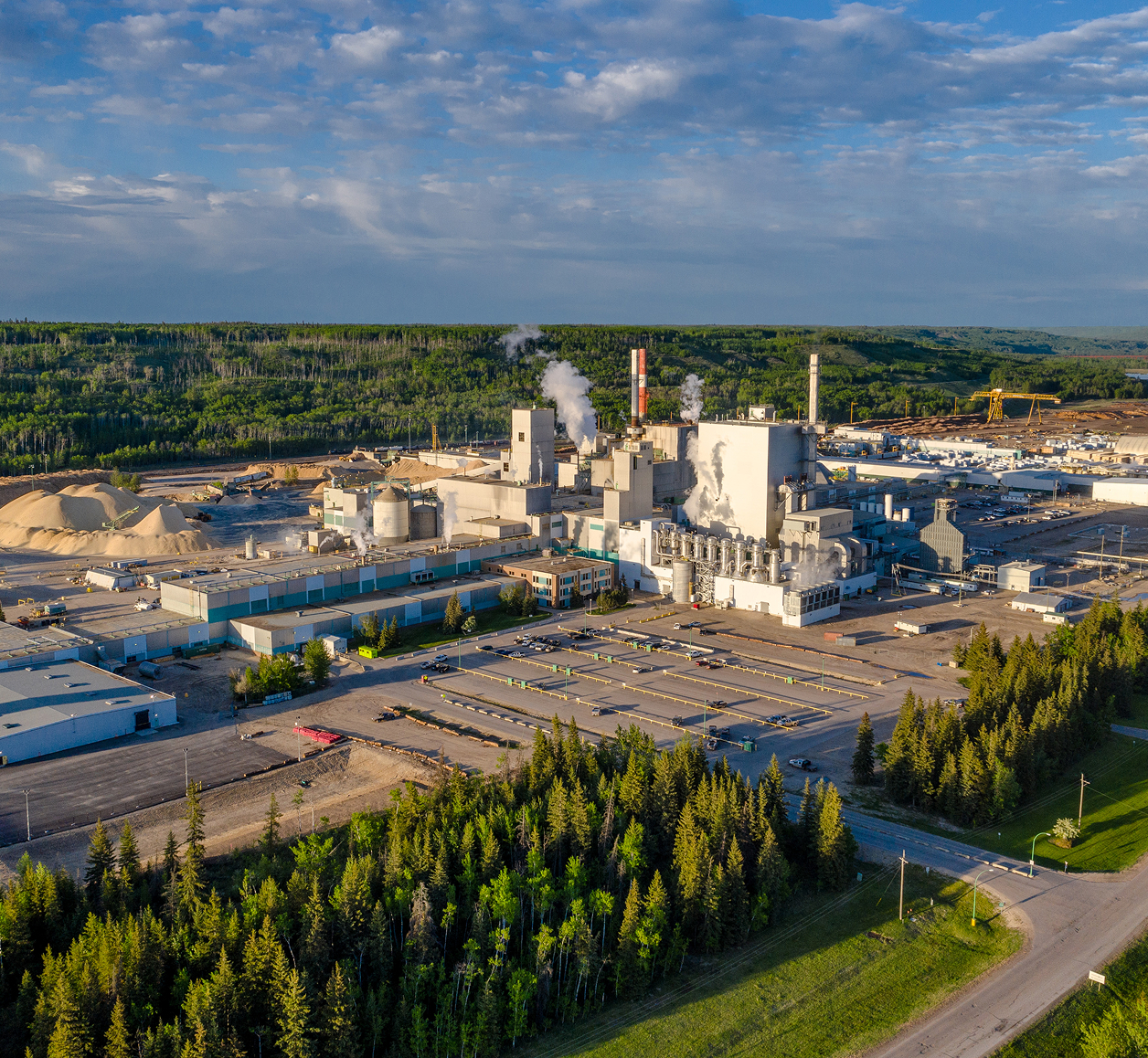
In January 2026, New York private equity firm American Industrial Partners completed its acquisition of International Paper's Global Cellulose Fibers division, the world's leading producer of fluff pulp, for $1.5 billion. The deal handed AIP control of nine manufacturing facilities across the United States, Canada, and Poland, roughly 3,300 employees, and a business that generated approximately $2.5 billion in revenue in 2024. The business now operates independently, under its own name, from Memphis, Tennessee. Almost nobody outside the paper and hygiene industries noticed.
What Actually Changed Hands
Fluff pulp is the absorbent softwood fiber that fills the core of a diaper, a maxi pad, an incontinence brief, and a growing share of personal care tissue products. It is not glamorous. It is also structurally impossible to substitute out of most of these products at scale, since superabsorbent polymers reduce how much fluff a diaper needs but cannot fully replace the bulk and wicking properties fluff pulp provides.
International Paper first announced its intent to sell GCF in August 2025, as part of a broader restructuring that included closing its Riceboro and Savannah mills and investing $250 million to convert its Riverdale mill in Selma, Alabama. The GCF sale finally closed on January 23, 2026, at a headline price of $1.5 billion, which included $190 million in preferred stock issued back to International Paper rather than paid in cash. The buyer, an affiliate of AIP, financed and structured the deal with advice from Ropes & Gray, while Morgan Stanley and Debevoise & Plimpton advised International Paper.
GCF's footprint includes seven pulp mills and two converting facilities, among them the Riegelwood mill in North Carolina, long the flagship of International Paper's fluff pulp production and the site the company has continued investing in even while shrinking its footprint elsewhere.
Why International Paper Let It Go
The sale is not really about pulp. It is about what International Paper CEO Andy Silvernail has been building since taking over the company: a pure play packaging business. In 2025, IP completed its acquisition of DS Smith, a major move to consolidate its position in North American and European packaging. Shedding GCF, along with closing containerboard capacity in Texas and Georgia, was the other half of that trade. GCF generated close to $2.8 billion in revenue in 2024 when mills that have since closed are included, a meaningful business by almost any standard, but not one that fit a company trying to present a single, coherent packaging story to investors. IP framed the sale as a compliment to the unit rather than a retreat from it, with Silvernail calling GCF a strong business that had already done the work of sharpening its customer focus before the sale closed.
Why AIP Wanted the Raw Material, Not Just the Product
The more interesting story sits on the buyer's side. AIP is not a stranger to absorbent hygiene products. Since 2021, it has owned Attindas Hygiene Partners, the company built from Domtar's former personal care division, which manufactures adult incontinence products and infant diapers under brands including Attends, Comfees, and Indas across the United States and Europe. Attindas is a customer of fluff pulp producers, not a maker of the fiber itself.
With the GCF acquisition, AIP now sits on both sides of that supply chain: an owner of a company that buys fluff pulp to make finished hygiene products, and an owner of one of the largest companies that makes fluff pulp to sell to hygiene manufacturers, including presumably AIP's own competitors. AIP's public rationale leaned on demographics rather than vertical integration, citing population growth, rising incomes, and consumer demand for absorbency and comfort as the tailwinds behind the deal. AIP partner Rick Hoffman pointed to GCF's wood basket, customer relationships, and well invested facilities as the foundation for a growth plan built alongside GCF's existing management team, led by senior executive Clay Ellis.
A Chokepoint Nobody Watches
The fluff pulp market is unusually concentrated for something this essential. A handful of producers, including Georgia Pacific, Suzano, WestRock, and now independently operated GCF, supply the overwhelming majority of global demand, with the American South serving as the largest single source of supply on earth thanks to its dense loblolly pine forests and export infrastructure. Analysts expect industry demand to keep growing in the low single digits annually, driven by aging populations in developed markets and rising adoption of hygiene products across South Asia and Southeast Asia, even as manufacturers slowly reduce the volume of fluff needed per unit through thinner, more efficient product designs.
None of that shows up in a headline. What does show up, eventually, is the price and availability of the fiber inside a product nearly every household in the developed world buys every month. A $1.5 billion transaction just moved control of that fiber from a public packaging company answering to shareholders every quarter into the hands of a private equity firm that already profits from the products made with it, and that now has every incentive to run the pulp business for decades, not quarters.