Orthomos Backs Instalimb's 3D-Printed Prosthetics Push Into India
Instalimb just took capital from an investor most trade press has never heard of, to scale a digital manufacturing model built for exactly the markets Western prosthetics companies tend to ignore.
By Carry and Conquer Publications
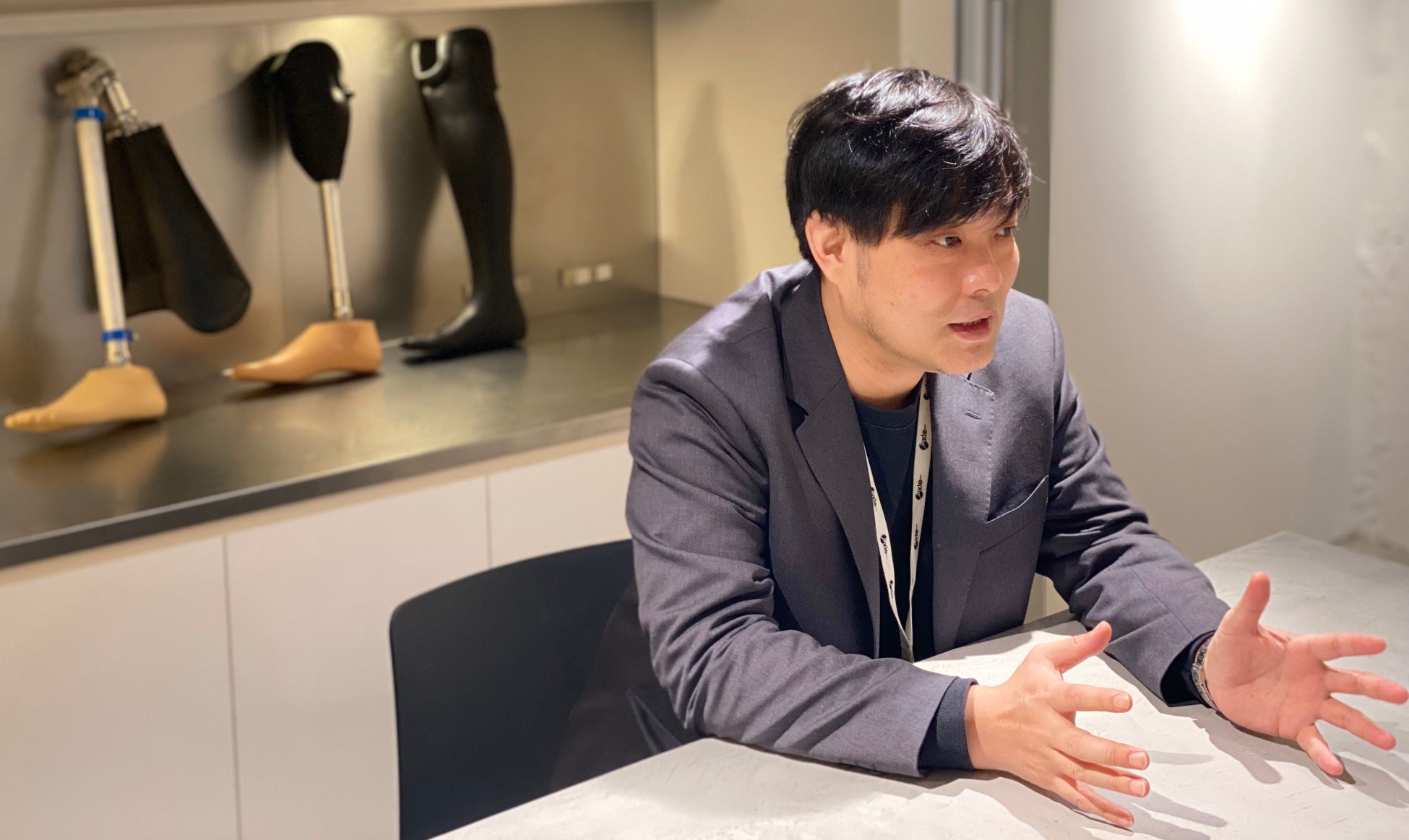
Instalimb, a Tokyo-based prosthetics and orthotics company, secured fresh funding from Orthomos Investment in a deal reported by The Bridge on May 21, 2026. The capital, raised through a J-KISS type convertible note, is earmarked for scaling an end-to-end digital manufacturing model: remote scanning, centralized factory production, and a fully traceable digital workflow that runs from scan to socket. The round did not disclose an amount, but the strategic logic is explicit. Instalimb is already live in India, where prosthetics and orthotics demand is large, geographically dispersed, and acutely cost-sensitive, precisely the conditions its centralized-factory approach is built to serve.
The Deal
Orthomos Investment, the newly formed investment arm of Japan's Orthomos Group, underwrote the round as its second disclosed portfolio investment since launching eight months earlier. Alongside the capital, Orthomos Group sibling company Alcare, a medical products manufacturer founded in 1955, signed a basic cooperation agreement with Instalimb to jointly explore adjustable prosthetic sockets, digital orthotic and welfare-equipment development, and expansion into the Japanese market, including a possible franchising model. Instalimb has never sold prosthetics domestically in Japan; its clinics operate in the Philippines and India, and its manufacturing facilities and Tokyo headquarters exist to design and export a digital fabrication system rather than to serve Japanese patients directly. The Alcare tie-up marks the first concrete step toward changing that.
Instalimb was founded in March 2017 by Yasushi Tokushima, who had spent 2012 to 2014 in the Philippines as a JICA Overseas Cooperation Volunteer attached to the country's Department of Trade and Industry. A 2017 survey commissioned by JICA found 1.23 million people in the Philippines alone who needed a prosthetic leg and could not obtain one. Tokushima, who had previously worked in hardware manufacturing and at a medical device maker designing casings for ECG machines and defibrillators, returned to Japan in 2015 and spent two years developing 3D-printing software for prosthetic sockets before incorporating Instalimb. The company's first commercial prosthetic leg, made from carbon-reinforced polylactic acid, cost roughly 20,000 Philippine pesos, about $400, one-tenth the price of a conventionally fabricated device and roughly equal to a single month's salary for a recent Filipino college graduate.
Why the Manufacturing Model Fits Underserved Geography
The traditional prosthetics supply chain is built around scarce, highly trained labor. A prosthetist manually casts a residual limb in plaster, sculpts a socket by hand, and adjusts it over repeated fittings, a process that typically takes three to four weeks per patient. The World Health Organization has estimated that in some regions, there is as little as one qualified prosthetics and orthotics practitioner per 250,000 people; even Australia, a wealthy country, reports only 1.62 prosthetists per 100,000 inhabitants, a ratio that runs lower still across Southeast Asia and sub-Saharan Africa. India illustrates the mismatch at scale. The country's Ministry of Road Transport and Highways records more than 150,000 road deaths a year, alongside a rising volume of diabetes-related amputations, feeding demand into a domestic prosthetics market that IMARC Group sizes at $59.6 million in 2025 and expects to reach $88.3 million by 2034. Instalimb's digital workflow, a 3D scan converted by proprietary CAD software into a manufacturable file, printed overnight, and fitted the next day, compresses that multi-week manual process into as little as 24 hours and increases the volume of devices a single prosthetist can produce by more than tenfold, according to the company.
Instalimb began Philippine clinic operations in 2019 and expanded into India in 2022. It has since delivered more than 9,000 devices across the two countries and formed licensing partnerships with ALIMCO and BMVSS Jaipur Foot, two of India's largest existing prosthetics distribution networks. The company was selected for Japan's J-Startup program in 2021 and its CEO appeared on the cover of Forbes Japan's 2023 "NEXT100" issue. None of that changes the fundamental arithmetic driving the Orthomos raise: a market this fragmented and this underserved rewards centralized digital manufacturing precisely because the alternative, training enough individual prosthetists by hand, would take decades.
An Investor Nobody in Western Trade Press Is Covering
Orthomos Investment is not a venture fund in the conventional sense. It is a wholly owned subsidiary of Orthomos Holdings, a Tokyo group formed in 2023 when Alcare, its founding operating company, restructured into a holding-company architecture under Terushige Suzuki, who had become Alcare's chairman the year before. Orthomos Investment was incorporated separately in October 2025 with 30 million yen in capital, under President Takamitsu Kaiga, explicitly to make strategic and growth-stage investments across the medical and health industry. Its pitch to founders is not purely financial: the firm frames its capital as a co-creation starting point, pairing investment with access to the Orthomos Group's clinical and manufacturing relationships, the same network that produced the Alcare cooperation agreement announced alongside the Instalimb round.
The Instalimb deal is only the second investment Orthomos Investment has disclosed since its founding. The first, in March 2026, was a Series B second-close investment in Cardio Intelligence, a Tokyo healthtech company whose AI software analyzes long-duration ECG data to detect atrial fibrillation, joining a syndicate that had been led in its first close by Shin Nippon Biomedical Laboratories. Two investments in eight months is a modest sample, but the through-line is legible: a century-old medical device manufacturer using a freshly built investment arm to back digital-health and digital-manufacturing companies that extend, rather than compete with, its existing clinical relationships.
Part of a Broader Capital Pattern
Instalimb's raise did not happen in isolation. The same season, CustoMED, an Israeli company spun out of Sheba Medical Center's 3D Printing and Innovation Lab, closed a $6 million round from Longevity Venture Partners, Varana Capital, Flag Capital, the Israel Innovation Authority, an undisclosed orthopedic implant manufacturer, and Wix co-founder Avishai Abrahami. CustoMED's platform uses AI and 3D printing to generate patient-specific surgical guides and implants directly from a surgeon's imaging, compressing what the company describes as a weeks-long custom fabrication process into minutes, with U.S. and EU regulatory approvals targeted for 2026. Sheba's ARC Innovation program, which incubated CustoMED, has already produced roughly $1 billion in cumulative exits, and both CustoMED and Instalimb sit on the same underlying thesis: AI-assisted 3D printing collapsing the labor bottleneck that has historically kept custom orthopedic devices scarce and expensive.
What separates the two deals is geography. CustoMED is chasing regulatory approval in the largest, wealthiest, most heavily served orthopedic markets in the world. Instalimb, backed by an investor almost no one outside Japan has heard of, is chasing the opposite: the billion-plus people the WHO estimates lack access to assistive devices at all, concentrated in exactly the countries global medtech coverage rarely names. Orthomos Investment is eight months old, has deployed capital twice, and has no track record to speak of. But the bet it just made, digital manufacturing capital following underserved geography rather than the largest addressable market, is a thesis almost nobody in Western trade press is watching for, which is precisely what makes it worth watching now.